Introduction
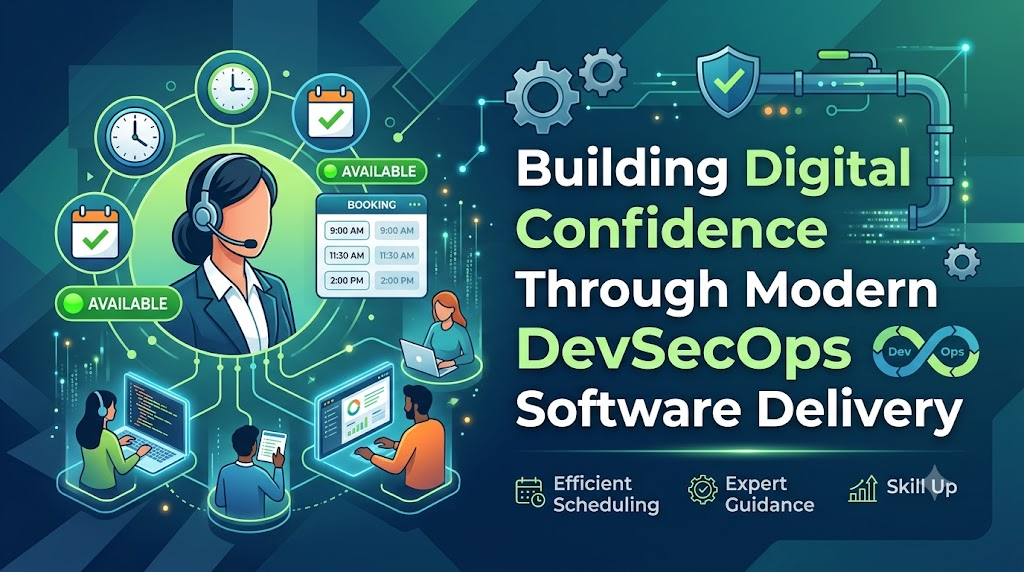
In the modern digital economy, organizational longevity depends entirely on data custody, forcing enterprise clients to evaluate software service partners based on asset protection rather than mere interface performance. Traditional software frameworks created systemic bottlenecks by separating product engineering and security validation into isolated business units, often resulting in late-stage launch delays and undetected production vulnerabilities. To address these structural deficiencies, modern organizations utilize DevSecOps engineering frameworks to embed automated vulnerability analysis, policy validation, and shared operational responsibility directly into early system development phases. By integrating continuous scanning into automated delivery pipelines, companies systematically transform cybersecurity from a post-development review step into a continuous operational feature, frequently utilizing comprehensive training resources like DevOpsSchool to master modern deployment pipelines, prevent infrastructure exploits, and cultivate enduring digital customer confidence.
Understanding Customer Trust in the Digital Age
Customer trust within modern web based ecosystems represents the foundational confidence that an end user or institutional buyer places in a service provider’s operational architecture. This trust extends far beyond basic contract fulfillments or software uptime metrics. It reflects a core belief that the partner firm will protect proprietary operational assets, user identity files, and financial records from unauthorized parties.
In previous decades, physical infrastructure, such as brick-and-mortar storefronts, corporate headquarters, and face-to-face service interactions, served as the primary symbols of organizational legitimacy. In contemporary markets, a company’s primary public interface is often its web application portal or mobile system endpoints. Consequently, digital confidence serves as the modern equivalent of traditional brand loyalty, determining whether a client chooses to sustain an ongoing commercial relationship or migrate to an alternative market provider.
+-----------------------------------------------------------------+
|                       DIGITAL TRUST CYCLE                       |
+-----------------------------------------------------------------+
|                                                                 |
|   Proactive Security  --> High Application  --> Sustained User  |
|      Validations           System Stability        Confidence   |
|          ^                                             |        |
|          |                                             v        |
|   Continuous Audits   <-- Transparent Data  <-- Reduced Brand   |
|    & Policy Checks        Handling Policy       Churn Metrics   |
|                                                                 |
+-----------------------------------------------------------------+
User experiences and system protective measures remain closely linked. When software systems run reliably without unexpected privacy alterations, data leaks, or access configuration failures, user engagement metrics improve. Conversely, when users run into unexpected validation errors or suspicious configuration changes, trust decreases, which often leads to higher user churn.
Long-term business viability requires verifiable security operations. Companies that demonstrate clear technical diligence regarding data custody enjoy higher customer lifetime values, easier client onboarding, and shorter sales cycles. System security is no longer just a technical checkbox for engineering departments; it is a vital strategy that drives customer satisfaction and modern corporate growth.
Why Security Directly Affects Customer Trust
Modern enterprise software buyers and retail consumers expect that their personal information, billing data, and behavioral analytics records will remain private and secure. When a user creates a new system profile or uploads information to a cloud database, they expect the service provider to maintain strict access controls. If an enterprise fails to protect this data, it breaches an implied agreement, which can permanently damage the customer relationship.
Privacy regulations go beyond basic technical requirements; they reflect fundamental human expectations for digital safety. Users want clear insight into where their records are processed, who has access to them, and how their data is protected from external threats. If an organization cannot prove it uses reliable encryption and access management, customers will look for alternative options that offer better protection.
| Security Failure Dimension | Direct Technical Impact | Resulting Customer Perception | Long-Term Corporate Outcome |
| Unencrypted Transport | Data Interception | Lack of Basic Technical Diligence | High Customer Attrition Rates |
| Poor Access Controls | Unauthorized Privileges | Structural Operational Carelessness | Heavy Regulatory Penalty Costs |
| Infrastructure Outage | Application Downtime | Unreliable Production Platforms | Brand Value Destruction |
Service reliability also shapes how customers perceive an organization’s security posture. Frequent application outages, unhandled server errors, and API performance drops often indicate deeper issues within the development process. Customers often assume that a company with unstable infrastructure also neglects critical data security protocols, which can weaken overall user confidence.
Ultimately, corporate brand reputation depends directly on real-world security performance. While marketing campaigns can build initial consumer interest, maintaining a strong long-term reputation requires consistent operational security. Organizations that prevent data leaks, handle vulnerabilities openly, and keep systems stable build strong market authority that competitors cannot easily match.
What Is DevSecOps?
DevSecOps is an engineering approach that integrates security practices throughout the entire software development lifecycle, from initial planning to long-term maintenance. Traditional development models often treated security as a final review step before deployment. DevSecOps shifts this responsibility, making security a continuous, shared priority across development, operations, and security teams.
               [Plan] ----------> [Code]
                 ^                  |
                 |                  v
              [Monitor]          [Build]
                 ^                  |
                 |                  v
              [Deploy] <--------- [Test]
                 |                  |
                 +--> (Security Embedded Across All Phases)
Core Engineering Principles
- Shift-Left Security: This practice introduces automated vulnerability analysis, compliance checks, and configuration monitoring early in the development process, rather than waiting for post-build reviews.
- Shared Responsibility Model: Instead of relying on a siloed security team, development, operations, and security professionals work together under a unified operational framework.
- Continuous Security Integration: Automated checking tools run continuously within development pipelines, evaluating every code modification before it reaches production environments.
For example, in a traditional software development setup, engineers might write application code for several months before sending the compiled release package to an independent security team for compliance review. If the security team discovers architectural flaws or dependency risks at this stage, developers must rewrite large portions of the codebase, which delays releases and increases development costs.
In a modern DevSecOps pipeline, every code submission automatically triggers static analysis tools, third-party dependency checks, and container layout scans. If a developer accidentally introduces a flawed dependency or a misconfigured access policy, the automated testing pipeline flags the issue immediately. This allows the engineer to correct the code right away, long before the software is staged for production release.
Why Traditional Security Approaches Often Fail
Traditional software development methodologies often treat security as an isolated phase at the very end of the engineering lifecycle. This approach creates a structural disconnect between the development teams, who focus on shipping features quickly, and the security reviewers, who focus on mitigating risks. This separation often results in conflicting priorities, slowed deployments, and higher operational risks for the organization.
Because security evaluations occur right before launch, production teams often discover critical vulnerabilities late in the process. When a security audit uncovers significant design flaws, dependency issues, or access control gaps just days before a scheduled release, management faces a difficult choice. They must either delay the product launch to fix the code or ship the software with known vulnerabilities to meet their deadline.
Traditional Approach:
[ Dev Phase ] ---> [ Ops Phase ] ---> [ Isolated Security Audit ] ---> (High Risk of Bottlenecks)

DevSecOps Approach:
[ Dev + Ops + Security Integrated Continuously Throughout Pipeline ] ---> (Smooth, Secure Releases)
Delayed detection also leads to slower remediation times. When software developers receive vulnerability reports weeks after writing the original code, they must spend time re-learning that part of the application to fix the bugs. This process diverts engineering resources away from new features, lowers overall development team productivity, and increases code maintenance costs.
| Operational Evaluation Parameter | Traditional Security Model | DevSecOps Engineering Approach |
| Primary Audit Timing Phase | Final stage prior to product launch | Continuous throughout development lifecycle |
| Vulnerability Identification Responsibility | Separate isolated security engineering unit | Shared across development, operations, and security teams |
| Average Resolution Speed | Weeks to months following initial code creation | Minutes to hours via automated feedback loops |
| Software Deployment Pipeline Velocity | Low velocity due to manual inspection phases | High velocity with continuous automated guardrails |
| Production Operational Risk Profile | High due to late-stage discovery gaps | Low due to continuous early testing and remediation |
How DevSecOps Improves Customer Trust
Integrating automated security validations into modern delivery pipelines directly protects end-user experiences. By replacing slow, manual reviews with automated testing, organizations can systematically verify their security controls. This approach ensures that every production update meets high data protection standards, which helps maintain consistent customer confidence.
| DevSecOps Practice | Customer Benefit | Trust Impact |
| Automated Static Code Analysis | Eliminates common injection and logic flaws | Higher confidence in data-handling code |
| Third-Party Dependency Auditing | Prevents known supply chain vulnerabilities | Assurance that software relies on secure components |
| Container Image Compliance Scanning | Ensures cloud environments are securely configured | Protection against infrastructure exploits |
| Infrastructure as Code (IaC) Validation | Minimizes server and cloud network misconfigurations | Reduced risk of data exposure from human error |
| Automated Dynamic Application Testing | Catches behavioral and runtime logic bugs | Stable, reliable application environments |
| Continuous Compliance Engineering | Verifies adherence to privacy standards (GDPR, SOC2) | External validation of corporate data stewardship |
Detailed Practice Implementations
- Secure Coding Patterns: Development teams use automated linters and static analysis tools right inside their code editors. This helps catch security issues like input flaws or weak encryption choices before the code ever leaves the developer’s workstation.
- Automated Security Pipelines: Central build servers automatically check every code update using specialized analysis tools. If the system detects an unpatched dependency or a security risk, it stops the build process, preventing insecure code from advancing toward production.
- Vulnerability Scanning: Automated scanners continuously check application containers and server environments for known security vulnerabilities. This helps operations teams identify and patch infrastructure issues before hackers can exploit them.
- Compliance Validation: Automated systems continuously check infrastructure configurations against regulatory standards like SOC2, ISO 27001, or PCI-DSS. This provides verifiable proof that the platform maintains high data protection controls.
- Continuous Performance Monitoring: Automated monitoring platforms keep watch over production systems, tracking security signals, access logs, and error trends. This helps teams identify and address unusual patterns before they impact users.
- Incident Response Planning: Automated tracking tools connect directly with communication platforms to notify on-call engineers the moment an anomaly is detected. This fast feedback loop allows teams to quickly isolate and resolve issues, minimizing system downtime.
Secure Software Development Builds Confidence
Building secure software requires treating security as a foundational feature from the very start of design, rather than an afterthought. When engineering teams build systems with security in mind, they analyze potential threats before writing any code. This proactive approach helps developers identify design risks, secure access points, and plan data protection measures early in the project life cycle.
Threat modeling plays an important role in this design process. Developers, operations teams, and security specialists work together to map out the application’s architecture, identify potential attack vectors, and design appropriate defenses. This collaborative review helps teams catch structural flaws early, avoiding costly fixes late in development and ensuring sensitive data is handled properly.
1. Threat Modeling ---> 2. Secure Coding Linting ---> 3. Continuous Integration Verification ---> 4. Secure Production
By embedding security checks directly into the development lifecycle, organizations can significantly reduce their overall risk profile. Catching security flaws early prevents vulnerable code from ever reaching production environments. This disciplined approach shows customers that the organization actively protects their data, helping build long-term digital confidence.
Faster Vulnerability Detection and Resolution
Automated security scanning tools allow companies to find and fix software vulnerabilities much faster than traditional manual reviews. Automated scanners analyze application code, third-party software packages, and cloud configuration files every time an engineer updates the system. This continuous feedback loop helps developers fix bugs immediately, rather than letting security issues build up over time.
Continuous monitoring systems extend this protection directly into production environments. These platforms watch live network traffic, application access patterns, and server configurations to detect unusual activity or emerging threats. This real-time visibility helps operations teams respond to security issues before they can impact users.
[ Developer Commits Code ] ---> [ Automated Scanner Runs ] ---> [ Instant Developer Feedback Loop ]
Finding security issues early drastically reduces the time an application is exposed to potential threats. Instead of leaving vulnerabilities unaddressed for weeks, development teams can deploy verified patches within hours. This quick turnaround minimizes security risks and shows customers that the company is committed to keeping their applications safe and reliable.
Protecting Customer Data Through DevSecOps
Protecting customer information requires multiple layers of technical security integrated directly into production environments. When companies build secure pipelines, they ensure that all sensitive data is encrypted both when stored on disk and when traveling across networks. This continuous encryption helps ensure that even if unauthorized users gain access to storage networks, they cannot read the underlying data.
+-----------------------------------------------------------------------+
|                    SECURE DATA PROTECTION ARCHITECTURE                |
+-----------------------------------------------------------------------+
|                                                                       |
|   [ Client Request ] ---> ( TLS 1.3 Transport Encryption )            |
|                                  |                                    |
|                                  v                                    |
|   [ Application Tier ] -> ( Role-Based Access Validation Check )      |
|                                  |                                    |
|                                  v                                    |
|   [ Database Storage ] -> ( AES-256 Storage Disk Encryption Layer )   |
|                                                                       |
+-----------------------------------------------------------------------+
Strict access management and explicit authentication tracking are also essential for keeping production platforms secure. By using the principle of least privilege, organizations ensure that only authorized services and verified staff can access sensitive databases. This approach limits user access to only the specific resources needed for their roles, reducing the risk of internal security slips.
Data Protection Checklist
- Encrypt all user data at rest using AES-256 encryption standards.
- Enforce TLS 1.3 encryption protocols for all data moving across networks.
- Implement automated rotation schedules for API tokens, database keys, and passwords.
- Strip out all database passwords and secrets from version control files.
- Enforce multi-factor authentication requirements for all internal production environments.
- Maintain isolated database networks with no direct public internet exposure.
- Run automated access reviews to remove outdated employee permissions.
Privacy and Compliance as Trust Builders
Global regulatory compliance frameworks require companies to maintain clear data oversight and strong user protections. Standards such as GDPR, HIPAA, and PCI-DSS require organizations to verify exactly how they collect, process, store, and delete user records. Meeting these standards shows customers that an independent auditor has verified the company’s security controls.
Modern DevSecOps workflows build compliance directly into the automated delivery process, rather than relying on manual, end-of-year audits. By tracking configuration metrics and logging pipeline events automatically, teams can generate real-world compliance data on demand. This approach helps companies consistently meet strict regulatory requirements without slowing down their development pace.
| Compliance Framework Focus Area | Technical Requirements Included | Resulting Trust Outcome |
| General User Privacy (GDPR) | Data anonymization, right to erasure | Users retain control over personal profiles |
| Payment Card Security (PCI-DSS) | Isolated financial zones, tokenized billing | Secure payment processing environments |
| Cloud Governance (SOC2 Type II) | Continuous audit logging, access validation | Verifiable operational safety and reliability |
Maintaining transparent data policies helps build strong long-term relationships with customers. When a company clearly explains its tracking mechanisms, privacy protections, and retention rules, users feel more secure sharing their data. This transparency helps transform compliance from a legal requirement into a distinct market advantage that builds customer loyalty.
Continuous Security Monitoring
Continuous monitoring gives organizations real-time visibility into the health and security of their live software applications. Instead of relying on occasional point-in-time checks, automated monitoring tools keep a constant watch on application behavior, user requests, and infrastructure stability. This continuous oversight helps engineering teams spot potential security anomalies before they escalate into major issues.
Modern security observability platforms collect logs, system metrics, and execution traces from across the entire cloud infrastructure. Advanced analysis engines review this data to flag unusual access spikes, unauthorized system changes, or unexpected data transfers. This real-time intelligence helps operations teams quickly understand and respond to emerging threats.
[ Continuous Observability Data ] ---> [ Automated Parsing Engine ] ---> [ Live Operations Dashboard ]
This continuous visibility directly benefits end users by allowing teams to address infrastructure issues before customers experience downtime or performance drops. When a security anomaly occurs, automated alerts notify on-call engineers immediately, enabling them to isolate and fix the problem right away. This rapid response protects the user experience and demonstrates a strong commitment to application security.
Reliability and Availability Increase Customer Confidence
Application security and system availability are closely linked in modern cloud environments. Many infrastructure outages are not caused by simple hardware failures, but rather by security issues like distributed denial-of-service attacks, unpatched memory leaks, or misconfigured network routers. By adopting DevSecOps practices, organizations can secure their infrastructure code and prevent these common causes of downtime.
Using Infrastructure as Code (IaC) templates allows engineering teams to define and launch server environments using pre-tested, standard configurations. These automated templates undergo security screening before deployment to prevent open network ports or access errors. This automated approach ensures that production environments remain consistent, predictable, and resilient against unexpected spikes in traffic.
[ Verified IaC Configuration Template ] ---> [ Automated Validation Scan ] ---> [ Stable Multi-Region Deployment ]
Maintaining reliable, highly available systems reassures customers that an organization can protect its services and preserve data access during unexpected events. When an application remains stable through traffic surges and security incidents, users gain confidence in the platform’s engineering quality. This operational resilience helps companies build strong, long-term relationships with their clients.
DevSecOps and Customer Experience
A smooth and reliable digital experience depends on having a secure, well-tested development pipeline. When software updates undergo automated security scans and performance tests, companies can deploy new features with much less risk of introducing bugs or system crashes. This rigorous process allows teams to deliver updates smoothly, avoiding the frustrating service interruptions that often plague poorly tested platforms.
Modern Secure Engineering Workflow:
[ Seamless Code Updates ] ---> [ Automated Security Checks ] ---> [ Uninterrupted User Experience ]
When technical issues do occur, integrated development pipelines help engineering teams identify, fix, and deploy software patches quickly. This fast turnaround minimizes application downtime and resolves bugs before they can widespread impact the user base. This efficiency shows customers that the company values their time and actively maintains the services they rely on.
Ultimately, investing in modern security practices directly improves overall product quality. By catching logic flaws, performance bottlenecks, and configuration errors early in development, teams build more stable and reliable applications. This focus on software quality creates a safer, more predictable digital environment that keeps customers engaged and satisfied.
Building Transparency Through Security Practices
Clear, honest communication is essential for building and maintaining customer trust, especially when managing security challenges. Organizations should share how they protect data, what security standards they follow, and how they handle potential system vulnerabilities. This transparency helps customers better understand and feel confident in the company’s security practices.
Having a clear vulnerability disclosure policy allows independent security researchers to safely report discovered bugs to the company’s engineering team. This proactive approach helps organizations find and fix security issues before malicious actors can exploit them. Handling these disclosures responsibly shows a strong commitment to continuous security improvement.
[ External Bug Report ] ---> [ Engineering Analysis ] ---> [ Verified Software Patch ] ---> [ Public Disclosure Notes ]
If a security incident occurs, keeping customers informed through timely, honest updates is critical for maintaining their trust. Organizations should clearly explain what happened, which data systems were affected, and the specific steps being taken to resolve the issue. This open communication helps prevent rumors, shows accountability, and helps preserve the company’s long-term reputation.
Real-World Security Incidents and Customer Trust Lessons
Analyzing historical security breaches highlights how deeply infrastructure vulnerabilities can impact an organization’s market standing. When a company suffers a major security failure, the damage extends far beyond immediate financial losses or regulatory fines. The most significant consequence is often a long-term loss of customer confidence, which can take years of dedicated effort to rebuild.
[ Unpatched Software Vulnerability ] ---> [ System Compromise ] ---> [ Brand Image Erosion ] ---> [ Client Attrition ]
When a data leak exposes sensitive client records, users often feel vulnerable and lose faith in the company’s ability to protect their information. This loss of trust frequently leads to higher customer churn, as clients migrate to competitors who offer better, more visible security measures. Rebuilding a damaged brand requires significant investments in security upgrades, independent audits, and transparent public communication.
The key lesson from these incidents is that reactive security measures are no longer sufficient to protect modern enterprise applications. Organizations must move away from old models that only address security right before launch or after a breach has occurred. Implementing an integrated DevSecOps framework allows companies to systematically find and fix vulnerabilities early, protecting both their data and their customer relationships.
The Role of Automation in Maintaining Trust
Automated workflows are essential for maintaining consistent security protections across modern, fast-moving development pipelines. Manual security reviews are often slow, prone to human error, and difficult to scale as an organization grows. Automation embeds security checks directly into the development lifecycle, ensuring that every code update meets established security standards before it reaches production.
[ Code Submissions ] ---> [ Automated Policy Check Engines ] ---> [ Standardized Production Implementations ]
Automated testing tools run continuously and impartially, checking every line of code against security policies without slowing down the development team. This predictable validation process helps prevent accidental security gaps caused by manual oversights or rushed deployment schedules. With automation handling routine checks, development teams can focus on building new features while maintaining high security standards.
| Automation Practice Area | Automated Verification System Action | Direct Value to Customer |
| Pre-Build Source Code Analysis | Scans code repositories for raw passwords or access tokens | Prevents accidental exposure of system credentials |
| Deployment Build Testing | Validates that third-party software updates are safe | Protects applications from supply chain security risks |
| Live Configuration Monitoring | Continuously checks cloud server permissions against baselines | Minimizes data leaks caused by human configuration errors |
Security Tools Commonly Used in DevSecOps
Building a dependable DevSecOps pipeline requires selecting and combining specialized tools that work together across different stages of development. These tools automate security checks, track system metrics, and ensure configuration compliance without disrupting engineering workflows.
| Tool Category | Example Software Tools | Core Purpose in Pipeline |
| Static Application Testing (SAST) | SonarQube, Checkmarx | Scans source code early to find structural flaws and security vulnerabilities |
| Software Composition Analysis (SCA) | Snyk, OWASP Dependency-Check | Identifies and tracks known security risks in third-party libraries |
| Container Image Compliance | Trivy, Clair | Scans container layouts for system bugs and security vulnerabilities |
| Infrastructure as Code (IaC) Review | Checkov, TFSec | Audits cloud configuration files to prevent deployment misconfigurations |
| Dynamic Application Testing (DAST) | OWASP ZAP, Burp Suite | Tests running applications from an outsider’s perspective to find logic flaws |
| Observability and Security Tracking | Prometheus, Datadog, Grafana | Collects real-time system logs and metrics to identify emerging threats |
Practical Tool Use Cases
- Source Code Analysis: SAST tools run automatically whenever a developer pushes new code, checking for common bugs like input validation errors or weak encryption choices. This helps engineers fix security issues before their code is merged into the main branch.
- Dependency Scanning: SCA tools scan third-party libraries and open-source packages to flag known security vulnerabilities. This ensures that the application only uses secure, up-to-date components.
- Container Security: Image scanners inspect container layers to find unpatched operating system bugs before they are deployed to production servers, ensuring a secure cloud infrastructure.
- Configuration Audits: IaC tools review cloud configuration templates to ensure that network controls and storage permissions are set correctly, reducing the risk of accidental data exposure.
DevSecOps for Different Industries
Different industries face distinct operational challenges, security requirements, and compliance standards based on the types of data they manage and their specific regulatory environments.
+-------------------------------------------------------------------+
|                  INDUSTRY COMPLIANCE REQUIREMENTS                 |
+-------------------------------------------------------------------+
|                                                                   |
|   [ Banking & Finance ]  --> Strict Ledger Auditability (PCI-DSS)  |
|                                                                   |
|   [ Healthcare Systems ] --> Absolute Patient Data Privacy (HIPAA) |
|                                                                   |
|   [ E-Commerce Sites ]   --> High-Availability Transaction Safety |
|                                                                   |
+-------------------------------------------------------------------+
Banking and Financial Services
Financial institutions operate under strict security regulations that demand robust data protection and detailed audit logs. These organizations use automated DevSecOps pipelines to verify account isolation, secure transactional systems, and maintain complete audit trails for every code update. This systematic verification helps protect sensitive financial assets and maintain customer confidence.
Healthcare Systems
Healthcare organizations manage highly sensitive personal health records that require strict privacy protections under regulations like HIPAA. DevSecOps practices help these institutions build secure data boundaries, enforce role-based access controls, and continuously audit network traffic. This careful management ensures patient data remains private and secure across all applications.
E-Commerce Platforms
Online retailers manage high volumes of customer payment data and experience frequent traffic fluctuations, making security and uptime critical. Integrated security pipelines automatically check payment interfaces, protect against common web vulnerabilities, and verify that infrastructure configurations adapt safely to changing user demands.
SaaS Implementations
Software-as-a-Service providers often host data for multiple enterprise clients on shared cloud infrastructure, requiring strong tenant isolation. Continuous security monitoring allows SaaS teams to verify data separation, track cross-tenant API requests, and deploy platform updates smoothly without disrupting client operations.
Government Digital Portals
Public-sector systems must provide secure, reliable access to essential services while protecting citizen data from advanced cyber threats. Implementing automated compliance testing and secure development practices helps government agencies protect public infrastructure, meet strict security standards, and build public trust.
Measuring Customer Trust Through Security Metrics
Organizations can measure and improve their security performance by tracking specific key performance indicators (KPIs) across their development pipelines. These metrics provide clear, data-driven insights into how effectively a company finds and fixes vulnerabilities, maintains system stability, and protects customer data.
| Security Metric | Operational Meaning | Direct Impact on Customer Experience |
| Mean Time to Remediation (MTTR) | The average time required to fix a discovered security bug | Reduces the time systems are exposed to potential threats |
| Vulnerability Escape Rate | The percentage of security bugs that make it to production | Fewer unexpected software glitches and data risks for users |
| Production System Availability | The percentage of time application services remain fully functional | Consistent, reliable access to applications whenever needed |
| Automated Security Test Coverage | The percentage of code automatically checked for security risks | Higher confidence that all code updates meet security standards |
| Recurrent Vulnerability Rate | How often previously patched security issues reappear | More stable software versions with fewer recurring bugs |
Tracking these metrics allows organizations to continuously refine their security practices and improve development efficiency. Sharing high-level security performance data, such as extended system uptime or fast vulnerability resolution times, helps companies demonstrate their commitment to data safety and build stronger relationships with their customers.
Common Challenges in Building Trust Through Security
Transitioning to an integrated security and development model can introduce several operational and cultural challenges that organizations must carefully manage to keep their projects moving forward smoothly.
[ Skill Shortage Gaps ] + [ Legacy Architectures ] ---> ( Requires Guided Training Paths )
Legacy Systems
Older software applications and infrastructure configurations often lack support for modern automation tools and continuous scanning APIs. To update these legacy systems, development teams can use specialized wrapper scripts or implement step-by-step modernization plans to gradually connect older platforms to modern deployment pipelines.
Skill Shortages
Engineering teams may initially lack deep experience with specialized security tools or automated cloud compliance practices. Organizations can address this knowledge gap by providing structured training programs, using clear documentation, and working with comprehensive training platforms like DevOpsSchool to help engineers build essential cloud security skills.
Process Complexity
Adding multiple automated scanning tools to a development pipeline can sometimes create long build times or generate confusing false positives that slow down developers. Teams can keep their pipelines efficient by regularly tuning scanner rules, removing duplicate test steps, and setting up clear alerts for genuine security risks.
Organizational Resistance
Development teams focused on shipping features quickly may view new security processes as roadblocks that slow down their work. Management can help align these priorities by building a collaborative engineering culture, setting shared goals for security and performance, and demonstrating how automated guardrails help prevent time-consuming fixes later on.
Best Practices for Implementing DevSecOps
Successfully adopting an integrated security framework requires combining clear team coordination, automated tools, and structured development workflows.
1. Shift Validation Left ---> 2. Automate Policy Testing ---> 3. Continuous Technical Education
Integrate Security Early
Introduce security reviews, threat modeling, and code analysis during the initial design and planning phases of your projects. Finding and addressing security risks early helps developers avoid structural flaws that are difficult and expensive to fix later in development.
Automate Routine Security Checks
Embed automated static analysis, dependency scanning, and configuration checks directly into your continuous integration pipelines. Automating these routine tests ensures every code change is validated quickly, providing developers with fast, actionable feedback without slowing down deployments.
Support Continuous Team Learning
Provide development and operations teams with ongoing training on secure coding patterns, modern cloud architectures, and compliance standards. Investing in continuous professional education helps teams proactively find and fix security issues, reducing reliance on post-development audits.
Maintain Clear System Monitoring
Set up comprehensive logging and observability tools across all production environments to track application behavior and security signals. Continuous monitoring helps operations teams quickly spot and address unusual activity before it impacts application performance or data safety.
Actionable Implementation Checklist
- Run automated static code scanners on every code branch update.
- Check all third-party software dependencies daily for known vulnerabilities.
- Verify that cloud infrastructure templates meet security policies before deployment.
- Audit production access permissions monthly to remove unused accounts.
- Conduct regular team exercises to test and refine incident response plans.
- Share high-level security performance metrics and compliance updates with users.
DevSecOps and Brand Reputation
In modern digital markets, robust data security practices serve as a key business differentiator and a cornerstone of corporate brand reputation. Organizations that consistently protect customer data, prevent system downtime, and handle vulnerabilities transparently build strong market authority that helps them stand out from competitors.
[ Verifiable DevSecOps Safeguards ] ---> [ Strong Market Reputation ] ---> [ Higher Customer Loyalty ]
When a company demonstrates consistent operational reliability, it makes it easier to build relationships with enterprise clients, lower customer churn, and shorten sales cycles. Customers prefer doing business with partners who show a clear commitment to security, transforming data protection into a valuable asset for business growth.
Conversely, a major security failure can quickly erase years of brand value and market trust. By prioritizing automated security guardrails and supporting a collaborative engineering culture, companies can systematically protect their operations and preserve user confidence, ensuring long-term business resilience.
Future of Customer Trust and DevSecOps
As digital platforms continue to evolve, the technologies and frameworks used to protect user data and maintain customer trust are advancing rapidly.
+-----------------------------------------------------------------------+
|                       FUTURE SECURITY PARADIGMS                       |
+-----------------------------------------------------------------------+
|                                                                       |
|   [ Zero Trust Architectures ] --> Continuous Identity Verification    |
|                                                                       |
|   [ Automated Guardrails ]     --> Intelligent Context-Aware Security |
|                                                                       |
|   [ Privacy-First Coding ]     --> Automated Data Anonymization Flow  |
|                                                                       |
+-----------------------------------------------------------------------+
Zero Trust Architecture
Modern cloud environments are shifting away from traditional network perimeter security toward Zero Trust models that require continuous authentication. This approach verifies every user, device, and API request explicitly, regardless of where the request originates, ensuring strict data access controls.
Context-Aware Security Automation
Next-generation development pipelines are adopting smarter testing systems that analyze code modifications within the context of the entire application architecture. This context-aware scanning helps reduce false positives, prioritize critical security risks, and deliver more accurate feedback to developers.
Privacy-First Development
As global privacy standards expand, development workflows are embedding data protection controls directly into application code. Automated pipelines verify that data anonymization, encryption, and storage rules run correctly by default, helping companies maintain compliance and protect user privacy.
Certifications & Learning Paths
Building a secure, automated development pipeline requires structured professional training and verified technical skills across development, operations, and security practices.
[ Associate Fundamentals ] ---> [ Advanced Cloud Infrastructure ] ---> [ Expert Enterprise Architecture ]
Engaging with specialized educational resources, such as the DevOpsSchool learning ecosystem, provides engineering teams with structured courses, hands-on labs, and expert guidance covering modern security frameworks.
| Professional Certification Name | Targeted Audience | Recommended Skill Level | Primary Technical Focus Area |
| DevSecOps Certified Engineer | DevOps professionals, security analysts | Intermediate level | Pipeline automation, automated scanning tool integration |
| Certified Cloud Security Specialist | Cloud architects, systems engineers | Advanced level | Cloud infrastructure security, IAM policy design |
| Secure Coding Practitioner | Software developers, application engineers | Professional foundation | Secure development patterns, input validation rules |
| Continuous Compliance Manager | IT managers, compliance auditors | Enterprise management | Automated audit reporting, governance frameworks |
Common Beginner Mistakes
- Treating Security as a Post-Development Phase: Waiting until the end of a project to run security checks often leads to missed deadlines, complex code rewrites, and delayed launches. Security validations should run continuously from the start of development.
- Ignoring Third-Party Dependency Risks: Using external code libraries without running automated dependency checks can expose applications to supply chain vulnerabilities. Always monitor and update third-party packages regularly.
- Relying Only on Automated Tools: While automated scanners are excellent for catching common code flaws, they cannot replace human design reviews. Combine automation with regular team threat modeling and architectural discussions.
- Using Excessively Strict Security Rules: Setting security scanner thresholds too high early in the transition can overwhelm developers with false positives and slow down progress. Start with a baseline of critical checks and gradually refine rules over time.
- Neglecting Secure Configuration Management: Securing application code is ineffective if cloud servers or databases are left with open network access. Ensure your infrastructure templates undergo regular security testing before deployment.
FAQs (Frequently Asked Questions)
How does DevSecOps improve customer trust?
DevSecOps improves customer trust by embedding automated security testing, compliance checks, and configuration monitoring directly into the development lifecycle. This continuous verification helps find and fix vulnerabilities early, ensuring that application updates are reliable and that sensitive user data remains protected.
Why is security important for customer confidence?
Modern customers want to know that their personal information, billing details, and private data are handled safely. Demonstrating a clear commitment to data protection, access management, and system uptime helps companies build digital confidence and encourage long-term customer loyalty.
What is shift-left security?
Shift-left security means introducing code analysis, vulnerability checking, and configuration testing early in the software development process, rather than waiting for post-development reviews. This early feedback helps developers fix security issues quickly, before they can reach production environments.
Can DevSecOps prevent all security breaches?
No development framework can guarantee total security against every possible threat. However, DevSecOps significantly lowers an organization’s overall risk profile by systematically removing common code flaws, updating unpatched dependencies, and providing continuous monitoring to catch and resolve security incidents quickly.
How does compliance help build customer trust?
Meeting regulatory compliance standards like SOC2, GDPR, or ISO 27001 shows customers that an independent auditor has reviewed and verified the company’s security controls. Integrating compliance checks into development pipelines ensures these safety measures remain active and effective over time.
What role does automation play in DevSecOps?
Automation ensures that security policies are applied consistently to every software update without slowing down development teams. Automated tools scan source repositories, check third-party packages, and audit cloud environments, reducing human error and keeping security testing predictable.
How do customers benefit from DevSecOps?
Customers receive more stable, reliable, and secure applications with fewer unexpected service interruptions or data exposures. When a company adopts continuous testing practices, it can deliver new features safely and resolve bugs much faster.
Is DevSecOps only for large enterprises?
No. Organizations of all sizes benefit from integrated security workflows. Smaller teams can use open-source scanning tools and automated cloud services to secure their code pipelines early, helping them scale safely without building up technical security debt.
How do development teams handle false positives in security scans?
Engineering teams manage false positives by regularly updating scan configurations, tuning alert rules, and marking verified non-issues within their tracking systems. This regular maintenance helps keep alerts accurate and prevents developers from being overwhelmed by non-critical notifications.
What is the difference between DevOps and DevSecOps?
Traditional DevOps focuses primarily on improving collaboration between development and operations teams to accelerate software delivery. DevSecOps builds upon this model by fully integrating automated security guardrails and shared risk management across all phases of the development lifecycle.
How does infrastructure as code improve security?
Infrastructure as Code (IaC) allows teams to define network settings, server environments, and storage permissions using standard configuration templates. These templates undergo automated testing before deployment, reducing the risk of manual configuration errors that can lead to data leaks.
How often should automated security tests run?
Automated security checks should run every time a developer updates code or builds a new software version. Continuous monitoring tools should also watch production environments 24/7 to identify emerging threats or unusual activity in real time.
Who is responsible for security in a DevSecOps framework?
Security is a shared responsibility across development, operations, and dedicated security teams. Developers write secure code using automated linters, operations teams maintain secure deployment configurations, and security specialists provide guidance, tune scanning tools, and review architecture designs.
What is software composition analysis?
Software Composition Analysis (SCA) involves using automated tools to scan an application’s open-source and third-party dependencies for known security flaws or licensing risks, helping ensure that external libraries are safe to use.
How should a company handle security updates with customers?
Organizations should share high-level information about system performance, upcoming security enhancements, and completed compliance audits on public status pages or in product updates. Clear, open communication shows accountability and helps strengthen customer confidence.
Final Thoughts
In modern digital business, maintaining reliable customer trust requires consistent, verifiable security practices. Organizations can no longer rely on manual, late-stage security audits that delay software releases and risk missing critical bugs. Transitioning to a collaborative DevSecOps engineering framework allows companies to build data protections directly into their delivery pipelines. This integrated approach helps development, operations, and security teams find and resolve vulnerabilities early, maintain system availability, and meet regulatory compliance standards. This disciplined execution protects sensitive user records and ensures a stable, reliable user experience across all digital channels. Ultimately, secure software development is a strategic business decision that directly strengthens brand reputation and customer loyalty. By replacing reactive security measures with automated guardrails and supporting a culture of continuous improvement, companies can protect their digital assets, stand out from competitors, and build lasting customer trust.






Leave a Reply
You must be logged in to post a comment.