Introduction
In today’s digital-first economy, customer trust has evolved from a soft metric into a critical competitive advantage, as users increasingly prioritize the safety and reliability of their digital experiences over features alone. A single security breach can erode years of brand reputation and trigger costly regulatory consequences, making the implementation of secure software delivery a baseline expectation rather than an optional luxury. This is the core mission of DevOpsSchool, where we focus on bridging the gap between rapid development and robust security through structured guidance and practical implementation. By shifting security from a final bottleneck to a continuous, integrated practice throughout the software development lifecycle, organizations can provide the resilient, reliable service their users demand, ultimately turning security into a cornerstone of long-term business success.
What Is DevSecOps?
DevSecOps is the philosophy of integrating security practices within the DevOps process. Traditionally, security was treated as a gatekeeper—a final check performed right before a product release. This model is incompatible with modern, rapid deployment cycles.
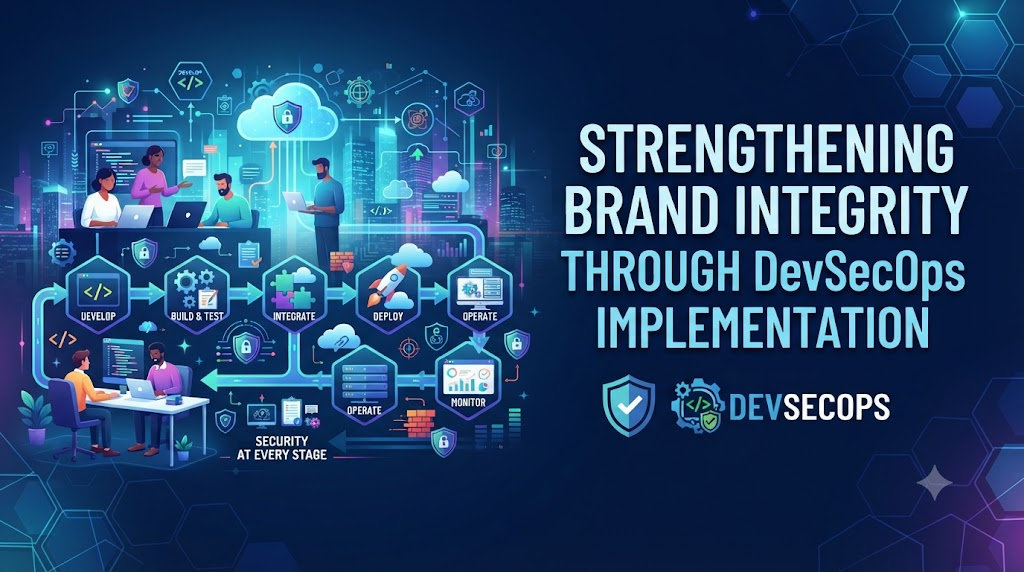
DevSecOps flips this script. It treats security as a shared responsibility across the entire lifecycle, from the initial planning phase to production monitoring. Its core principles include:
- Shift-Left Security: Moving security testing to the earliest possible stages of development to catch vulnerabilities before they reach production.
- Security as Code: Automating security controls within the CI/CD pipeline, ensuring that policies are applied consistently to every piece of code.
- Continuous Security: Moving away from periodic audits to ongoing monitoring and automated threat detection.
By embedding security into the culture and the technology stack, teams can innovate rapidly without sacrificing the safety of their users.
Why Customer Trust Matters
Customer trust is the currency of the digital age. It represents the belief that an organization will act in the best interests of its users, particularly regarding their data and digital experience.
- Data Privacy: With the rise of sophisticated cyber threats, customers are hypersensitive about how their personal data is stored and handled.
- Business Reputation: A company known for secure, stable systems gains a reputation for reliability, which serves as a powerful market differentiator.
- Customer Retention: Trust is a primary driver of long-term loyalty. When customers feel safe using a platform, they stay longer and advocate for the brand.
- Regulatory Expectations: Beyond user sentiment, compliance with standards like GDPR, HIPAA, or SOC2 is mandatory. Demonstrating compliance through secure practices builds objective credibility.
How DevSecOps Builds Customer Trust
| DevSecOps Practice | How It Improves Customer Trust |
| Secure Coding | Reduces the likelihood of bugs that can lead to data breaches. |
| Automated Security Testing | Provides consistent, error-free validation of software security. |
| Continuous Monitoring | Ensures rapid detection and mitigation of potential threats. |
| Compliance Automation | Offers verifiable proof of adherence to security standards. |
| Vulnerability Management | Shortens the window of exposure for known threats. |
| Secure CI/CD Pipelines | Prevents unauthorized code or malicious dependencies from reaching production. |
| Incident Response | Demonstrates transparency and competence during security events. |
Security Throughout the Software Development Lifecycle
Integrating security across the SDLC ensures that trust is built in, not bolted on.
- Planning: Threat modeling occurs here. By identifying potential risks early, architects can design systems that are inherently secure.
- Development: Developers use secure coding standards and IDE plugins to catch security flaws in real-time.
- Testing: Automated SAST (Static Application Security Testing) and SCA (Software Composition Analysis) scan for vulnerabilities before the build is finalized.
- Deployment: Infrastructure as Code (IaC) templates are scanned for misconfigurations, ensuring the target environment is hardened.
- Monitoring: Once live, the application is continuously monitored for anomalous behavior, enabling proactive responses to emerging threats.
- Continuous Improvement: Feedback from security incidents is fed back into the planning phase, creating a virtuous loop of hardening.
Secure Software Development Practices
Building trust requires concrete technical rigor:
- Secure Coding Standards: Adopting frameworks like OWASP ensures that developers avoid common pitfalls such as injection flaws.
- Code Reviews: Peer reviews must include a security-focused lens, not just a functional one.
- Dependency Management: Regularly auditing third-party libraries is vital, as modern applications rely heavily on open-source code that may harbor vulnerabilities.
- Secrets Management: Never hardcode credentials. Use tools like HashiCorp Vault or cloud-native key management services to rotate and protect secrets.
- Infrastructure Security: Treating infrastructure as code allows for version-controlled, reproducible, and secure environment definitions.
Continuous Security Testing
Automated testing is the heartbeat of DevSecOps. It provides the scale necessary to maintain security without slowing down development.
- SAST: Scans source code for patterns that indicate common vulnerabilities.
- DAST: Interacts with the running application to identify security flaws in real-world scenarios.
- SCA: Analyzes external libraries and dependencies to ensure no known vulnerabilities are being introduced into the build.
- Container Security Scanning: Essential for modern microservices; it ensures that the images being deployed do not contain outdated software or configuration weaknesses.
Compliance and Governance
Compliance should not be an annual “fire drill.” Through DevSecOps, governance becomes automated. By codifying policies, organizations can ensure that every deployment automatically meets regulatory requirements. This “Continuous Compliance” approach turns audits from a stressful manual process into a simple report generation task, fostering immense trust with stakeholders and regulators.
Continuous Monitoring and Incident Response
Security is never “done.” Continuous monitoring provides visibility into the health of the system. If an anomaly occurs, automated incident response workflows can isolate affected services, alert the security team, and provide logs that allow for rapid forensic analysis. This proactive stance ensures that if a problem arises, it is contained before it impacts the end-user.
Protecting Customer Data
Data protection is the ultimate test of customer trust. Implementing strong encryption at rest and in transit, combined with granular Identity and Access Management (IAM), ensures that even if a system is breached, sensitive customer information remains unintelligible to attackers. Secure APIs are the gatekeepers of this data; validating every request ensures that only authorized entities can interact with the system.
Measuring Customer Trust Through DevSecOps
| Metric | Why It Matters | Business Value |
| Security Incidents | Indicates the effectiveness of current controls. | Reduced financial and reputation risk. |
| Vulnerability Resolution Time | Shows agility in patching critical holes. | Maintains user confidence in system integrity. |
| Compliance Score | Validates alignment with regulatory mandates. | Avoids fines and legal complications. |
| Customer Satisfaction | Directly links security to the user experience. | Improves retention and brand loyalty. |
| System Availability | Reflects resilience against attacks. | Ensures business continuity for users. |
| Incident Recovery Time | Measures the maturity of response workflows. | Minimizes user disruption. |
Business Benefits of DevSecOps
| Without DevSecOps | With DevSecOps |
| Reactive, “firefighting” security culture. | Proactive, embedded security culture. |
| Security slows down release speed. | Security accelerates quality releases. |
| Compliance is a manual, high-effort task. | Compliance is automated and continuous. |
| Higher risk of data breaches. | Significantly reduced attack surface. |
| Customer confidence is fragile. | Customer confidence is a core brand asset. |
Common Challenges and Solutions
| Challenge | Impact | Recommended Solution |
| Legacy Systems | Resistance to modern automation. | Containerize and layer security controls. |
| Manual Security Reviews | Slows development lifecycle. | Prioritize automated security tooling. |
| Tool Integration | Data silos between teams. | Standardize on an integrated platform. |
| Skill Gaps | Security becomes a bottleneck. | Invest in continuous team training. |
| Cultural Resistance | “Not my job” mentality. | Foster shared responsibility models. |
Best Practices for Building Customer Trust With DevSecOps
- Integrate Security Early: Don’t wait until the end; start at the requirements phase.
- Automate Everything: From testing to deployment, automation is the key to consistency.
- Secure the CI/CD Pipeline: Protect the tools that build and deploy your software.
- Monitor Continuously: Visibility is essential for real-time security.
- Educate the Team: Security is a skill that must be cultivated across all departments.
- Regularly Review Compliance: Ensure that your automated controls still match the evolving threat landscape.
Real-World Example: Building Customer Trust Through DevSecOps
Consider a mid-sized fintech company that struggled with high vulnerability rates in their customer-facing portal. Releases were often delayed due to manual security sign-offs.
The Implementation: They adopted a DevSecOps model, integrating SAST tools directly into their CI/CD pipeline and training developers on secure coding.
The Results: Within six months, vulnerability resolution time dropped by 60%. Because releases were now accompanied by automated security scan reports, the compliance team was able to expedite the audit process. Most importantly, the company published a “Security Transparency Report” for their customers, demonstrating their commitment to security. Customer churn decreased by 15%, proving that security transparency translates directly into business growth.
Common Beginner Mistakes
- Treating security as a final step: It must be part of the entire workflow.
- Ignoring dependency updates: Keeping third-party libraries updated is crucial for security.
- Weak secrets management: Never store passwords in code repositories.
- Limited monitoring: You cannot defend against what you cannot see.
- Poor documentation: Security processes must be clear and accessible to everyone.
Future of DevSecOps and Customer Trust
The future of DevSecOps is defined by intelligence and autonomy. AI-powered security tools are beginning to predict threats before they manifest, while Zero Trust architectures ensure that no entity is trusted by default. As we move toward more cloud-native, distributed systems, the focus will increasingly shift to supply chain security—ensuring that every component of the software, from base images to third-party libraries, is verified and secure.
Certifications & Learning Paths
Building a secure organization starts with a knowledgeable team.
| Certification | Best For | Skill Level | Focus Area |
| DevSecOps Foundation | Beginners | Entry | Core Principles |
| Certified Kubernetes Security | Specialists | Advanced | Container/Cloud Security |
| Cloud Security Professional | Architects | Mid-Level | Multi-Cloud Governance |
| Secure CI/CD Engineering | Engineers | Mid-Level | Automated Pipelines |
Exploring these pathways through DevOpsSchool ensures that your team stays current with evolving industry standards.
Practical DevSecOps Checklist
- Implement a threat modeling session for every new project.
- Integrate SAST/DAST tools into the CI/CD pipeline.
- Use a secure vault for managing secrets.
- Conduct regular automated dependency scans.
- Establish a clear, documented incident response plan.
- Train the development team on secure coding standards at least twice a year.
FAQs
- How does DevSecOps improve customer trust? By providing verifiable, consistent, and proactive security, it assures customers that their data and user experience are protected by mature processes.
- Why is security important for customer retention? A secure product prevents disruptions and data breaches, which are the primary reasons for customer dissatisfaction and churn.
- What is Shift-Left Security? It is the practice of moving security testing and validation to the earliest possible stages of the development cycle.
- How does DevSecOps support compliance? By automating policy enforcement, DevSecOps makes compliance continuous and audit-ready rather than periodic.
- Which security tests should be automated? SAST, DAST, SCA, and infrastructure configuration scanning are essential candidates for automation.
- Can small businesses implement DevSecOps? Absolutely. Even small teams can benefit from automated scanning tools and cloud-native security practices to maintain a high security posture.
- How does DevSecOps reduce business risk? By proactively finding vulnerabilities and automating responses, it prevents incidents before they escalate into major business threats.
- How should beginners start learning DevSecOps? Start by understanding the fundamentals of CI/CD, then add security tooling like SAST into the process. Resources at DevOpsSchool offer structured learning paths.
- What is the role of the security team in DevSecOps? They transition from being gatekeepers to being facilitators who define policies and select the tools used by developers.
- Is DevSecOps just about tools? No, it is primarily a cultural shift toward shared responsibility for security.
- How do I handle legacy systems? Use a “wrapper” approach, applying security layers like firewalls and vulnerability scanning around the legacy application.
- What is Zero Trust in DevSecOps? It is an architecture that assumes no user or service is trusted by default, requiring verification for every request.
- How often should I test for security? With DevSecOps, testing should happen with every code commit or deployment.
- Does automation replace manual reviews? Not entirely, but it handles the bulk of the work, allowing human expertise to focus on complex logic and architecture.
- What is the first step to becoming a DevSecOps organization? Audit your current pipeline and identify one manual process that can be automated for better security.
Final Thoughts
Building customer trust through DevSecOps is a marathon, not a sprint. It requires a commitment to proactive security, continuous improvement, and the honest acknowledgment that security is never fully “achieved”—it is practiced. By shifting your mindset from seeing security as a roadblock to viewing it as a foundation for reliability, you create a safer environment for your customers and a more resilient business for your stakeholders. Focus on building robust, transparent, and automated pipelines, and you will find that security becomes your strongest selling point.





Leave a Reply
You must be logged in to post a comment.