Microservices often depend on dozens of services to complete one request. Each service must communicate with other services safely and reliably. As applications grow, managing this traffic becomes harder.
A service mesh helps solve this problem. It manages service-to-service communication through a dedicated infrastructure layer. It can handle traffic routing, encryption, service identity, access rules, and monitoring.
But not every service mesh works the same way. Some focus on simplicity. Others offer advanced traffic controls, multi-cluster networking, or support for virtual machines.
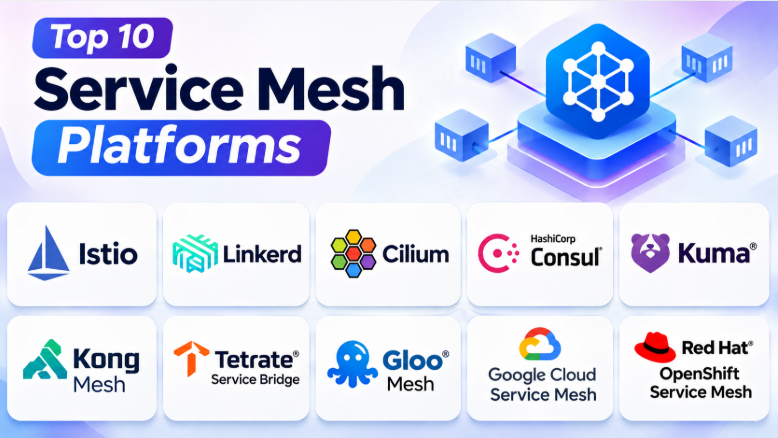
This guide compares ten service mesh platforms and solutions. It explains their features, advantages, limitations, and best uses. It also helps you choose a platform that fits your infrastructure.
What Is a Service Mesh?
A service mesh is a networking layer for applications built from separate services. It manages how those services communicate without requiring teams to write all networking logic into application code.
A service mesh usually has two main parts:
- Control plane: Manages configuration, service identity, certificates, and policies.
- Data plane: Handles the actual traffic between services through proxies or other network components.
For example, an online shopping application may have separate services for payments, products, orders, and user accounts. When these services communicate, the mesh can encrypt traffic and apply access rules.
It can also help teams manage traffic during software updates. A team may send a small share of requests to a new application version before moving all traffic.
Common service mesh capabilities include:
- Mutual TLS (mTLS) encryption.
- Service identity and authentication.
- Traffic routing and load balancing.
- Retries, timeouts, and failure handling.
- Access control between services.
- Metrics and traffic visibility.
- Multi-cluster service communication.
A service mesh does not automatically fix poor application design. Teams must still configure safe retries, timeouts, and failure handling.
Top 10 Service Mesh Platforms
1. Istio
Istio is an open-source service mesh for connecting, securing, and monitoring distributed applications. It is widely used with Kubernetes, but it can also connect virtual machines and other workloads.
Istio uses Envoy proxies as its main data plane in sidecar mode. It also offers Ambient mode, which uses node-level proxies and optional Layer 7 proxies called waypoints. This gives teams another way to add mesh features without placing a sidecar in every application Pod. Istio+1
Key features
- Automatic mutual TLS between meshed services.
- Service identity and access control.
- Traffic routing, retries, and failover rules.
- Canary and gradual traffic releases.
- Metrics, logs, and distributed tracing support.
- Sidecar and Ambient data plane options.
- Support for multi-cluster and VM workloads.
Pros
- Offers a broad set of traffic and security controls.
- Supports different deployment environments.
- Provides flexible routing and policy options.
- Ambient mode offers an alternative to per-Pod sidecars.
- Has a large cloud-native ecosystem.
Cons
- Requires time to learn and operate.
- Advanced policies can increase configuration work.
- Sidecar deployments add proxy resources to workloads.
- Multi-cluster setups need careful network and certificate planning.
Best for: Organizations that need advanced traffic management, service security, and flexible Kubernetes networking.
2. Linkerd
Linkerd is an open-source service mesh focused on secure and observable service communication. It uses a lightweight proxy written in Rust instead of the general-purpose Envoy proxy.
Its control plane manages service discovery, workload identity, and proxy configuration. Its data plane uses small proxies alongside application workloads. Linkerd automatically enables mTLS for communication between meshed Pods. Linkerd+2
Key features
- Automatic mTLS for meshed workloads.
- Lightweight Rust-based proxy.
- Service-level traffic metrics.
- HTTP, HTTP/2, gRPC, and TCP proxying.
- Retries, timeouts, and load balancing.
- Authorization policies.
- Multi-cluster service communication.
Pros
- Focuses on a smaller operational feature set.
- Provides automatic encryption for meshed traffic.
- Uses a proxy designed for service mesh workloads.
- Offers useful service-level visibility.
- Supports Kubernetes-native workflows.
Cons
- Uses sidecar proxies, which consume resources.
- Provides fewer advanced routing options than Istio.
- Does not replace an ingress controller.
- Certificate and trust-anchor rotation need planning.
Best for: Teams that want service-to-service security and observability without adopting a highly complex mesh.
3. Cilium Service Mesh
Cilium combines Kubernetes networking, network security, and observability with service mesh capabilities. It uses eBPF to handle network processing inside the Linux kernel.
For application-layer traffic, Cilium can use Envoy. This allows it to support features such as HTTP-aware routing and policy enforcement without relying on a sidecar proxy for every workload. Cilium 1.20.5 documentation+1
Cilium is different from a traditional service mesh. It is also a Container Network Interface (CNI) solution. That means adopting its mesh features can involve changing the cluster networking layer.
Key features
- eBPF-based network processing.
- Kubernetes network policies.
- Service load balancing.
- Application-layer traffic controls through Envoy.
- Network and service observability.
- Ingress and Gateway API capabilities.
- Integration with Kubernetes networking.
Pros
- Combines networking and mesh capabilities.
- Avoids a sidecar for many network functions.
- Provides detailed network visibility.
- Supports Kubernetes network security policies.
- Useful for teams adopting eBPF-based infrastructure.
Cons
- Requires careful CNI planning.
- Changes to cluster networking can affect existing systems.
- Some Layer 7 features still rely on Envoy.
- Teams need knowledge of Kubernetes networking and eBPF.
Best for: Kubernetes teams that want networking, security, and service mesh capabilities within one platform.
4. HashiCorp Consul Service Mesh
HashiCorp Consul is a service networking platform with service discovery, service mesh, and traffic management features. It can connect services across Kubernetes, virtual machines, and different cloud environments.
Consul uses a central service registry to track services and their network locations. Its service mesh uses Envoy sidecar proxies to manage service communication. It also supports mTLS and identity-based access controls. HashiCorp Developer+2
This makes Consul useful for organizations that run applications on both containers and traditional infrastructure.
Key features
- Service discovery and registration.
- Service-to-service mTLS.
- Envoy proxy integration.
- Identity-based access policies.
- Traffic routing and service health checks.
- Kubernetes and VM connectivity.
- Multi-cloud and hybrid infrastructure support.
Pros
- Supports more than Kubernetes workloads.
- Helps connect services across different runtimes.
- Combines service discovery with mesh capabilities.
- Provides a central networking control plane.
- Supports gradual application modernization.
Cons
- Adds another control plane to operate.
- Requires planning for service registration and identity.
- Sidecar proxies need resources.
- Commercial features and support depend on the selected Consul offering.
Best for: Organizations connecting microservices across Kubernetes, virtual machines, and hybrid infrastructure.
5. Kuma
Kuma is an open-source service mesh control plane maintained by Kong. It supports Kubernetes, virtual machines, and bare-metal environments.
Kuma uses Envoy proxies to manage service traffic. Its multi-zone architecture lets teams connect services across different clusters, clouds, and data centers. It also supports multiple independent meshes managed through one control plane. Kuma+1
This makes Kuma useful when services run in more than one type of environment.
Key features
- Kubernetes and VM support.
- Envoy-based data plane.
- Multi-zone service mesh architecture.
- Multiple mesh environments.
- Traffic and security policies.
- Service discovery and connectivity.
- Kubernetes resources and REST API support.
Pros
- Supports mixed infrastructure environments.
- Offers multi-zone connectivity.
- Provides a Kubernetes-native operating model.
- Supports multiple meshes through one control plane.
- Uses the established Envoy proxy.
Cons
- Envoy introduces proxy management work.
- Multi-zone networking needs careful design.
- Teams must learn Kuma’s policy and zone model.
- Advanced environments may require additional operational planning.
Best for: Teams that need one service mesh across Kubernetes clusters, virtual machines, and data centers.
6. Kong Mesh
Kong Mesh is a commercial service mesh built around the open-source Kuma project. It helps teams secure, connect, and observe services across Kubernetes and virtual machines.
Kong Mesh uses a global control plane and zone control planes. Envoy-based proxies handle application traffic and apply mesh policies. Its multi-zone design supports services across different clusters, clouds, and data centers. Kong Docs+2
Kong Mesh is closely related to Kuma, but its commercial packaging and management options make it a separate buying choice.
Key features
- Central and zone-based control planes.
- Envoy-based data plane.
- Service identity and mTLS.
- Traffic and access policies.
- Multi-zone connectivity.
- Kubernetes and Universal deployment modes.
- Hosted global control plane option through Konnect.
Pros
- Supports Kubernetes and VM workloads.
- Offers a structured multi-zone architecture.
- Provides commercial management options.
- Helps apply consistent policies across environments.
- Builds on the Kuma ecosystem.
Cons
- Adds commercial licensing considerations.
- Zone connectivity requires network planning.
- Envoy proxy operations remain important.
- May be excessive for a small single-cluster setup.
Best for: Enterprises that need commercial service mesh management across hybrid and multi-cloud environments.
7. Tetrate Service Bridge
Tetrate Service Bridge (TSB) is an enterprise service mesh management platform built around Istio. It helps organizations manage service connectivity, security, and traffic across multiple Kubernetes clusters.
TSB adds a management layer above the mesh control planes. Teams can organize access through workspaces and groups. It also supports cross-cluster communication, traffic policies, and service observability. Service Bridge+2
TSB is especially relevant when a company needs more centralized control than a basic Istio installation provides.
Key features
- Centralized service mesh management.
- Istio-based service connectivity.
- Multi-cluster traffic management.
- Role-based access control.
- mTLS and service authorization.
- Global service visibility.
- GitOps-based configuration workflows.
Pros
- Adds management features around Istio.
- Supports multi-cluster service communication.
- Helps organize policies across teams.
- Offers a central management plane.
- Supports Kubernetes and VM modernization workflows.
Cons
- Adds another platform layer to learn.
- Requires planning for management and workload clusters.
- Commercial licensing needs review.
- Teams still need Istio knowledge.
Best for: Large organizations that need centralized Istio management, multi-cluster networking, and team-level governance.
8. Gloo Mesh
Gloo Mesh from Solo.io provides management and networking capabilities for Istio-based service meshes. It focuses on multi-cluster and multi-mesh environments.
It can help teams connect services across clusters, manage traffic policies, and organize service mesh operations. Gloo’s documentation describes a management plane that coordinates workload clusters and their mesh components. Gloo Mesh Gateway docs+2
Gloo Mesh should not be confused with Gloo Mesh Gateway. The gateway product focuses on gateway and traffic entry capabilities, while the broader mesh management offering provides additional multi-cluster and policy functions.
Key features
- Istio-based service mesh management.
- Multi-cluster service connectivity.
- Centralized policy configuration.
- Traffic routing between clusters.
- Management and visibility for mesh environments.
- Integration with Gloo Gateway components.
Pros
- Helps manage complex Istio environments.
- Supports cross-cluster routing.
- Provides central configuration workflows.
- Useful for organizations with several workload clusters.
- Can combine mesh and gateway capabilities.
Cons
- Some management capabilities require a commercial license.
- Adds a management plane to the architecture.
- Teams need knowledge of Istio and Gloo concepts.
- The product’s exact scope depends on the selected edition.
Best for: Platform teams that need centralized Istio management and service connectivity across multiple clusters.
9. Google Cloud Service Mesh
Google Cloud Service Mesh is Google’s service mesh offering for securing, managing, and observing service communication. It supports workloads on Google Cloud and supported GKE environments.
It uses Istio APIs for Kubernetes workloads. Google also offers a managed control plane and, for supported GKE deployments, managed data plane options. This can reduce the work needed to maintain mesh components. Google Cloud Documentation+2
Google Cloud Service Mesh is useful for teams that want service mesh capabilities without operating every control-plane component themselves.
Key features
- Managed service mesh options.
- Istio API support for Kubernetes workloads.
- Service-to-service security.
- Traffic management and load balancing.
- Metrics and service observability.
- Support for GKE and selected VM environments.
- Integration with Google Cloud services.
Pros
- Reduces control-plane maintenance in managed deployments.
- Fits existing Google Cloud environments.
- Supports traffic management and security policies.
- Provides service insights through Google Cloud tools.
- Uses familiar Istio APIs for supported Kubernetes workloads.
Cons
- Best fit is within supported Google Cloud environments.
- Managed and in-cluster options have different responsibilities.
- Some control-plane implementations are deprecated and require modernization.
- Teams should verify regional, cluster, and feature support before adoption.
Best for: Organizations running GKE or Google Cloud workloads that want managed service mesh operations.
10. Red Hat OpenShift Service Mesh
Red Hat OpenShift Service Mesh provides service mesh capabilities within the OpenShift platform. It is based on Istio and uses Envoy proxies to manage service communication.
It helps teams connect, secure, and monitor microservices. Its capabilities include service discovery, load balancing, authentication, traffic control, and monitoring. Red Hat Documentation+1
This offering is most relevant to organizations already using OpenShift. It provides a supported way to bring service mesh functions into that platform environment.
Key features
- Istio-based service mesh architecture.
- Envoy sidecar proxies.
- Service-to-service authentication.
- Traffic management and routing.
- Monitoring and metrics.
- Access control and policy management.
- Integration with OpenShift operations.
Pros
- Fits existing OpenShift environments.
- Builds on the Istio ecosystem.
- Offers enterprise platform integration.
- Helps manage microservice traffic and security.
- Provides a supported commercial environment.
Cons
- Strongest fit is within OpenShift.
- Adds proxy and control-plane resources.
- Requires knowledge of both OpenShift and service mesh concepts.
- Version and feature support depend on the selected OpenShift release.
Best for: Enterprises running OpenShift that need integrated service mesh capabilities and commercial support.
Service Mesh Platforms Comparison
| Platform | Main technology | Deployment focus | Main strength |
|---|---|---|---|
| Istio | Envoy, sidecar and Ambient modes | Kubernetes, VMs, multi-cluster | Advanced traffic and security controls |
| Linkerd | Rust-based micro-proxy | Kubernetes | Simpler service mesh operations |
| Cilium Service Mesh | eBPF and Envoy | Kubernetes | Integrated networking and mesh |
| Consul | Envoy and service registry | Kubernetes, VMs, cloud | Hybrid service networking |
| Kuma | Envoy | Kubernetes, VMs, bare metal | Multi-zone mesh |
| Kong Mesh | Kuma and Envoy | Kubernetes and Universal | Commercial multi-zone management |
| Tetrate Service Bridge | Istio and Envoy | Multi-cluster Kubernetes and VMs | Centralized Istio governance |
| Gloo Mesh | Istio and Envoy | Multi-cluster Kubernetes | Mesh management and routing |
| Google Cloud Service Mesh | Istio APIs and managed control plane | Google Cloud and supported GKE | Managed mesh operations |
| Red Hat OpenShift Service Mesh | Istio and Envoy | OpenShift | Enterprise OpenShift integration |
These platforms are not all direct alternatives at the same layer. Istio, Linkerd, Cilium, Consul, and Kuma provide core mesh capabilities. Tetrate, Gloo, Google, Red Hat, and Kong add commercial management, platform integration, or managed operating models.
How to Choose the Right Service Mesh Platform
The best choice depends on your infrastructure and the problems you need to solve.
For advanced traffic control
Choose Istio when you need detailed routing, security policies, traffic splitting, and support for complex service environments.
Its flexibility is useful, but teams should be ready for a larger learning and operating effort.
For simpler Kubernetes service security
Consider Linkerd when your main needs are automatic mTLS, service metrics, and basic traffic reliability.
It provides a focused feature set and a purpose-built proxy. Teams needing extensive routing features may prefer Istio.
For eBPF-based networking
Consider Cilium Service Mesh when you want service mesh capabilities alongside Kubernetes networking and network security.
It is especially relevant when your team is already planning to use Cilium as its CNI.
For Kubernetes and virtual machine environments
Compare Consul and Kuma when your applications run across containers, VMs, and other infrastructure.
Consul combines service discovery with service networking. Kuma provides an Envoy-based mesh with multi-zone support.
For enterprise service mesh management
Evaluate Kong Mesh, Tetrate Service Bridge, and Gloo Mesh when you need commercial management, multi-cluster coordination, or centralized policy control.
Compare their control-plane models, licensing, support, and integration requirements.
For cloud-managed service mesh
Choose Google Cloud Service Mesh when your workloads fit its supported Google Cloud environments and you want Google to manage more of the mesh infrastructure.
For OpenShift environments
Consider Red Hat OpenShift Service Mesh when your organization already uses OpenShift and wants service mesh capabilities within that ecosystem.
Common Service Mesh Implementation Mistakes
A service mesh can improve service communication. However, poor planning can add complexity and increase operational costs.
1. Adding a Mesh Without a Clear Need
Not every application needs a service mesh. A small application with a few services may work well with normal Kubernetes networking.
Start with a clear need, such as service-to-service encryption, identity-based access, or advanced traffic control.
2. Ignoring Proxy Resource Costs
Sidecar proxies use CPU and memory. Their resource needs grow as more workloads join the mesh.
Measure resource use with your own traffic patterns. Do not assume that every architecture has the same overhead.
3. Enabling Retries Without Checking Application Behavior
Retries can help when a request fails temporarily. But careless retry settings can increase traffic during an outage.
Use timeouts, retry limits, and backoff settings. Check whether an application operation is safe to repeat.
4. Treating mTLS as Complete Security
mTLS encrypts communication and verifies workload identity. It does not automatically decide whether every request is allowed.
Create authorization policies that define which services can communicate.
5. Ignoring Certificate Management
Service meshes depend on certificates and trust relationships. Expired certificates or poor rotation plans can disrupt communication.
Plan certificate issuance, rotation, trust anchors, and recovery before production use.
6. Forgetting Observability Requirements
A mesh can generate traffic metrics and traces. However, teams still need monitoring systems and useful dashboards.
Plan how to collect, store, and review telemetry. Also consider the cost of retaining large volumes of data.
Questions to Ask Before Selecting a Service Mesh
Use these questions during technical reviews and product demonstrations:
- Does the platform support our Kubernetes distribution?
- Can it connect virtual machines and other workloads?
- Does it use sidecars, node-level proxies, or another data plane?
- How does it issue and rotate workload certificates?
- Can we enforce identity-based access policies?
- Does it support multi-cluster communication?
- Which protocols and traffic policies does it support?
- How does it collect metrics and traces?
- What happens when the control plane becomes unavailable?
- Which features need a paid subscription?
- How much CPU and memory do proxies need under our workload?
- Can we migrate away without rewriting application code?
These questions help reveal the operational effort behind each product. They also help teams avoid choosing a platform based only on its feature list.
Final Thoughts
Service mesh platforms help teams manage the communication between microservices. They can add encryption, identity, traffic control, and useful visibility without placing every networking task inside application code.
Istio suits teams that need extensive control. Linkerd offers a focused approach to service security and observability. Cilium combines mesh features with eBPF-based networking. Consul and Kuma help connect services across different infrastructure types.
For enterprise management, Kong Mesh, Tetrate Service Bridge, and Gloo Mesh offer additional control and multi-cluster capabilities. Google Cloud Service Mesh and Red Hat OpenShift Service Mesh fit their respective cloud and platform ecosystems.
Before choosing, test one real application. Measure proxy overhead, check certificate rotation, apply access policies, and test failure behavior. A service mesh should solve a clear networking problem, not become another layer your team struggles to maintain.


Leave a Reply
You must be logged in to post a comment.