Introduction
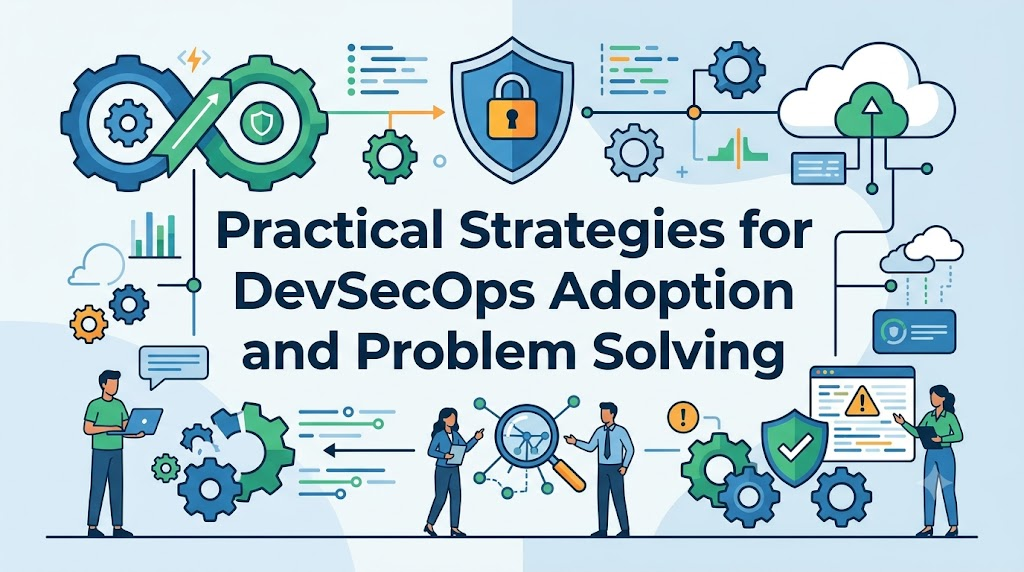
In today’s software-driven economy, DevSecOps has evolved from an aspirational goal to an operational necessity, yet many organizations struggle to bridge the gap between rapid delivery and robust security. Despite significant investment in security tooling, the persistence of vulnerabilities in production highlights that true transformation is not merely about procuring software; it is about embedding security into the culture, processes, and pipelines of an engineering organization. The challenge is often dual-faceted: technical complexity in modern CI/CD integration and cultural resistance to shared responsibility. Consider a common enterprise failure where a team integrates advanced automated scanning into their pipeline, only to have developers consistently ignore the resulting alerts due to high false-positive rates and a lack of clear accountability, eventually leading to a critical production breach. Success in this domain requires more than just tools—it demands disciplined execution and standardized practices, which is why engineering leaders increasingly turn to DevOpsSchool to equip their teams with the foundational knowledge and practical strategies necessary to navigate these cultural and technical hurdles while building sustainable, secure software delivery pipelines.
What Is DevSecOps in Real-World Context?
At its core, DevSecOps is the practice of integrating security measures and testing methodologies into the earliest stages of the software development lifecycle (SDLC). It is the realization that security is not a “gate” at the end of the process, but a continuous activity.
The Shift-Left Paradigm
“Shifting left” means moving security testing as early as possible. If a vulnerability is found while a developer is writing code on their local machine, it costs almost nothing to fix. If it is found after deployment to production, the cost—in terms of rework, downtime, and potential breach damage—is massive.
Security as Code
In a DevSecOps environment, security policies, configurations, and compliance requirements are treated as code. This allows for version control, automated testing, and repeatable deployments. By automating security, we remove human error from the equation, ensuring that every deployment adheres to the same security standards without slowing down the release cycle.
Why DevSecOps Is Difficult to Implement
Implementing DevSecOps is fundamentally difficult because it demands a transformation of human behavior and organizational structure. It is not as simple as installing a plugin.
Cultural Resistance
Organizations are often siloed. Security teams are trained to say “no” to mitigate risk, while development teams are measured by the speed at which they deliver features. This inherent conflict creates friction.
Tool Complexity
The modern DevSecOps toolchain is vast—SAST, DAST, IAST, SCA, container scanning, secret management, and compliance automation. Integrating these into a cohesive pipeline that doesn’t overwhelm developers is a major architectural challenge.
Legacy System Limitations
Most organizations are not building from scratch. They are managing monoliths, legacy databases, and antiquated infrastructure that were never designed for automation or frequent, secure deployments.
Top DevSecOps Challenges in Modern Organizations
To succeed, leaders must anticipate the following hurdles that appear in almost every enterprise transformation project.
| Challenge Area | Primary Issue | Impact |
| Culture | Siloed teams and “blame culture” | Slow adoption and security friction |
| Skills | Lack of security knowledge in DevOps teams | High rate of “false positive” management |
| CI/CD Pipeline | Gatekeeping vs. Automation | Deployment bottlenecks and bypasses |
| Tooling | Tool sprawl and data silos | Poor observability and alert fatigue |
| Compliance | Static/Manual compliance checks | Inability to prove audit readiness |
| Legacy Systems | Hard-coded secrets and monoliths | High technical debt and risk |
Challenge 1: Cultural Resistance to DevSecOps
The most significant barrier is not technical; it is psychological. Security has traditionally been viewed as an external auditor. When you ask a developer to take ownership of security, it can feel like adding an extra, unwanted task to an already full plate.
The Solution: Security Champions Model
We must change the narrative from “Security is the Security Team’s problem” to “Security is a quality metric.”
- Implement Security Champions: Identify one developer in every squad who has a passion for security. They act as the liaison between the security office and the dev team, scaling security expertise.
- Shared KPIs: Align the goals of the security team and the engineering team. Both should be responsible for the security posture of the software.
Challenge 2: Skill Gaps in DevSecOps Teams
DevOps engineers often lack deep security knowledge, and security professionals often lack infrastructure-as-code (IaC) or scripting experience. This mismatch leads to ineffective tool implementation.
The Solution: Continuous Training and Hands-On Labs
- Cross-Functional Training: Devs need to learn about common vulnerabilities (OWASP Top 10), and security teams need to learn how to write CI/CD pipelines.
- Hands-on Labs: Avoid theory-only training. Use sandboxed environments where engineers can simulate attacks and remediate them in real-time. This practical approach is the cornerstone of modern engineering enablement.
Challenge 3: CI/CD Security Integration Issues
Many teams attempt to shoehorn security into the pipeline by simply adding a manual scan step. This effectively recreates the “bottleneck” that DevOps was designed to eliminate.
The Solution: Automated Policy-as-Code
- Fail-Fast Mechanisms: Configure pipelines to break only on high-severity, verifiable vulnerabilities, not on every low-level warning.
- Policy-as-Code: Use tools that allow you to codify compliance rules (e.g., “no public S3 buckets”) and run these checks automatically before deployment. If the code violates the policy, the build fails automatically, providing immediate feedback to the developer.
Challenge 4: Tool Complexity and Integration Issues
“Alert fatigue” is real. If a team receives 500 alerts from a security scan, they will eventually ignore them all.
The Solution: Unified Toolchain Strategy
- Platform Engineering Approach: Build an internal security platform that abstracts complexity. Developers shouldn’t have to configure five different security tools. They should interact with a single security API or interface.
- Consolidation: Audit the toolchain. Do you have three different tools scanning for vulnerabilities? Consolidate them to reduce the noise and improve the quality of data.
Challenge 5: Compliance and Governance Issues
Compliance is often treated as a quarterly or annual event, but in a world of daily deployments, this approach is obsolete.
The Solution: Automated Compliance
- Continuous Compliance: Move from “Compliance as a point-in-time check” to “Compliance as code.” Ensure that the pipeline automatically generates audit logs, SBOMs (Software Bill of Materials), and test results for every release. This creates a real-time audit trail.
Challenge 6: Legacy System Limitations
Modernizing legacy applications is complex because they lack APIs for automation.
The Solution: The Strangler Fig Pattern
- Incremental Modernization: Do not try to re-architect the whole system. Wrap the legacy system in secure API gateways and slowly migrate functions to cloud-native microservices that support modern DevSecOps pipelines. This allows for improved security on new features while maintaining the existing core.
Real-World Example: DevSecOps Failure Scenario
A financial services firm implemented automated scanning in their CI/CD pipeline. However, they allowed developers to “override” scan results if they felt the vulnerability was not critical. Because there was no centralized governance, developers used this override function for 80% of alerts to save time. When an attacker exploited a known vulnerability in an open-source library that had been “overridden” in the pipeline, the system was compromised. The failure was not the tool; it was the lack of enforced policy and accountability.
The Fix
The firm moved to a centralized policy engine where overrides required secondary approval from a Security Champion. They also implemented an automated “deny-list” for specific high-risk library versions, preventing them from being pulled into the build environment entirely.
Real-World Example: Successful DevSecOps Implementation
An e-commerce platform integrated “Security as Code” from the start. They utilized pre-approved Terraform modules for cloud infrastructure. Developers could only deploy infrastructure using these modules, which were hard-coded to be secure (e.g., encrypted disks, private subnets). This removed the need for manual security reviews of infrastructure, effectively shifting security left without creating a bottleneck. The security team focused on high-level architecture reviews rather than checking every resource configuration.
Best Practices to Overcome DevSecOps Challenges
- Start Security Early (Shift-Left): Integrate security checks into the IDE (Integrated Development Environment) so developers see vulnerabilities as they write code.
- Automate Everything Possible: If a security check is manual, it will eventually be skipped.
- Reduce Tool Fragmentation: Favor integrated security suites over disparate, disconnected tools.
- Train Engineering Teams: Invest in continuous education; security is a shared responsibility.
- Implement Continuous Monitoring: DevSecOps does not end at deployment. Monitor production for anomalies and feed that data back into the pipeline.
Role of DevOpsSchool in DevSecOps Learning
For teams and individuals struggling to navigate these complexities, education is the first step. Understanding the theoretical foundations and practical applications of secure pipelines is what differentiates an effective architect from a novice. DevOpsSchool provides a structured path for professionals to learn these concepts. By focusing on the integration of secure CI/CD pipelines, cloud security practices, and the development of a practical engineering mindset, learners can gain the exposure necessary to implement these strategies effectively in their own organizations. It is about understanding the “why” behind the “how.”
Industries Facing DevSecOps Challenges
- Banking & Finance: High regulatory pressure and strict compliance mandates (PCI-DSS, SOC2) make automation and auditability critical.
- Healthcare Systems: Handling sensitive patient data requires robust encryption and access controls, often on top of aging infrastructure.
- SaaS Platforms: The need for rapid feature deployment often clashes with the need for rigorous security testing.
- E-Commerce: Frequent changes to public-facing applications create massive attack surfaces.
- Telecom: Managing massive distributed networks requires high-level automation to ensure availability and security.
- Government Systems: Security is paramount, often requiring complex integration with legacy standards and strict data sovereignty rules.
Future of DevSecOps
The future of DevSecOps lies in intelligence and self-healing systems.
- AI-Powered Automation: Artificial intelligence will soon be used to triage security alerts automatically, distinguishing true positives from noise with high accuracy.
- Self-Healing Pipelines: Future CI/CD pipelines will not just detect misconfigurations; they will automatically patch them or roll back to a known secure state.
- Policy-as-Code Evolution: Governance will become fully embedded in the IDE, where developers will receive real-time guidance on security policies before they even commit a line of code.
FAQs
- What are the primary DevSecOps challenges for large enterprises?The main challenges are cultural silos, legacy infrastructure that prevents automation, and the difficulty of integrating security tools without slowing down deployment velocity.
- Why is DevSecOps difficult to adopt?It requires a change in culture, where development teams take ownership of security, and security teams act as enablers rather than gatekeepers.
- How do you integrate security into CI/CD pipelines without slowing down builds?Use asynchronous scanning for heavy processes and enforce policy-as-code for fast, automated gatekeeping.
- What is shift-left security?It is the practice of conducting security testing and analysis as early as possible in the development lifecycle, typically during the coding and build phases.
- What are common DevSecOps failures to avoid?Ignoring cultural alignment, relying solely on tooling, and creating manual security bottlenecks in the deployment process.
- How can teams improve their DevSecOps maturity?By implementing a Security Champions program, automating compliance checks, and investing in continuous training for engineers.
- What tools are essential for a DevSecOps toolchain?Essential tools include SAST (Static Analysis), DAST (Dynamic Analysis), SCA (Software Composition Analysis), and Secret Management tools.
- How do you solve pipeline security bottlenecks?Move away from manual approval processes and replace them with automated security gates that only block builds based on verified, high-severity risks.
- What is the role of a Security Champion?They act as a bridge between security and engineering, advocating for secure coding practices within their specific development squad.
- How does policy-as-code help in DevSecOps?It allows security teams to codify compliance requirements, enabling the pipeline to automatically validate configurations against these rules.
- Why do developers resist DevSecOps?Often due to the perception that security tools add friction, create “false positives,” and delay sprint velocity.
- Can DevSecOps be applied to legacy systems?Yes, by using the Strangler Fig pattern to wrap legacy services in secure APIs and gradually migrating functionality to modern, automated pipelines.
- How do you handle alert fatigue in DevSecOps?Prioritize alerts by business risk and suppress low-priority/false-positive warnings to ensure the team focuses on genuine threats.
- What is the difference between DevOps and DevSecOps?DevOps focuses on the speed and reliability of software delivery, while DevSecOps incorporates security practices directly into those delivery processes.
- How do we measure DevSecOps success?Measure metrics like “Mean Time to Remediate” (MTTR) vulnerabilities, the percentage of automated security tests, and the frequency of security-related deployment failures.
Final Thoughts
DevSecOps is a journey, not a destination. It requires the right balance of culture, automation, and discipline. Do not expect to transform your entire organization overnight. Start small, identify the highest-risk areas in your pipeline, and apply automation there first.
Most importantly, foster an environment where security is seen as a key component of software quality rather than an external obstacle. Challenges are inevitable during adoption, but with a focus on continuous improvement and team collaboration, they are entirely solvable. Security must be built into every stage of the delivery lifecycle to be effective. Keep your processes lean, your policies clear, and your team educated.







Leave a Reply
You must be logged in to post a comment.