Introduction
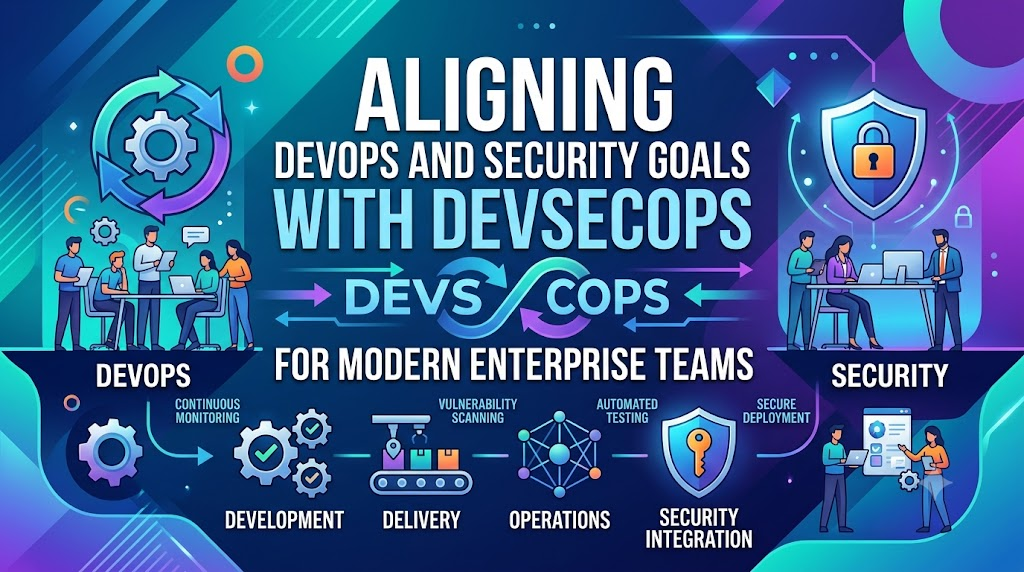
In the modern digital landscape, organizations face immense pressure to accelerate software delivery while maintaining rigorous security standards. Traditionally, security operated as a final gatekeeper, creating friction, delays, and an adversarial divide between development and operations teams. DevSecOps resolves this conflict by embedding automated security practices into every phase of the software lifecycle, transforming security from a bottleneck into a shared responsibility. By aligning team goals and integrating security early, enterprises can achieve rapid innovation without compromising resilience. To master these methodologies and bridge the gap between speed and protection, structured professional training from platforms like DevOpsSchool provides engineers and organizations with the practical expertise needed for secure software delivery.
What Is DevSecOps?
DevSecOps is the practice of integrating security testing, compliance checks, and risk management into every phase of the software development lifecycle, from initial design through coding, testing, deployment, and ongoing maintenance.
Evolution from DevOps to DevSecOps
DevOps successfully unified development and operations, enabling continuous integration and continuous deployment. However, it initially left security as an external process. As cloud adoption soared and cyber attacks grew more sophisticated, treating security as an afterthought proved unsustainable. DevSecOps evolved as the natural extension of DevOps, ensuring that security scales at the same velocity as code deployment.
Security as a Shared Responsibility
In a DevSecOps model, security is no longer owned exclusively by a siloed security team. Instead, developers write secure code, operations engineers maintain secure infrastructure, and security professionals establish policies, guardrails, and automated validation frameworks. This collaborative approach ensures that security awareness permeates every layer of the engineering organization.
Why DevOps and Security Goals Need Alignment
Aligning the objectives of development, operations, and security is essential for navigating the complexities of modern software engineering. When these teams operate with conflicting priorities, operational friction and security vulnerabilities inevitably arise.
Faster Software Releases
Modern businesses depend on rapid feature delivery to maintain competitive advantage. Traditional security reviews can take weeks, stalling deployment pipelines. Aligning security goals with DevOps ensures that security validation happens continuously and automatically, allowing rapid releases without compromising safety.
Increasing Cyber Threats
Attack vectors are expanding rapidly, targeting application logic, open-source dependencies, cloud configurations, and CI/CD pipelines. Early alignment ensures that vulnerabilities are caught and neutralized before malicious actors can exploit them in production environments.
Cloud Complexity
Modern applications run on distributed cloud infrastructure, microservices, and containerized clusters. The complexity of these environments demands automated security controls that can adapt to dynamic resource allocation.
Compliance Requirements
Regulatory frameworks such as GDPR, HIPAA, PCI-DSS, and SOC 2 require continuous compliance monitoring. Aligning security and DevOps goals embeds compliance checks directly into automation pipelines, reducing audit stress and manual overhead.
Traditional Security Approach vs DevSecOps Approach
| Area | Traditional Security | DevSecOps Security |
| Security timing | Applied at the end of the development cycle (gatekeeping). | Integrated from day one and throughout the entire lifecycle (shift-left). |
| Team involvement | Handled exclusively by a siloed security team. | Shared responsibility across developers, operations, and security. |
| Testing approach | Manual audits and periodic penetration testing. | Automated scanning integrated into CI/CD pipelines. |
| Automation | Minimal automation; heavy reliance on manual approvals. | High automation for vulnerability checks, policy enforcement, and reporting. |
| Deployment impact | Causes severe bottlenecks and delays release schedules. | Enables continuous, frictionless, and secure deployments. |
| Risk management | Reactive remediation after vulnerabilities are found in production. | Proactive prevention and rapid remediation during development. |
Core Principles of DevSecOps
| Principle | Purpose | Business Benefit |
| Shared responsibility | Distributes security accountability across all engineering teams. | Eliminates blame culture and fosters proactive security habits. |
| Security automation | Embeds automated tests and checks directly into pipelines. | Reduces human error and speeds up vulnerability detection. |
| Continuous testing | Tests code, dependencies, and infrastructure at every stage. | Prevents defective builds from moving down the pipeline. |
| Early vulnerability detection | Identifies and resolves security flaws during the coding phase. | Lowers the financial and operational cost of remediation. |
| Collaboration | Unites dev, ops, and security under common KPIs. | Improves organizational efficiency and morale. |
| Continuous improvement | Iterates on security policies based on threat intelligence and metrics. | Strengthens long-term enterprise resilience. |
Principle 1: Security as Shared Responsibility
The foundation of DevSecOps rests on the principle that security is everyone’s job. In traditional organizations, developers assumed security was the security team’s problem, while operations focused solely on uptime.
By fostering a collaborative environment, organizations remove security ownership barriers. Developers receive security training to write clean, robust code, operations teams configure hardening baselines for infrastructure, and security engineers design automated guardrails that guide development rather than block it.
Principle 2: Shift-Left Security
Shift-left security means moving security activities as early as possible in the software development lifecycle. Instead of finding vulnerabilities during pre-production testing or after release, teams identify and fix them while the code is still being written on a developer’s workstation.
Key Practices in Shift-Left
- Code Scanning: Using automated linters and scanners inside integrated development environments.
- Dependency Checks: Verifying third-party libraries for known vulnerabilities before importing them.
- Security Reviews: Conducting lightweight threat modeling during architectural design discussions.
Principle 3: Security Automation in CI/CD Pipelines
Automation is the engine that makes DevSecOps scalable. Manual security reviews cannot keep pace with modern deployment frequencies. By embedding automated security checks into CI/CD pipelines, organizations ensure every code commit is rigorously tested.
Essential Pipeline Security Tools
- Static Application Security Testing (SAST): Analyzes source code for vulnerabilities without executing it.
- Dynamic Application Security Testing (DAST): Evaluates running applications by simulating external attacks.
- Software Composition Analysis (SCA): Scans open-source libraries and third-party dependencies for known Common Vulnerabilities and Exposures.
Principle 4: Secure Infrastructure as Code
Modern infrastructure is defined and provisioned using code, such as Terraform, AWS CloudFormation, or Ansible. Securing this code is just as important as securing application source code.
Infrastructure Security Practices
- Terraform Security: Scanning infrastructure templates for misconfigurations before deployment.
- Configuration Validation: Enforcing policy-as-code frameworks to prevent insecure cloud settings.
- Automated Compliance Checks: Verifying that infrastructure meets industry benchmarks before provisioning.
Principle 5: Continuous Monitoring and Threat Detection
Even with robust preventive controls, sophisticated threats can emerge in production. Continuous monitoring provides real-time visibility into application behavior, network traffic, and system logs.
Key Monitoring Components
- SIEM Platforms: Aggregating logs from multiple sources to detect abnormal activity.
- Monitoring Tools: Tracking performance metrics, error rates, and resource utilization.
- Threat Analytics: Using automated alerts to flag potential security incidents instantly.
Principle 6: Secure Container and Kubernetes Practices
Containers and orchestration platforms like Kubernetes form the backbone of modern cloud-native architectures. Securing these environments requires specialized controls.
Container Security Measures
- Image Scanning: Inspecting base container images for vulnerabilities and outdated packages.
- Secrets Management: Securing API keys, database credentials, and certificates using dedicated vault solutions.
- Access Control: Implementing strict Role-Based Access Control and network policies within Kubernetes clusters.
Aligning DevOps and Security Team Goals
Misalignment between teams often stems from conflicting performance metrics. Developers are measured on feature delivery speed, operators on system stability, and security teams on risk mitigation. DevSecOps harmonizes these goals.
| Team | Traditional Goal | DevSecOps Goal |
| Development | Ship features as fast as possible. | Ship secure features efficiently without compromising velocity. |
| Operations | Maintain system uptime and stability. | Maintain secure, resilient, and compliant infrastructure. |
| Security | Block risky code and enforce strict compliance. | Enable safe innovation through automated security guardrails. |
| Business | Increase revenue and market share. | Grow sustainably while protecting customer data and brand reputation. |
DevSecOps Implementation Framework
Implementing DevSecOps requires a structured, step-by-step approach rather than an overnight overhaul.
Step 1: Build Security Culture
Encourage open communication, provide continuous security training, and eliminate the blame culture when vulnerabilities are discovered.
Step 2: Assess Current Security Practices
Evaluate existing workflows, identify security bottlenecks, and map out where manual processes slow down delivery.
Step 3: Integrate Security Tools
Introduce automated security testing tools into existing version control systems and CI/CD pipelines gradually.
Step 4: Automate Security Testing
Configure SAST, DAST, and SCA tools to run automatically on every code commit and pull request.
Step 5: Monitor and Improve Continuously
Establish feedback loops, track security metrics, and refine policies based on post-incident reviews and threat intelligence.
DevSecOps Tools Ecosystem
| Category | Tools | Purpose |
| Code Security | SonarQube, Semgrep, Checkmarx | Perform static code analysis and identify coding flaws. |
| CI/CD Security | GitHub Actions, GitLab CI, Jenkins | Automate build, test, and deployment workflows. |
| Container Security | Trivy, Aqua Security, Prisma Cloud | Scan container images and Kubernetes manifests for vulnerabilities. |
| Cloud Security | Checkov, tfsec, Cloud Custodian | Audit Infrastructure as Code and cloud provider settings. |
| Monitoring | Prometheus, Grafana, Datadog | Track system performance, logs, and security alerts. |
| Compliance | Open Policy Agent (OPA), Bridgecrew | Enforce policy-as-code and automated compliance rules. |
Real-World DevSecOps Workflow Example
- Developer Writes Code: A developer writes feature code and commits it to a feature branch in version control.
- Code Enters Version Control: A pull request is opened, triggering automated CI pipeline jobs.
- CI Pipeline Runs Security Scans: SAST and SCA tools automatically scan the modified code and its dependencies.
- Vulnerabilities Are Detected Early: If a vulnerability or compliance violation is found, the build fails and provides actionable feedback to the developer.
- Secure Build Is Created: Once all automated security checks pass successfully, the code is merged into the main branch.
- Application Is Deployed: The artifact is packaged into a secure container and deployed automatically to staging or production environments.
- Continuous Monitoring Begins: Runtime security tools and SIEM platforms monitor the application for anomalies, ensuring ongoing protection.
Benefits of Aligning DevOps and Security Goals
- Faster Secure Releases: Automated testing eliminates manual approval bottlenecks, allowing rapid and safe deployments.
- Reduced Vulnerabilities: Catching issues early in the development cycle prevents critical bugs from reaching production.
- Better Compliance: Continuous automated auditing ensures adherence to industry regulations with minimal administrative overhead.
- Improved Collaboration: Shared goals break down traditional silos, creating a unified engineering culture.
- Lower Operational Risk: Proactive security practices minimize the likelihood of costly security breaches and downtime.
- Better Customer Trust: Delivering secure applications consistently enhances brand reputation and customer confidence.
Common Challenges in DevSecOps Adoption
Security Culture Resistance
Transitioning from traditional gated security to a collaborative model can face pushback from teams accustomed to established habits. Solution: Invest in regular training sessions and demonstrate how security automation makes daily engineering tasks easier.
Lack of Skills
Teams may lack proficiency in modern cloud security and DevSecOps tooling. Solution: Provide structured learning paths and hands-on workshops to upskill existing engineering talent.
Tool Complexity
Introducing too many complex security tools can overwhelm engineers and cause alert fatigue. Solution: Integrate lightweight tools gradually, focusing on high-value checks first.
Poor Communication
Misalignment between security mandates and development velocity creates friction. Solution: Establish clear Key Performance Indicators and regular cross-functional syncs.
Legacy Systems
Older monolithic applications often lack support for modern automated security tooling. Solution: Apply strangler-fig patterns to refactor legacy components while applying perimeter security wrappers.
Best Practices for Successful DevSecOps Implementation
- Train teams continuously on secure coding standards and modern security frameworks.
- Automate security checks wherever possible to remove human error and speed up feedback loops.
- Use actionable security metrics to track vulnerability remediation times and pipeline efficiency.
- Integrate security early in the development lifecycle rather than treating it as a final hurdle.
- Improve continuously by reviewing security incidents and updating automation guardrails.
- Maintain clear documentation for security policies, incident response plans, and pipeline configurations.
DevSecOps Skills Required for Modern Engineers
- DevOps Skills: Proficiency in CI/CD pipeline configuration, version control, and automation scripting.
- Security Fundamentals: Understanding OWASP Top 10 vulnerabilities, cryptography, and secure authentication mechanisms.
- Cloud Security: Knowledge of cloud provider security models, IAM policies, and secure network design.
- Automation: Ability to write infrastructure as code and configure automated testing tools.
- Kubernetes Security: Expertise in container hardening, network policies, and cluster access controls.
- Monitoring: Familiarity with logging systems, metrics collection, and threat detection platforms.
Career Opportunities in DevSecOps
The demand for skilled DevSecOps professionals continues to surge as enterprises accelerate their cloud transformations. Key roles include:
- DevSecOps Engineer: Bridges development, operations, and security by building secure CI/CD pipelines and automation frameworks.
- Cloud Security Engineer: Focuses on securing cloud-native infrastructure, identity management, and compliance baselines.
- Security Automation Engineer: Specializes in integrating security scanners and policy-as-code tools into enterprise workflows.
- DevOps Security Consultant: Advises organizations on transforming their delivery lifecycles and adopting secure engineering practices.
- Platform Security Engineer: Builds internal developer platforms equipped with built-in security guardrails.
Certifications and Learning Paths
Developing practical security skills is essential for long-term career growth. Combining practical project experience with recognized industry certifications validates expertise in cloud-native security and pipeline automation.
| Certification Type | Suitable For | Skill Level | Focus Area |
| DevOps Foundations | Beginners & Developers | Beginner | CI/CD, Linux, Version Control |
| Cloud Security Certifications | Cloud Engineers & Ops | Intermediate | Cloud IAM, Infrastructure Security |
| Kubernetes Security Specialist | DevOps & Security Engineers | Advanced | Container Hardening, Cluster Security |
| Advanced DevSecOps Programs | Senior Engineers & Architects | Expert | End-to-End Pipeline Security, Policy-as-Code |
Structured learning ecosystems, such as those provided by DevOpsSchool, offer comprehensive guidance, mentorship, and practical labs tailored for engineers looking to master modern DevSecOps practices.
Beginner Roadmap to Learn DevSecOps
[Stage 1: DevOps Fundamentals] ──> [Stage 2: Security Basics] ──> [Stage 3: CI/CD Security] ──> [Stage 4: Cloud Security] ──> [Stage 5: Advanced DevSecOps]
Stage 1: DevOps Fundamentals
Master Linux administration, Git version control, containerization with Docker, and basic CI/CD pipeline creation.
Stage 2: Security Basics
Learn fundamental cybersecurity principles, the OWASP Top 10 vulnerability list, and basic threat modeling concepts.
Stage 3: CI/CD Security
Integrate SAST, DAST, and SCA tools into automated pipelines using platforms like GitHub Actions or GitLab CI.
Stage 4: Cloud Security
Understand cloud provider security models, IAM configurations, and Infrastructure as Code security scanning using tools like Checkov or Terraform.
Stage 5: Advanced DevSecOps Practices
Master container orchestration security with Kubernetes, policy-as-code frameworks, continuous threat monitoring, and enterprise compliance automation.
Future of DevSecOps
- AI-Driven Security Automation: Leveraging artificial intelligence to analyze code patterns, predict vulnerabilities, and automate remediation workflows.
- Cloud-Native Security: Deeper integration of security directly into cloud-native architectures and serverless computing models.
- Zero Trust Adoption: Implementing continuous verification frameworks across all network and application layers.
- Platform Engineering Security: Embedding security guardrails directly into internal developer platforms to make secure choices the easiest path for developers.
FAQs
1. What is DevSecOps?
DevSecOps is the practice of integrating security testing and compliance automation into every phase of the software development lifecycle, making security a shared responsibility.
2. How does DevSecOps connect DevOps and security?
It bridges the gap by embedding automated security checks into CI/CD pipelines, aligning team goals, and shifting security reviews earlier into the development process.
3. Why is security important in DevOps?
Traditional security reviews create bottlenecks that slow down rapid release cycles. Integrating security into DevOps ensures high velocity without compromising safety.
4. What is shift-left security?
Shift-left security is the practice of moving security testing and vulnerability identification earlier in the development lifecycle, right down to the coding phase.
5. Which tools are used in DevSecOps?
Common tools include SonarQube for static analysis, Trivy for container scanning, Checkov for infrastructure code auditing, and various CI/CD automation platforms.
6. Is DevSecOps difficult for beginners?
It requires learning both DevOps automation and security fundamentals, but with a structured roadmap and hands-on practice, beginners can master it progressively.
7. What skills are needed for DevSecOps?
Essential skills include pipeline automation, containerization, cloud security, vulnerability assessment, and infrastructure as code management.
8. Can DevOps engineers learn security?
Yes, DevOps engineers already understand deployment pipelines and infrastructure, making it a natural transition to incorporate security tooling and practices.
9. What is SAST and DAST?
SAST scans source code for vulnerabilities without executing it, while DAST tests running applications by simulating external attacks.
10. How does DevSecOps improve compliance?
By automating compliance checks and policy enforcement within pipelines, organizations maintain continuous audit readiness.
11. What is Software Composition Analysis (SCA)?
SCA is a process that identifies open-source libraries and third-party dependencies in projects to check for known security vulnerabilities.
12. Why do organizations struggle with DevSecOps adoption?
Common hurdles include resistance to cultural change, lack of specialized skills, tool complexity, and poor cross-team communication.
13. What is Infrastructure as Code (IaC) security?
IaC security involves scanning infrastructure provisioning templates (like Terraform or CloudFormation) for misconfigurations before deployment.
14. How does continuous monitoring help in DevSecOps?
Continuous monitoring provides real-time visibility into application behavior, system logs, and network traffic to detect and respond to threats instantly.
15. Where can I learn DevSecOps professionally?
Engineers can build practical expertise through hands-on projects, industry certifications, and structured training ecosystems like DevOpsSchool.
Final Thoughts
Aligning DevOps and security goals through DevSecOps is no longer optional for modern engineering organizations. By transforming security from a restrictive gatekeeper into an automated, collaborative enabler, teams can achieve unprecedented delivery speed while maintaining robust protection against evolving threats. Success in DevSecOps relies on fostering a healthy security culture, embracing automation, and committing to continuous learning.






Leave a Reply
You must be logged in to post a comment.