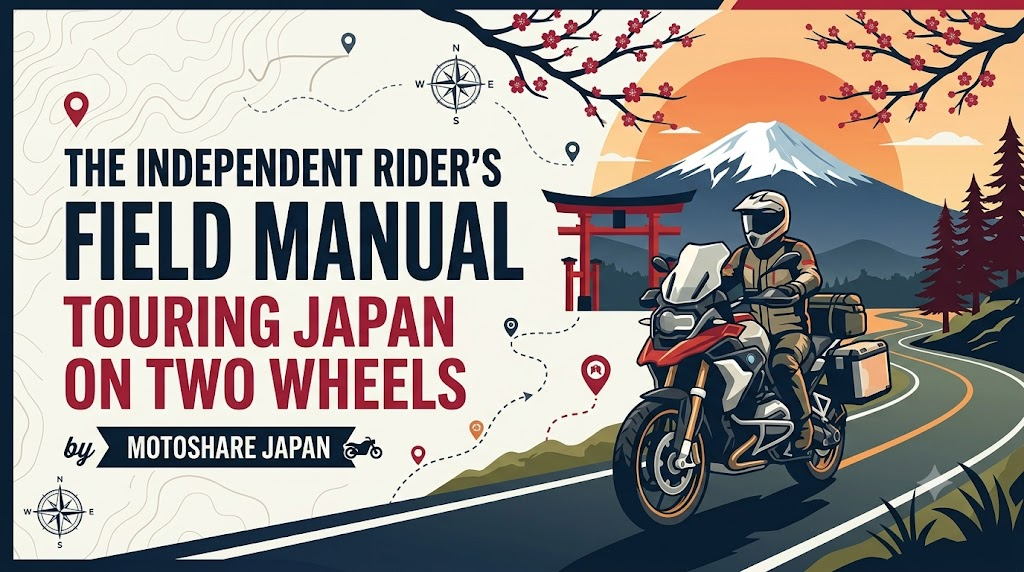
Boarding an express train between Tokyo, Kyoto, and Osaka gives travelers speed and efficiency, but it keeps them confined to dense urban corridors. Japan’s true geographic drama—volcanic ridgelines, terraced mountain farming valleys, and isolated coastal bluffs—remains entirely inaccessible from a standard rail platform. Modern booking services like MotoShare Japan have made it vastly easier for independent riders to bridge the gap with local rental fleets, simplifying inventory discovery and advance reservations before landing.
Taking on Japanese roads aboard a motorcycle provides an intimate, unfiltered look at the country that guided excursions cannot replicate. Even so, running a successful tour across the islands requires strict attention to documentation laws, realistic engine selection, and a working knowledge of national transit infrastructure.
Legal Clearance: Navigating Driver Documentation and Permits
Japan enforces driving regulations with uncompromising precision. Traffic authorities conduct vehicle stops by the book, meaning an administrative mistake at home will stop your trip at the rental desk before the ignition key is ever handed over.
The Two International Entry Gateways
Depending on which authority issued your domestic operating credentials, you will fall under one of two mutually exclusive legal categories:
- The 1949 Geneva Convention Track: Travelers from signatory countries must present their physical original home license alongside a valid International Driving Permit (IDP) issued strictly under the 1949 framework. The IDP must carry an explicit “Category A” stamp authorizing motorcycle operation. Permits issued under the 1968 Vienna Convention are legally invalid in Japan.
- Authorized Embassy Translation Agreements: Drivers holding licenses from a small group of designated countries—including France, Germany, Switzerland, Belgium, Monaco, and Taiwan—cannot use standard IDPs. Instead, the law mandates carrying the original home license paired with an official Japanese translation certified by the Japan Automobile Federation (JAF) or the traveler’s domestic embassy located within Japan.
Both documentation paths remain legally recognized for up to 365 days after crossing border control, provided the traveler’s passport carries an active temporary visitor landing stamp. Arriving with digital copies, uncertified translations, or mismatched vehicle endorsements results in an immediate booking cancellation.
Matching Engine Displacement to Regional Topography
Motorcycle capacity in Japan is divided into defined displacement tiers. These classifications govern highway legality, toll access, and machine maneuverability across tight geography.
| Engine Class | Expressway Access | Best Operational Use |
| 50cc to 125cc | Strictly Banned | Dense downtown navigation, alleyways, low-speed coastal roads |
| 126cc to 250cc | Permitted | Technical mountain switchbacks, scenic bypasses, light regional tours |
| 400cc | Permitted | Balanced highway cruising and twisting alpine passes |
| Over 400cc (Open Class) | Permitted | Sustained high-speed inter-prefecture travel and heavy touring |
Bikes under 125cc offer nimble handling through crowded city lanes, but being banned from expressways adds massive transit times whenever bridging broader prefecture borders. For travelers running mixed multi-day loops that link major metropolitan areas to mountain ridgelines, machines in the 250cc to 650cc range offer the ideal balance: stable enough for prolonged highway stretches, yet light enough to flick through narrow, hairpin-heavy passes.
Route Design: Balancing Intercity Highways and Mountain Passes
Constructing a coherent touring route across Honshu demands blending fast expressway transit legs with slower, technically demanding secondary roads.
The Southern Flank: Hakone and the Izu Peninsula
Pushing south out of Tokyo brings riders straight onto the sweeping ribbons of the Hakone mountain passes and the clifftop vistas of the Izu Skyline. Circling the Fuji Five Lakes serves up sweeping views of Mount Fuji alongside pristine, well-graded tarmac. However, outbound expressways like the Tomei choke with heavy tourist traffic on weekends, making mid-week morning departures substantially smoother.
The Mountain Backbone: The Japanese Alps
Heading inland through Nagano, Gifu, and Toyama takes machines straight into alpine territory. The famous Venus Line delivers cool highland air, continuous grade changes, and panoramic mountain vistas. Elevation shifts bring rapid weather transitions, meaning sudden temperature drops and high-altitude fog require flexible pacing and windproof layering.
Rural Byways: The Inland Sea and Shikoku
Riders venturing further west through Kansai can cross the islands of the Seto Inland Sea via the Shimanami Kaido into Shikoku. The interior reaches of Tokushima and the deep Iya Valley offer minimal vehicle traffic, single-lane valley passages, and deeply traditional rural hamlets cut off from major tourism corridors.
Highway Systems, Tollways, and ETC Automation
Japan operates an exceptionally well-maintained, highly engineered expressway network, but nearly every intercity kilometer carries a mandatory toll. Settling these fees manually on a motorcycle quickly becomes an exhausting routine.
Pulling up to a cash barrier requires braking, shifting to neutral, pulling off gloves, digging out yen or a credit card, and stashing coins while keeping your footing on an inclined ramp. Booking a rental bike factory-fitted with an Electronic Toll Collection (ETC) reader and requesting a rental ETC card bypasses the problem completely.
The card transponder reads wirelessly as you approach the toll gate, raising the barrier without demanding a stop and billing all accrued fees directly to your checkout statement. Furthermore, expressway operators periodically issue regional motorcycle touring discount passes, providing unlimited flat-rate highway use within designated zones over two- or three-day blocks.
Traffic Laws, Urban Parking Rules, and Road Etiquette
Operating a motorcycle safely in Japan means adopting an observant, highly disciplined riding style. Local authorities enforce traffic and municipal ordinances strictly.
- Ride on the Left: Vehicles travel on the left-hand side of the road. Turning right across opposing multi-lane traffic requires deliberate patience and careful scanning for oncoming vehicles and crossing pedestrians.
- Strict Urban Parking Enforcement: Never abandon a motorcycle on pedestrian sidewalks, storefront curbs, or quiet back alleys. Municipal authorities contract dedicated enforcement wardens who issue steep fines to illegally parked two-wheelers within minutes. Always locate marked pay-by-hour motorcycle parking garages or confirm dedicated parking stalls with your hotel before arrival.
- Speed Limits and Cameras: Expressway speed limits generally sit between 80 km/h and 100 km/h, though modern stretches occasionally allow 120 km/h. Mountain roads drop to 40 km/h or 50 km/h. Both marked patrol cars and automated overhead gantries actively monitor traffic speeds.
- Zero Blood Alcohol Limit: Japan enforces an absolute zero-tolerance statute regarding alcohol and motor vehicles. Operating a machine with any measurable blood alcohol concentration triggers severe criminal prosecution, license revocation, steep financial penalties, and deportation. Passengers who willingly ride with an impaired driver face identical legal charges.
Weather Windows and Luggage Logistics
Japan experiences dramatic seasonal shifts throughout the year, making thoughtful scheduling and gear choices critical to a comfortable trip.
Springtime across April and May delivers pleasant riding temperatures and dry roads, though high-altitude mountain passes may still carry early morning frost and residual road sand. Summer brings high heat, heavy humidity, and the seasonal rainy period (tsuyu) throughout June and early July. Midsummer riding calls for breathable mesh protective wear, disciplined hydration routines, and regular pauses at roadside rest plazas (michi-no-eki).
Autumn, particularly from late September through November, represents the premier riding window, marked by crisp air, stable atmospheric systems, and colorful foliage across the highlands. By contrast, winter brings substantial snow accumulations across northern Honshu and the Japan Sea coastline, shuttering mountain passes between December and March.
Choosing soft, water-resistant saddlebags or tail bags proves far more practical than rigid aluminum cases when hauling personal gear into traditional Japanese inns (ryokan), where luggage must frequently be carried across delicate tatami surfaces.
Frequently Asked Questions
Can you transport a rental motorcycle on domestic car ferries?
Yes. Japan has an established domestic roll-on, roll-off ferry network running between Honshu, Hokkaido, Shikoku, and Kyushu. Ferry crews secure motorcycles using heavy tie-down straps and wheel chocks on vehicle decks, letting riders sleep overnight while covering long water transit legs.
What is the minimum age to rent a motorcycle in Japan?
While the statutory minimum age to operate light motorcycles in Japan is 16, most commercial rental agencies mandate an age floor of 18 or 20, particularly for intermediate and heavy-displacement machines above 250cc.
Are passengers legally permitted on expressways?
Carrying a passenger on expressways is allowed only if the rider is at least 20 years old and has held a full motorcycle license for three consecutive years or more. Furthermore, designated downtown segments of Tokyo’s Shuto Expressway prohibit two-up riding altogether, regardless of licensing history.
What should I do if the bike suffers a flat tire?
Most reputable rental agreements include 24-hour roadside assistance dispatch (such as through JAF). Because road bikes do not carry spare wheels or extensive tools, support centers dispatch recovery flatbeds to transport the vehicle to the nearest certified repair facility.
Traversing Japan’s outer regions on two wheels offers an unmatched view of the nation’s varied geography, culture, and architecture. By getting your international permits in order well in advance, picking an engine displacement tailored to your route, and outfitting your ride with an automated toll pass, you clear the way for an extraordinary journey from coastal horizons to alpine crests.







Leave a Reply
You must be logged in to post a comment.