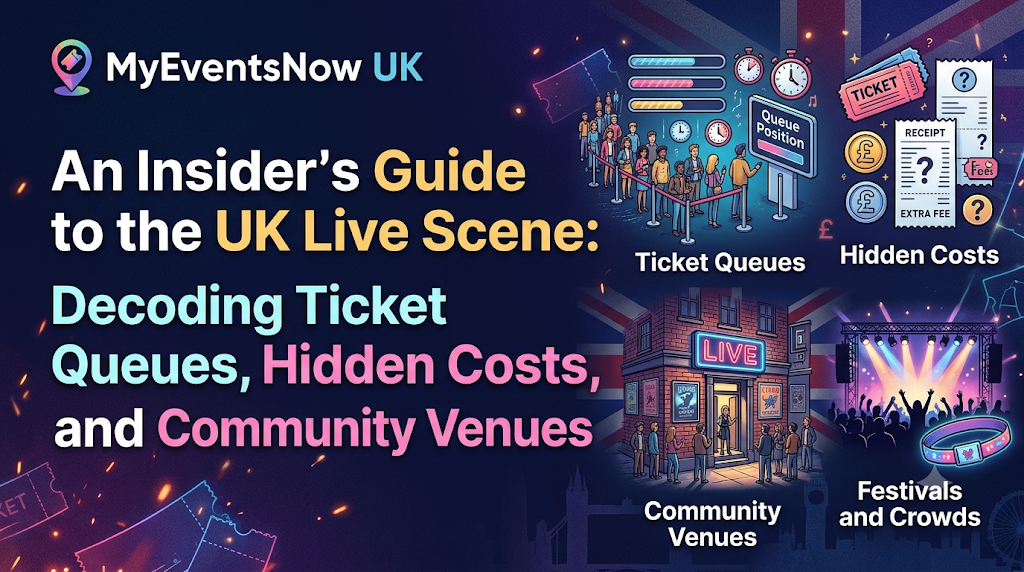
Few shared rituals match the thrill of walking into a packed room just as the house lights drop. Whether it is an experimental theatre piece staging in a converted mill in Bradford, a grime showcase in East London, or an iconic summer festival in the Highlands, live performance remains woven into the fabric of British culture.
Yet for regular gig-goers, getting into those rooms feels increasingly like navigating an obstacle course. Between high-speed digital waiting rooms, controversial pricing systems, and ticketing apps that seem to change with every booking, buying a simple admission pass has become a masterclass in logistics. Making sense of modern box-office practices—and looking beyond the obvious headline circuits—is now essential if you want to catch great entertainment without draining your bank account.
Why General Release Sells Out in Seconds
The frustration is familiar: you log on at 8:59 AM on a Friday, join a queue of 40,000 people, and watch every ticket vanish within two minutes. What feels like an instant sell-out, however, is rarely the whole story. The total capacity of any major venue is almost never released to the general public in one big batch.
The Allocation Funnel
Long before the general public on-sale opens, significant blocks of inventory have already been distributed:
- Direct Artist & Fan Communities: Pre-orders for vinyl, early newsletter sign-ups, and fan-club subscriptions routinely claim access 48 to 72 hours before the public sees an on-sale date.
- Corporate & Cardholder Allocations: Major bank cards, telecom networks, and venue naming sponsors retain substantial allocations for exclusive customer portals.
- Production & Industry Reservations: Lighting trusses, soundboards, camera sweeps, and VIP requirements require promoters to hold safety reserves. These spots remain frozen until final room measurements are verified just days before curtain call.
- Public Remainder: What is left for the public queue often represents only a fraction of total room capacity.
Recognizing how this funnel functions changes your strategy. Snagging entry to high-demand tours is less about how fast you can click on Friday morning and more about which early access channels you tapped into earlier in the week.
The Cost Equation: Algorithmic Pricing, Check-Out Surcharges, and Safe Resale
The economics of catching a show have shifted rapidly, drawing valid questions from consumer groups and music fans across Britain.
Dynamic Adjustments on High-Demand Dates
Variable pricing algorithms have migrated from budget airlines straight into concert checkouts. In theory, allowing ticket prices to rise alongside extreme demand keeps revenue with performers rather than scalpers. In practice, fans often find a standard ticket jumping from sixty quid to more than two hundred while sitting in a virtual waiting line. It has turned what used to be a set expense into an unpredictable auction.
Unravelling the Added Surcharges
Reaching the payment window often brings a series of non-optional extras. Service charges, order processing line-items, venue restoration levies, and electronic transfer charges regularly inflate the base price by 15% to 25%. While calls for total-price transparency have gained traction, keeping track of the final total still requires careful attention before entering your card details.
Closed-Loop Resale vs Unregulated Secondary Sites
Secondary resale has long plagued the industry. While people inevitably fall ill or face work emergencies, automated purchasing accounts frequently hoover up tickets to flip them at extortionate prices. In response, artists and independent organizers increasingly use closed-loop fan exchanges. These ecosystems lock tickets directly into specific apps, preventing digital transfers to unauthorized third parties and capping resale strictly at face value.
Touring Beyond the Capital: Regional Circuit Realities
London will always pull the lion’s share of international arena runs, but the true vitality of British live entertainment lives across our regional cities, coastal arts hubs, and market towns.
| Region / City | Unique Creative Strengths | On-the-Ground Practical Realities |
| Greater London | Massive international tours, historic West End runs, round-the-clock nightlife. | Tube bottlenecks, high hotel tariffs, rapid ticket exhaustion. |
| Manchester & The North West | Landmark music legacy, expansive warehouse venues, thriving indie arts scenes. | Severe pressure on 500-to-1,000 capacity spaces; late-night cross-Pennine rail cuts. |
| The West Midlands (Birmingham) | Central transport crossroads, vast arena infrastructure, growing grassroots energy. | Midnight suburban rail gaps; fragmented borough-by-borough event promotion. |
| Glasgow & Scotland | Legendary crowd energy, stunning Victorian halls, major outdoor park festivals. | Unpredictable weather factors; significant travel distance between touring stops. |
| Bristol & South West | Groundbreaking sound systems, DIY arts collectives, scenic outdoor harbour events. | Noise compliance restrictions in regenerating central quarters; shortage of mid-size venues. |
| Belfast & Northern Ireland | Deep musical heritage, renowned hospitality, distinctive coastal performance hubs. | Costly ferry and flight logistics that can limit extended mid-week routing. |
A touring calendar that works in Central London does not fit Sheffield or Cardiff. Mid-week shows in smaller cities depend heavily on local transport timetables. Missing the last local commuter train because an opening set ran fifteen minutes over can easily double the cost of your night out with an unexpected taxi fare.
Grassroots Rooms: Protecting the Heart of Live Performance
Stadium tours make the headlines, but every arena artist started their journey playing to fifteen people through an abused vocal PA in a local basement pub.
The Realities Facing Independent Spaces
Independent venues navigate severe operational headwinds:
- Energy and Operating Overheads: Commercial power rates hit spaces running high-draw acoustic amplifiers, cooling rigs, and stage rigs particularly hard.
- Urban Planning Friction: As disused industrial quarters transform into residential flats, new neighbours frequently lodge noise complaints against venues that have operated for decades.
- Evolving Social Habits: Shifting lifestyles mean younger attendees are drinking less alcohol and being more deliberate with their nights out, eroding the traditional wet-bar sales that historically kept live performance fees affordable.
Without small rooms, the talent pipeline dries up. A healthy live scene requires testing grounds where new voices can test fresh material, make mistakes, and build a real following from the floor up.
The Creative Pipeline: Moving Up the Circuit
[ Grassroots Pub Backrooms & Community Spaces (50–250 cap) ]
                               ↓
[ Regional Independent Venues & Club Circuits (300–800 cap) ]
                               ↓
[ Converted Picture Houses & City Halls (1,000–2,500 cap) ]
                               ↓
[ Commercial Urban Arenas (8,000–20,000 cap) ]
                               ↓
[ Multi-Day Festivals & Stadium Grounds (30,000+ cap) ]
Choosing to spend a tenner on a Thursday night to catch three local bands in your neighbourhood does more to keep Britain’s musical culture alive than buying an occasional stadium seat.
Smarter Event Discovery: Moving Past Social Media Noise
Finding great upcoming events in the UK has become strangely complicated. Social media platforms now prioritize paid advertising and short-form algorithms over chronological updates, meaning a tour announcement from your favourite performer can slip by completely unnoticed.
Dedicated community platforms solve this problem by connecting organizers directly with curious audiences. Independent promoters need simple tools to publish lineups, register attendees, and take payments without hefty setup costs. At the same time, audiences want clean search interfaces that filter by town, ticket price, and accessibility. Platforms like MyEventsNow UK help bridge this gap, providing event listing and ticketing workflows for local promoters while offering gig-goers a clear view of what is happening in their local area.
Having a dedicated space for discovery levels the playing field. It gives volunteer-run community theatre groups, spoken-word collectives, local comedy clubs, and DIY promoters a fair shot at reaching audiences alongside commercial entertainment companies.
Practical Essentials for an Effortless Evening
A little advance planning turns a good night out into a great one.
1. Clear the Door Without Delays
- Cache Passes to Your Smartphone Wallet: Cell reception frequently collapses when thousands of people gather around an arena or festival gates. Adding passes to your Apple Wallet or Google Wallet ensures you can display your barcode instantly without waiting for a webpage to reload.
- Travel Light: Venue security policies are increasingly uniform: most spaces limit bags strictly to A4 sizing (about 21cm x 30cm) or ban backpacks entirely. Leaving surplus kit at home lets you skip long bag-search lanes.
- Double-Check Door Times and Age Rules: Check whether an early show has a strict 10:00 PM curfew, or if an underage attendee requires an adult companion on licensed premises.
2. Transport Logistics and Curfew Management
- Outside Central London, most town councils enforce sound curfews between 10:30 PM and 11:00 PM for urban music venues.
- When planning your return trip, factor in the twenty minutes it takes to exit a crowded auditorium, retrieve coats, and walk to the nearest station.
3. Arrange Accessibility Accommodations Early
- Britain’s historic halls often feature listed architecture with steep staircases and narrow doorways. If you need step-free access, accessible viewing areas, or a companion ticket, reach out to the venue’s access coordinator as soon as you book. These provisions are limited and fill up quickly.
Spotting Frauds and Protecting Your Money
High demand creates prime conditions for ticket touts. Staying secure requires simple precautions.
Sensible Purchasing Habits
- Ignore Social Media Comments: The moment an event sells out, scam accounts flood comment sections claiming they have “spare tickets due to a family emergency.” Never send cash via bank transfer or friends-and-family payment options to someone you cannot verify.
- Use Credit Card Protections: For ticket orders over £100, paying with a credit card provides statutory purchase protection under Section 75 of the Consumer Credit Act, safeguarding your money if an unauthorized vendor fails to deliver.
- Rely on Official Resale Exchanges: Use authorized, face-value fan exchanges where existing tickets are officially re-assigned to your account with a fresh barcode.
Future Horizons: What Is Next for UK Live Experiences?
The live entertainment landscape continues to adapt to new cultural priorities and technological developments.
Sustainable and Responsible Touring
Green initiatives are moving from optional extras to fundamental touring requirements. Festivals are cutting diesel generators in favour of grid and solar hook-ups, banning single-use plastics, and encouraging attendees to travel by train through combined transit ticketing.
Immersive and Non-Traditional Stages
The line between traditional gigs, theatre, and visual arts is growing porous. Audiences are flocking to spatial-audio environments, projection-mapped warehouse residencies, and interactive storytelling where the stage surrounds the crowd rather than sitting across from them.
Daylight and Sober Gatherings
The appetite for early-evening and daytime social gatherings is booming. From afternoon dance events tailored for older crowds to alcohol-free morning club sessions and weekend matinees, live events are expanding well beyond the conventional late-night schedule.
Frequently Asked Questions
What are my rights if a show is cancelled or postponed?
If an event is cancelled entirely, you are legally entitled to a full refund of the face-value ticket cost from the primary seller. Booking fees may be non-refundable depending on the seller’s specific terms. If a date is postponed, your ticket automatically transfers to the rescheduled date; if you cannot make the new slot, you can request a full face-value refund within the organizer’s claim window.
Why do ticket booking fees vary so dramatically between sellers?
Booking fees cover the costs of secure cloud servers, credit card processing, door-scanning equipment, fraud prevention, and customer support. The variation in fees reflects different commercial contracts negotiated between the ticket agent, the promoter, and the venue.
How can I get tickets to major tours without paying inflated prices?
Sign up for artist and venue newsletters to unlock early presales. Make sure your account, billing details, and two-factor payment authorizations are set up beforehand. On the day of the sale, log on early and avoid refreshing once you are in line. If you miss out, check the artist’s official face-value resale partner during the final week before the show, when guest lists shrink and unexpected spare tickets are released.
Can a venue turn me away if the name on the ticket is not mine?
Yes, if the tour has strict lead-booker terms. For major anti-scalping campaigns, the purchaser’s name is printed on the passes, and that person must show photo identification at the door for the entire party to gain entry. Check your booking confirmation to see if lead-booker rules apply to your event.
Showing Up for Live Culture
There is an irreplaceable energy in hearing an unamplified voice carry across a historic hall or feeling the sub-bass rumble of a packed club floor. Navigating the modern live scene simply requires preparation: knowing how the ticketing systems work, keeping transit plans realistic, and making time for local, grassroots shows alongside major national tours.
By supporting independent spaces, avoiding secondary touts, and taking advantage of dedicated discovery resources, you help keep the UK’s live scene vibrant, varied, and accessible for everyone.









Leave a Reply
You must be logged in to post a comment.