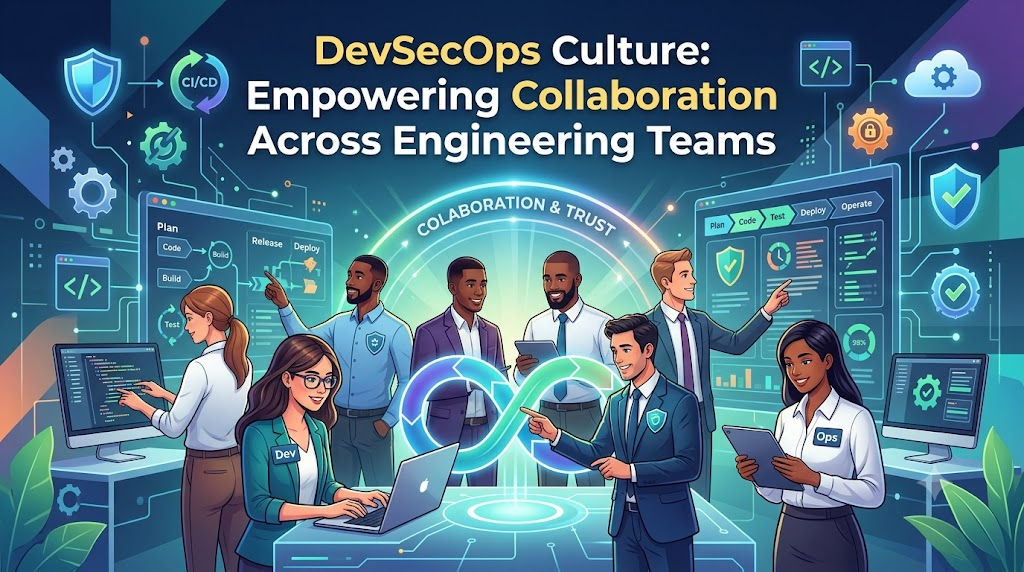
Introduction
For decades, enterprise software delivery operated in fragmented silos where developers focused strictly on feature velocity, operations teams managed deployment stability, and isolated security teams acted as late-stage gatekeepers, running manual compliance audits right before a major release. In today’s cloud-native era—where deployments happen multiple times a day—this traditional model creates unsustainable bottlenecks, delayed launches, and adversarial team dynamics. True system resilience cannot be achieved by tools alone; a successful transformation depends on cultivating a collaborative DevSecOps culture where security is treated as a shared, non-functional software quality requirement embedded naturally into every single phase of the lifecycle. Building this cross-functional alignment requires high-quality training and enterprise-grade guidance, which is why organizations looking to navigate this complex cultural shift often partner with dedicated training platforms like DevOpsSchool to equip their engineering, operations, and security personnel with the unified methodologies needed for sustainable, secure software delivery.
What Is DevSecOps Culture?
DevSecOps culture is the systemic practice of integrating security principles, mindsets, and processes into every phase of the software engineering and operational lifecycle. It moves beyond treating DevOps and security as separate entities, fusing them into a unified philosophy. In a traditional DevOps environment, the primary drivers are velocity, stability, and continuous delivery. DevSecOps culture expands this mandate by establishing that a software system cannot truly be stable or high-quality unless it is also thoroughly secure.
At its core, this culture relies on a few fundamental pillars:
- Shared Responsibility: Security is no longer the exclusive domain of the security team. Every team member—from the product manager defining features to the developer writing code, the cloud engineer provisioning infrastructure, and the site reliability engineer monitoring production—shares equal ownership of the system’s security posture.
- Collaboration Over Confrontation: Instead of acting as a strict gatekeeper that halts deployments, the security team functions as an enabling partner. They work alongside developers to build guardrails, clear pathways, and automated checks, allowing development teams to move quickly without compromising safety.
- A Security-First Mindset: Security is treated as a core non-functional requirement from day one. It is integrated directly into daily standups, architectural design reviews, sprint planning, and code reviews, ensuring it is never treated as a final, superficial check.
- Continuous Improvement: A healthy DevSecOps culture acknowledges that no system is completely impenetrable. The focus is on constantly monitoring, learning from production incidents, optimizing automated scanning tools, and updating threat models based on real-world data.
- Cross-Functional Communication: Breaking down technical jargon is essential. Security professionals learn to express risks in terms of business impact and technical remediation, while developers articulate how security controls affect application performance and user experience.
For beginners entering the space, DevSecOps culture can be understood through a simple analogy: building a modern car. Traditional development represents the engine builders who focus purely on speed and horsepower. Operations represents the mechanics ensuring the car runs smoothly on the track without breaking down. Traditional security acts like an inspector who checks the brakes only after the entire vehicle is fully assembled, often forcing the mechanics to tear the car apart to fix a structural defect.
A DevSecOps culture, by contrast, brings the engine builders, mechanics, and brake specialists together at the very drafting table. They design the braking system, airbags, and crumple zones directly into the chassis while the engine is being designed. This cross-functional alignment ensures the vehicle can safely travel at high speeds because safety mechanisms are woven natively into its core architecture.
Why Collaboration Is Essential in DevSecOps
Without active, sustained collaboration, DevSecOps stalls out as an empty marketing buzzword. Organizations that simply purchase expensive security software and force developers to use it without changing how teams interact fail to achieve true security. Collaboration acts as the vital glue that connects human intent with technical execution.
+-----------------------------------------------------------------------------------+
|                            THE COLLABORATION DIFFERENCE                           |
+-----------------------------------------------------------------------------------+
|                                                                                   |
|  [ SILOED APPROACH ]                                                              |
|  Devs Write Code ---> Ops Deploys ---> Sec Scans ---> High Friction & Slow Fixes  |
|                                                                                   |
|  [ COLLABORATIVE DEVSECOPS ]                                                      |
|  Devs + Ops + Sec  ===> Unified Pipeline ===> Continuous Safety & Rapid Delivery  |
|                                                                                   |
+-----------------------------------------------------------------------------------+
Faster Issue Resolution
When development, operations, and security teams work in separate silos, resolving a single security vulnerability can take days or even weeks. A vulnerability found in production must be documented by security, logged into a separate ticketing system, prioritized by a project manager, assigned to a developer who has likely forgotten the context of that specific code, tested by QA, and finally redeployed by operations.
When these teams collaborate actively, this loop shrinks dramatically. Developers can pair directly with security engineers to understand the root cause of an exploit and apply a validated patch within hours or minutes, minimizing the window of exposure.
Earlier Security Detection
Collaborative teams engage in collective threat modeling before writing code. By discussing potential vectors during the planning phase, engineers can identify design flaws—such as unencrypted data storage or insecure third-party APIs—long before they are built. Finding a vulnerability during the design phase costs next to nothing. Finding that same vulnerability in a production system running live workloads can cost hundreds of thousands of dollars in emergency engineering hours, compliance penalties, and lost business.
Reduced Deployment Risks
When operations and security teams collaborate on Infrastructure as Code (IaC), cloud environments are configured securely by default. Security teams contribute automated policy compliance rules directly to the deployment scripts written by operations. This prevents misconfigured cloud storage buckets, open firewalls, and incorrect identity policies from ever reaching live production. The risk of an operational deployment accidentally introducing a catastrophic security flaw drops to near zero.
Improved Software Quality
Security flaws are, fundamentally, software defects. A system with poor input validation is both insecure and prone to unexpected application crashes. By treating security criteria as an indicator of overall software quality, collaborative teams write cleaner, more resilient code. The discipline required to maintain robust security documentation, clear API contracts, and clean dependency trees naturally results in more stable, maintainable enterprise software.
Better Compliance and Audit Readiness
In highly regulated industries like finance, healthcare, and e-commerce, compliance with frameworks such as PCI-DSS, HIPAA, and GDPR is non-negotiable. Traditional compliance audits involve chaotic weeks of collecting logs, screenshots, and firewall configurations across different teams.
In a collaborative DevSecOps culture, compliance requirements are translated into automated tests and continuously captured logs. Because security and operations work together, the compliance state is transparent and auditable at any moment, turning auditing from an annual crisis into a continuous, stress-free operational reality.
Increased Customer Trust
In the modern digital landscape, consumers and enterprise clients are deeply aware of cyber threats. A major data breach can destroy a brand’s reputation overnight. When an organization demonstrates that it builds security directly into its culture, releases regular patches without downtime, and handles data responsibly, it establishes a powerful competitive advantage. Secure software delivery becomes a core brand pillar that builds long-term customer loyalty.
How DevSecOps Culture Works
To understand how a collaborative DevSecOps culture operates on a daily basis, it is helpful to follow a software feature through its entire development and deployment cycle. Rather than acting as a linear conveyor belt, the DevSecOps workflow functions as a continuous feedback loop where engineering, operations, and security checkpoints are tightly integrated.
       [1. Planning] -------> [2. Secure Design] -------> [3. Development]
             ^                                                    |
             |                                                    v
 [11. Continuous Improvement]                              [4. Code Review]
             ^                                                    |
             |                                                    v
   [10. Feedback Loops]                             [5. Automated Sec Testing]
             ^                                                    |
             |                                                    v
   [9. Incident Response] <--- [8. Monitoring] <--- [7. Deployment] <--- [6. CI/CD Pipeline]
1. Planning
The lifecycle begins with product managers, developers, operations leads, and security professionals meeting to discuss the roadmap for upcoming features. Instead of discussing only user experience and business logic, the team aligns on the operational resources required and the security boundaries that must be respected. Compliance standards and privacy-by-design requirements are established directly within the initial product requirement documents.
2. Secure Design
Before coding starts, the team conducts a threat modeling exercise. They explicitly map out the architecture of the new feature, identifying where data enters the system, how it moves across components, and where it is stored. Security engineers help developers anticipate potential attack vectors, such as SQL injection or cross-site scripting, ensuring that proper authentication and input filtering mechanisms are included directly in the initial technical design docs.
3. Development
With a clear blueprint in hand, developers begin writing code. Because they are supported by a collaborative culture, they do not work in the dark. They use IDE plugins configured by the security team that highlight insecure coding patterns in real time as they type. This immediate feedback helps developers write secure code natively, preventing common vulnerabilities from ever leaving their local workstation.
4. Code Review
Once a developer completes a task, they submit a pull request. In a DevSecOps culture, code reviews are a collaborative peer learning opportunity. Reviewers look for logic flaws, architectural alignment, and test coverage, while also validating that security requirements have been met. Security champions within the development team help ensure that secret keys, passwords, and sensitive configurations are never accidentally committed to the source control repository.
5. Automated Security Testing
The moment a pull request is created, an automated suite of security testing tools triggers. This phase does not rely on a security analyst running a manual scan. Instead, automated tools analyze the codebase for known vulnerabilities in third-party libraries, inspect the structural integrity of the application code, and verify that the infrastructure configuration scripts comply with organization-wide security baselines.
6. CI/CD Pipeline
If the automated tests pass and the peer review is approved, the code is merged into the main branch, triggering the continuous integration and continuous deployment (CI/CD) pipeline. This pipeline acts as a secure, automated assembly line. It compiles the application, runs comprehensive unit and integration tests, packs the software into secure containers, and prepares the deployment artifacts in a completely isolated, repeatable environment.
7. Deployment
Operations and security teams collaborate to define automated deployment strategies, such as canary releases or blue-green deployments. The software is rolled out to production environments progressively. Automated guardrails ensure that if the new deployment exhibits unexpected errors, performance degradation, or security anomalies, the system instantly rolls back to the previous stable state, minimizing blast radius.
8. Continuous Monitoring
Once live in production, the application is continuously monitored by automated systems. Operations engineers and SREs track performance metrics and system availability, while security monitoring tools analyze traffic logs, access patterns, and system calls for any signs of malicious behavior or unexpected drift from the established configuration baseline.
9. Incident Response
If a security anomaly or an operational failure is detected, a cross-functional incident response team is mobilized immediately. Rather than wasting time pointing fingers or assigning blame, developers, operations specialists, and security responders work closely together using a shared dashboard to isolate the affected components, mitigate the immediate threat, and restore normal service operations.
10. Feedback Loops
Data gathered from production monitoring, user telemetry, and security alerts is fed directly back to the engineering teams. This structural feedback loop ensures that real-world operational insights are clearly visible to developers, allowing them to understand how their design choices behave under real production stress and malicious traffic patterns.
11. Continuous Improvement
The cycle concludes and restarts with a focus on long-term optimization. The teams review their performance across the entire cycle, tuning automated scanners to reduce false positives, refining threat models based on new attack vectors, and identifying areas where additional training or tooling can further streamline the secure delivery pipeline.
Core Principles of a Collaborative DevSecOps Culture
To successfully transition from traditional, siloed software delivery to an integrated DevSecOps culture, an organization must align around a core set of foundational principles. These principles serve as the cultural compass guiding daily decision-making, engineering practices, and cross-team interactions.
| Principle | Why It Matters | Business Benefit |
| Shared Ownership | Breaks down traditional team silos, ensuring everyone is collectively responsible for stability, velocity, and security. | Eliminates organizational bottlenecks, minimizes finger-pointing, and drives high-quality code. |
| Shift-Left Security | Moves security practices to the earliest stages of planning and development rather than saving them for the final release step. | Uncovers and fixes critical architectural defects early, drastically reducing engineering remediation costs. |
| Security Automation | Embeds security verification into the automated CI/CD pipeline, removing slow, error-prone manual reviews. | Accelerates release cycles while maintaining consistent compliance baselines. |
| Continuous Feedback | Establishes immediate communication loops between production runtime monitoring and engineering teams. | Enables rapid detection, containment, and mitigation of application vulnerabilities. |
| Transparency | Opens up visibility into security metrics, vulnerability backlogs, and operational risks across all organizational levels. | Builds trust, aligns priorities, and allows leadership to make data-driven investment choices. |
| Collaboration | Unifies development, operations, and security teams around shared organizational goals and integrated workflows. | Harmonizes security protocols with development velocity, keeping releases safe and fast. |
| Continuous Learning | Normalizes regular training, threat modeling workshops, and blameless post-mortems across all departments. | Elevates collective security awareness, preventing repetitive coding mistakes. |
| Policy as Code | Codifies security rules, compliance boundaries, and access configurations into verifiable, version-controlled scripts. | Standardizes environment configurations, eliminating human error and environmental drift. |
Shared Ownership
Shared ownership means that a security vulnerability is treated with the same urgency and importance as a critical production outage or a broken user-facing feature. Developers no longer pass off code with the mindset of “it’s the security team’s job to find the bugs.” Conversely, security teams do not simply hand over a spreadsheet of issues and walk away; they actively assist in designing solutions.
Shift-Left Security
Shifting left is both a technical adjustment and a deep mental shift. It means integrating security checks into the earliest phases of software creation. When security is included during initial brain-storming and local development, engineering teams avoid the painful rework required when a foundational architectural flaw is uncovered right before a scheduled market launch.
Security Automation
Human beings are poorly suited for repetitive, tedious verification tasks like scanning thousands of lines of third-party dependency code for known exploits. By automating these baseline checks within the continuous integration engine, teams ensure that human intelligence can be preserved for complex, creative tasks like threat modeling, deep architectural design, and exploratory penetration testing.
Continuous Feedback
A culture without feedback loops operates blindly. When an organization connects live telemetry from production environments back to the developer’s desktop, it builds an educational bridge. Developers can see exactly how an attacker attempts to exploit an API endpoint, giving them the practical context needed to build more resilient code patterns in their next development sprint.
Transparency
For decades, security teams operated behind closed doors, using obscured metrics and complex jargon that alienated development teams. A true DevSecOps culture prioritizes absolute transparency. Security dashboards, vulnerability trends, and compliance readiness statuses are made accessible to every engineer, fostering an open environment where teams can proactively rally to fix issues together.
Collaboration
Collaboration means designing workflows that encourage interdisciplinary teamwork. Security engineers sit in on developer sprint reviews, and operations engineers contribute directly to security infrastructure design. This structural integration removes the traditional “us versus them” dynamic, creating a unified engineering front dedicated to delivering business value safely.
Continuous Learning
The cybersecurity landscape evolves daily, with new exploits, vulnerabilities, and attack methodologies emerging constantly. A healthy DevSecOps culture treats security awareness as an ongoing educational journey rather than an annual compliance checkbox. Teams dedicate time for hands-on labs, interactive workshops, and collaborative exercises to keep their skills sharp.
Policy as Code
By treating security policies exactly like application source code—storing them in version control systems, subjecting them to peer reviews, and deploying them automatically—organizations establish a reliable source of truth. Policy as Code ensures that security guardrails are predictable, fully repeatable across multiple environments, and easy for any engineer to inspect and understand.
Building Cross-Functional Teams
Eliminating long-standing institutional silos requires structural adjustments to how teams are organized and how individual roles are defined. A collaborative DevSecOps culture cannot survive if engineers continue to be evaluated on conflicting, disconnected performance metrics.
+----------------------------------------------------------------------------+
|                        CROSS-FUNCTIONAL ALIGNMENT                          |
+----------------------------------------------------------------------------+
|                                                                            |
|   [DEVELOPMENT]           [OPERATIONS]            [SECURITY]               |
|   - Secure Coding         - Secure Environments   - Threat Modeling        |
|   - Clean Architecture    - Infrastructure-as-Code- Guardrail Design       |
|   - Peer Reviews          - Monitoring & SRE       - Tooling Integration   |
|                                                                            |
|                     \                  |                  /                |
|                      \                 |                 /                 |
|                       v                v                v                  |
|                   +---------------------------------------+                |
|                   |   SHARED GOAL: Secure, High-Quality   |                |
|                   |         Continuous Delivery           |                |
|                   +---------------------------------------+                |
+----------------------------------------------------------------------------+
Developer Responsibilities
In this unified model, software developers take on direct ownership of the structural integrity and security of the code they produce. Their responsibilities include:
- Adhering to secure coding practices and established organizational patterns.
- Remediating flaws highlighted by automated IDE plugins and pipeline scanners before merging code.
- Participating actively in threat modeling sessions to anticipate potential design exploits.
- Writing comprehensive unit and integration tests that validate security boundaries.
Operations Responsibilities
Operations professionals and SREs focus on building and maintaining the resilient environments where applications run. Their expanded responsibilities include:
- Authoring secure, predictable Infrastructure as Code configuration files.
- Ensuring production environments are regularly patched, hardened, and free from configuration drift.
- Configuring robust logging, alerting, and telemetry frameworks to catch anomalous system behavior.
- Collaborating with security to design automated, immutable deployment strategies.
Security Responsibilities
The modern security engineer shifts from a reactive enforcer to an enabling consultant and platform engineer. Their primary duties evolve to:
- Designing, configuring, and maintaining the automated security tooling embedded within the CI/CD pipeline.
- Providing actionable engineering context and remediation guidance alongside discovered vulnerabilities.
- Acting as mentors, hosting threat modeling workshops, and training development teams.
- Focusing on high-impact tasks like advanced penetration testing and proactive threat hunting.
Product Management Involvement
Product managers play a crucial role in building cross-functional alignment. If a product manager evaluates an engineering team solely on the number of visual features shipped per sprint, security items will inevitably be pushed to the bottom of the backlog. Product managers must treat security, performance, and stability as primary components of the product value proposition, explicitly allocating sprint capacity for security enhancements, technical debt reduction, and architectural upgrades.
Leadership Support
A cultural shift of this scale requires clear backing from executive leadership. CTOs, CISOs, and engineering directors must align their organizational incentives to support collaboration. This means rewarding teams that reduce vulnerability backlogs, celebrating proactive risk mitigation, and ensuring that delivery deadlines are adjusted to accommodate proper architectural review. Leadership must provide the funding and time required for continuous engineering education and modern tooling investments.
Breaking Down Silos Through Shared OKRs
The most effective way to break down organizational silos is to align team incentives using shared Objectives and Key Results (OKRs). When the development team’s bonuses are tied purely to feature speed, the operations team’s bonuses to uptime, and the security team’s bonuses to zero risk, conflict is guaranteed.
By creating shared, cross-functional engineering OKRs—where all three groups are collectively evaluated on metrics like deployment velocity, system availability, and Mean Time to Remediate (MTTR) flaws—silos dissolve. Teams stop blaming one another and begin working as a unified team to achieve shared organizational goals.
Shift-Left Security
The concept of “shift-left” security is one of the most practical expressions of a mature DevSecOps culture. Geometrically, if you visualize the software delivery process as a timeline moving from left (planning and design) to right (production and maintenance), shifting left means dragging security awareness and verification tools as close to the beginning of that timeline as possible.
Traditional Security:
[ Planning ] ---> [ Development ] ---> [ Deployment ] ---> [ SEC CHECK (Gatekeeper) ]

Shift-Left Security:
[ Planning + Sec ] ---> [ Dev + Sec ] ---> [ Pipeline + Sec ] ---> [ Safe Deployment ]
Secure Coding Practices
Shifting left starts at the developer’s workstation. Writing secure code requires developers to understand foundational security fundamentals, such as escaping user inputs, implementing safe cryptographic libraries, and enforcing strict type checking. By providing continuous training and immediate IDE feedback, organizations empower developers to write clean code natively, eliminating vulnerabilities before they are ever committed to a shared repository.
Automated Code Scanning (SAST)
Static Application Security Testing (SAST) tools analyze source code without executing it. These scanners look for patterns that match known vulnerabilities, such as hardcoded credentials, buffer overflows, or poor encryption choices. Integrated directly into the local development workflow or pull request checks, SAST provides immediate feedback to engineers, allowing them to fix coding errors long before their software is compiled or packaged.
Dependency Scanning (SCA)
Modern enterprise applications are rarely built entirely from scratch; they rely heavily on open-source libraries and third-party components. Software Composition Analysis (SCA) tools scan application dependency trees to identify imported libraries that contain publicly documented security vulnerabilities or non-compliant licenses. By running SCA automatically during the early build stages, teams prevent outdated or compromised third-party code from entering their systems.
Secrets Management
Accidentally committing private API keys, database passwords, or cryptographic certificates to public or private source control repositories is one of the most common causes of modern cloud data breaches. Shift-left security enforces strict secrets management. Developers use automated scanning utilities that intercept commits containing plaintext secrets, forcing the use of secure vaulting solutions, runtime environment variables, or dynamic cloud identity roles instead.
Container Security
As organizations adopt containerization platforms like Docker and Kubernetes, the underlying container base images become a key part of the security boundary. Shifting left means scanning container blueprints and base images for vulnerabilities during the local building process. Developers pull from verified, pre-hardened enterprise base image registries, ensuring that operating system patches and secure runtime configurations are applied before any application layer is added.
Realizing the Financial Benefits of Early Detection
The industry data surrounding the cost of software defects is unmistakable. Fixing a vulnerability discovered during production requires emergency triage, multi-department coordination, deployment rollbacks, and potential regulatory reporting. The cost layout of finding and fixing vulnerabilities scales exponentially across the delivery lifecycle:
+-------------------------------------------------------------------+
|               COST TO FIX VULNERABILITIES BY STAGE                |
+-------------------------------------------------------------------+
|                                                                   |
|  [ Planning / Design ]   $ (Base Cost)                            |
|  [ Development ]         $$ (2x Cost)                             |
|  [ CI/CD Pipeline ]      $$$$ (4x Cost)                           |
|  [ Production Runtime ]  $$$$$$$$$$$$$$$$$$$$ (20x+ Cost)         |
|                                                                   |
+-------------------------------------------------------------------+
By investing in shift-left methodologies and cultural alignment, enterprise organizations save thousands of engineering hours annually, pivoting their security strategy from expensive, stressful emergency fire-fighting to predictable, continuous architectural governance.
Security Automation
In a high-velocity software delivery model, manual security verifications simply cannot scale. Security automation is the practice of embedding repeatable, standardized security checks directly into the automated CI/CD pipeline. This ensures that every single line of code, configuration file, and environment modification is scrutinized automatically before touching a live production environment.
                 +---------------------------------------+
                 |       AUTOMATED SECURITY PIPELINE      |
                 +---------------------------------------+
                                     |
                                     v
                      +-----------------------------+
                      |   Code Commit Triggered    |
                      +-----------------------------+
                                     |
                                     v
                      +-----------------------------+
                      |  SAST Scan & SCA Dependency |
                      +-----------------------------+
                                     |
                                     v
                      +-----------------------------+
                      |  IaC Baseline Validation    |
                      +-----------------------------+
                                     |
                                     v
                      +-----------------------------+
                      | Container Image Assessment |
                      +-----------------------------+
                                     |
                                     v
                      +-----------------------------+
                      |  DAST Runtime Execution    |
                      +-----------------------------+
                                     |
                                     v
                      +-----------------------------+
                      | Automated Policy Compliance |
                      +-----------------------------+
                                     |
                                     v
                 +---------------------------------------+
                 |  Successful Automated Release Ticket  |
                 +---------------------------------------+
Static Application Security Testing (SAST)
SAST tools act as an automated code reviewer. They parse the source code structure to build a comprehensive model of data flows and control paths. If the scanner detects that unsanitized user inputs are passed directly to a backend database query, it marks the build as failed. Automation ensures that this structural check happens on every single commit, maintaining a clean codebase without human intervention.
Software Composition Analysis (SCA)
SCA automation continuously tracks the sprawling landscape of open-source dependencies. When a new vulnerability is discovered and published to global security databases, automated SCA tools instantly flag any internal projects utilizing that specific version of the library. This automated cross-referencing allows enterprise security teams to map their total exposure to newly emerging threats across thousands of distinct code repositories in seconds.
Dynamic Application Security Testing (DAST)
While SAST looks at code from the inside out, Dynamic Application Security Testing (DAST) evaluates the application from the outside in. DAST tools execute while the application is running in a staged environment, simulating real-world hacking techniques like fuzzing, path traversal, and session hijacking. Automating DAST inside the staging pipeline ensures that runtime behavioral vulnerabilities, which cannot be seen in raw source code, are uncovered before release.
Infrastructure as Code (IaC) Scanning
Modern environments are provisioned using configuration languages like Terraform, CloudFormation, or Ansible. Automating IaC scanning means inspecting these infrastructure scripts for architectural misconfigurations before they are executed. Automated tools verify that cloud storage blocks are private, network firewalls restrict unnecessary ports, and logging configurations are fully enabled, ensuring cloud security compliance by default.
Container Image Scanning
When software is packaged into container images, automated image scanners review the embedded operating system packages and binary layers against known vulnerability registries. This automated checkpoint ensures that container images containing high-risk, unpatched security flaws are blocked from entering production registries or running inside corporate Kubernetes clusters.
Policy Enforcement
Automated policy enforcement systems act as digital guardrails. By codifying compliance frameworks into automated validation rules, organizations can programmatically block any deployment that fails to meet baseline security benchmarks. This automation provides leadership with absolute assurance that compliance boundaries are being maintained across all engineering teams, while allowing developers to retain their self-service deployment capabilities safely.
Continuous Feedback and Learning
A resilient DevSecOps culture understands that technology and automated pipelines are only as good as the humans managing them. To prevent security from becoming a stagnant set of rules, organizations must cultivate an environment of continuous learning, psychological safety, and open, non-punitive feedback loops.
+----------------------------------------------------------------------------+
|                         CONTINUOUS LEARNING CYCLE                          |
+----------------------------------------------------------------------------+
|                                                                            |
|        +----------------------------------------------------------+        |
|        |                  Blameless Post-Mortem                   |        |
|        +----------------------------------------------------------+        |
|                                     |                                      |
|                                     v                                      |
|        +----------------------------------------------------------+        |
|        |               System-Wide Root Cause Analysis            |        |
|        +----------------------------------------------------------+        |
|                                     |                                      |
|                                     v                                      |
|        +----------------------------------------------------------+        |
|        |             Collaborative Threat Modeling                |        |
|        +----------------------------------------------------------+        |
|                                     |                                      |
|                                     v                                      |
|        +----------------------------------------------------------+        |
|        |               Cross-Team Knowledge Sharing               |        |
|        +----------------------------------------------------------+        |
|                                                                            |
+----------------------------------------------------------------------------+
Blameless Post-Mortems
When a security incident or operational failure occurs in production, traditional corporate cultures look for someone to blame, penalize, or terminate. This approach forces engineers to hide mistakes, obscure data, and avoid taking risks. A DevSecOps culture prioritizes blameless post-mortems.
The foundational assumption is that engineers are trying to do good work, and if an error occurs, it is due to a failure in systemic guardrails, inadequate tooling, or confusing documentation. By focusing entirely on how the system allowed the mistake to happen rather than who made it, teams can uncover the true root causes and implement robust automated fixes that protect the organization long into the future.
Incident Reviews and Root Cause Analysis
Once an incident is contained, developers, operations leads, and security responders sit down together to conduct a thorough root cause analysis. They dissect the timeline of the event, analyze why automated alerts failed to trigger earlier, and evaluate the effectiveness of their mitigation steps. The findings are documented openly and translated directly into actionable engineering tasks to harden the system against similar attack vectors.
Collaborative Threat Modeling
Threat modeling is not a one-time exercise done at a project’s inception. It is a continuous, living practice. Whenever a significant structural change is made to an application’s architecture, the team meets to update their threat models. This collaborative brainstorming sharpens the security awareness of software developers, helping them anticipate adversarial tactics and think critically about security boundaries throughout their daily programming activities.
Knowledge Sharing Across Departments
Silos thrive when technical knowledge is closely guarded within specific departments. Collaborative cultures actively break this down through regular, cross-functional knowledge-sharing sessions. Developers demonstrate new framework features to the security team, operations engineers explain modern infrastructure constraints to software builders, and security specialists share insights on newly observed real-world exploit patterns.
Internal Workshops and Training
Static, yearly compliance presentations are ineffective at building a modern security posture. Organizations must invest in continuous, interactive education. This includes organizing hands-on labs, secure coding hackathons, and structured cloud security workshops where engineers can experiment with defensive and offensive security principles in realistic, sandbox environments.
The Security Champions Program
One of the most effective structural strategies for scaling security awareness is the cultivation of a Security Champions program. Security champions are core software developers, platform engineers, or SREs who have a strong interest in cybersecurity. They do not leave their primary engineering teams; instead, they act as an embedded bridge between the core security department and their local development pod.
  +--------------------------+          +--------------------------+
  |   Central Security Pod   | <======> |    Security Champions    |
  +--------------------------+          +--------------------------+
                                                     ^
                                                     | (Embedded Bridge)
                                                     v
                                        +--------------------------+
                                        |  Local Development Pods  |
                                        +--------------------------+
Security champions receive advanced security training, participate in specialized threat modeling sessions, and help choose enterprise security tooling. Within their local teams, they advocate for secure coding practices, help peers interpret vulnerability scan results, and ensure that security tasks are prioritized during sprint planning. This decentralized network allows a lean security team to scale its expertise across dozens of distributed engineering teams simultaneously.
Measuring DevSecOps Culture
A cultural shift cannot be managed effectively if it cannot be measured. To track the health, maturity, and business impact of a DevSecOps transformation, organizations must move away from purely vanity metrics—such as the total number of blocked attacks—and focus on actionable Key Performance Indicators (KPIs) that capture engineering efficiency, safety, and cross-team collaboration.
| Metric | Why It Matters | Business Value |
| Vulnerabilities Detected Early | Tracks the percentage of security defects discovered during local development and build phases versus production. | Proves the effectiveness of shift-left practices, drastically reducing engineering remediation costs. |
| Deployment Frequency | Measures how often code is safely deployed to production environments by engineering teams. | Indicates pipeline agility and shows that security guardrails are facilitating rather than slowing velocity. |
| Mean Time to Remediate (MTTR) | Calculates the average time it takes from a security vulnerability being identified to its verified fix in production. | Minimizes the organization’s window of exposure, reducing the likelihood of data breaches. |
| Security Training Completion | Tracks the active participation and completion rates of engineers in modern secure coding and DevSecOps labs. | Builds a highly skilled, security-aware engineering workforce capable of writing self-healing systems. |
| Compliance Success Rate | Measures the percentage of automated compliance checks passed continuously across cloud infrastructure. | Eliminates manual audit overhead and ensures consistent alignment with enterprise regulatory standards. |
| Incident Reduction Rate | Monitors the downward trend of high-severity security incidents occurring within production environments. | Validates the long-term return on investment of the organization’s DevSecOps transformation. |
Vulnerabilities Detected Early
A high percentage of vulnerabilities caught during development and code review indicates that shift-left strategies are working. It proves that engineers are using local tooling and peer reviews effectively to stop bugs from moving downstream, ensuring that the central security team spends less time processing production-level vulnerabilities.
Deployment Frequency
In a healthy DevSecOps culture, security checks are highly automated and integrated into the delivery pipeline. If deployment frequency remains high or increases alongside new security controls, it proves that security automation is acting as an accelerator rather than a bureaucratic bottleneck to the development lifecycle.
Mean Time to Remediate (MTTR)
MTTR is a critical metric for operational resilience. When development, operations, and security teams share clear dashboards and automated deployment pathways, the time required to patch a critical flaw drops from weeks to hours, significantly shrinking the window of opportunity available to potential attackers.
Security Training Completion
Tracking active engagement with hands-on labs and certifications provides clear visibility into the organization’s human capabilities. Higher completion rates correlate directly with fewer baseline coding errors, showing a cultural commitment to professional development and continuous engineering improvement.
Compliance Success Rate
Moving away from periodic, manual compliance reviews toward a continuous, automated compliance posture provides immediate risk visibility. A consistently high compliance success rate gives executive leadership absolute confidence that the enterprise remains fully audit-ready at any given second.
Incident Reduction Rate
The ultimate indicator of structural safety is a steady decrease in high-severity runtime incidents. As secure coding, continuous automated pipeline scanning, and collaborative threat modeling become standard daily habits, the overall security posture of the application portfolio hardens naturally, preventing production vulnerabilities from manifesting in the first place.
Common Challenges
Transitioning to an integrated DevSecOps culture is a complex, long-term undertaking that inevitably encounters organizational and technical friction. Understanding these common challenges allows leadership teams to plan ahead and implement practical solutions rather than letting transformation initiatives stall out.
| Challenge | Impact | Recommended Solution |
| Team Silos | Drives misaligned priorities, slower issue resolution, and frequent finger-pointing during production incidents. | Implement shared engineering OKRs that tie development, operations, and security to unified business goals. |
| Resistance to Change | Leads to engineering teams bypassing security tools or viewing security protocols as bureaucratic speed bumps. | Provide hands-on training, build accessible automated tooling pathways, and nurture a blameless engineering culture. |
| Manual Security Reviews | Creates severe release bottlenecks, delays product launches, and encourages teams to skip security steps. | Automate code, dependency, and infrastructure testing directly within the continuous integration pipeline. |
| Communication Gaps | Results in developers misinterpreting complex security data and ignoring vague vulnerability scan results. | Establish a clear Security Champions program to translate security concerns into actionable engineering tasks. |
| Tool Complexity | Overwhelms software engineers with excessive false positives, fragmented alert channels, and tool fatigue. | Consolidate security instrumentation, tune scanning thresholds regularly, and embed alerts into existing developer workflows. |
| Limited Security Awareness | Causes repetitive coding errors and poor security design decisions during initial feature planning phases. | Invest in regular, hands-on secure coding workshops and run collaborative threat modeling exercises every sprint. |
Overcoming Team Silos and Cultural Friction
Deeply rooted institutional silos do not disappear simply by renaming a team. When groups have spent years working in isolation, building trust requires deliberate action. Leadership can foster cross-functional collaboration by physically or digitally embedding security engineers into development squads, organizing joint technical hackathons, and ensuring that all departments use shared communication channels to resolve operational issues.
Eliminating Tool Fatigue and Alert Overload
One of the fastest ways to kill a DevSecOps initiative is to overwhelm developers with thousands of low-severity alerts and false positives from untuned security scanners. When developers are confronted with massive spreadsheets of irrelevant data, they develop alert fatigue and begin completely ignoring security notifications.
Organizations must implement security tools progressively, tuning scanner rulesets carefully to ensure that only high-confidence, actionable vulnerabilities fail a build. The goal is to provide developers with clear, contextual instructions on how to remediate a flaw directly within their native development environments.
Best Practices
Building a sustainable, collaborative DevSecOps culture requires moving away from abstract theories and implementing practical, everyday habits across your engineering organization. Use this actionable checklist to evaluate and guide your team’s transformation journey.
- Foster Shared Ownership Across All Departments
- Action: Ensure that security metrics are included in daily standups and sprint planning sessions, treating security issues with the same structural importance as critical functional defects.
- Automate Security Testing Natively Within Pipelines
- Action: Integrate SAST, SCA, and IaC scanning directly into your automated continuous integration engine, ensuring no code can be merged without passing automated baseline checks.
- Integrate Security Requirements Directly into CI/CD Gateways
- Action: Define clear, automated quality gates that automatically block pull requests containing critical vulnerabilities, providing developers with immediate, programmatic feedback.
- Encourage Proactive Knowledge Sharing and Mentorship
- Action: Launch an organized Security Champions program, embedding interested developers into security circles and providing them with specialized training resources.
- Review Runtime Incidents Regular Through a Blameless Lens
- Action: Conduct blameless post-mortems following every operational or security failure, focusing entirely on fixing underlying systemic vulnerabilities rather than assigning individual blame.
- Promote Continuous Learning via Interactive Technical Labs
- Action: Move away from dry compliance slideshows and invest in regular, hands-on secure coding hackathons, threat modeling games, and dynamic simulation platforms.
Cultivating Empathy Between Developers and Security Engineers
At its heart, a great DevSecOps culture is built on deep mutual empathy. Security engineers must take the time to understand the extreme velocity and delivery pressures placed on modern software developers. They should focus on making security processes as painless, automated, and frictionless as possible.
Simultaneously, developers must recognize that security engineers are working to protect the organization, its customers, and its digital infrastructure from sophisticated global threats. When both groups stop viewing each other as obstacles and start acting as collaborative partners, secure software delivery becomes a natural, stress-free byproduct of daily engineering operations.
Real-World Example: Enterprise Case Study
Initial Collaboration Challenges at Global Logistics Corp
Global Logistics Corp (GLC) managed a sprawling fleet of supply chain tracking applications. Their engineering division was split into traditional silos: 120 developers organized into fast-moving product teams, an operations group of 30 managing cloud infrastructure, and a central security unit of just 4 compliance analysts.
Developers were evaluated purely on feature velocity, leading them to ship code rapidly without considering security architecture. The security team, operating entirely at the end of the lifecycle, conducted manual penetration tests and compliance audits right before major quarterly releases.
This model created massive friction. Every quarter, the security team would uncover dozens of critical vulnerabilities, halting deployments and forcing developers to drop all planned features to write emergency patches. Releases were routinely delayed by weeks, operational environments suffered from configuration drift, and team morale was low due to constant finger-pointing and mutual blame.
The DevSecOps Transformation Journey
Recognizing that their delivery model was broken, GLC leadership initiated a multi-phase DevSecOps cultural transformation. They adjusted their engineering incentives, replacing siloed team goals with shared, cross-functional engineering OKRs focused on deployment frequency, system uptime, and Mean Time to Remediate (MTTR) flaws.
To bridge the communication gap, they launched an internal Security Champions program, selecting one developer from each product squad to receive advanced training and act as an embedded security advocate.
Technical Implementation of Security Automation
The organization systematically decommissioned manual end-of-cycle reviews and embedded automated security instrumentation directly into their global GitLab CI/CD pipelines:
- Local Workspace: Implemented lightweight IDE linting plugins, allowing developers to catch basic secure coding errors while typing at their workstations.
- Pull Request Phase: Automated SAST and SCA scanning were integrated as mandatory pipeline checks. Any code merge that introduced a known high-severity vulnerability was automatically blocked, providing the developer with an immediate, clear remediation guide.
- Infrastructure Pipeline: Operations migrated all environment provisioning to Terraform, integrating automated IaC scanners to validate cloud configurations against security baselines before deployment.
- Staging Environment: Automated DAST tools were scheduled to run dynamic runtime checks against isolated staging environments overnight, flagging complex behavioral flaws automatically.
Cultural and Operational Improvements
As the automated tooling matured, the daily interactions between teams transformed. The central security team stopped acting as strict gatekeepers and stepped into an enablement role, spending their time tuning pipeline scanners to eliminate false positives, authoring reusable secure design patterns, and running interactive threat modeling workshops.
Because developers received immediate feedback inside their pull requests, they began learning secure coding patterns naturally. The traditional culture of blame dissolved, replaced by a collaborative engineering environment built on psychological safety and shared technical ownership.
Business Outcomes and Key Metrics
Within twelve months of launching the cultural and technical transformation, GLC captured significant improvements across their core engineering metrics:
+-------------------------------------------------------------------+
|               GLC TRANSFORMATION METRICS COMPARISON               |
+-------------------------------------------------------------------+
|                                                                   |
|  METRIC                     BEFORE               AFTER            |
|  ---------------------------------------------------------------  |
|  Deployment Frequency       Quarterly            Bi-Weekly        |
|  Vulnerabilities in Prod    140+ Avg             < 5 Avg          |
|  Vulnerability MTTR         24 Days              6.2 Hours        |
|  Audit Readiness Phase      3 Weeks Chaos        Continuous       |
|                                                                   |
+-------------------------------------------------------------------+
Lessons Learned
The engineering leadership at GLC walked away with three foundational insights:
- Tools Are Useless Without Trust: Buying expensive security software fails if developers view the tools as bureaucratic hurdles to bypass. Cultural alignment and developer empathy must come first.
- Actionable Feedback Is Critical: Flooding engineers with long, untuned vulnerability reports causes alert fatigue. Scanners must be tuned to provide clear, actionable instructions within the developer’s native workflow.
- Celebrate Proactive Security: Rewarding teams for catching flaws early during design and planning phases normalizes security as a core component of engineering excellence, making safety a natural point of pride across the enterprise.
Common Beginner Mistakes
When organizations or individual engineers begin their transition to a DevSecOps model, they often fall into predictable traps. Recognizing these common mistakes early allows teams to adjust their strategy and avoid costly setbacks.
Treating Security as Someone Else’s Responsibility
The absolute most common mistake is maintaining the legacy mindset that security belongs exclusively to the security department. When developers continue to write code carelessly, assuming that downstream tools or separate teams will catch their mistakes, the pipeline becomes overwhelmed with avoidable defects, stalling the development lifecycle.
Adding Security Only Before Deployment
Simply changing the name of your process to “DevSecOps” while leaving security testing as a final checkpoint right before production release fails to capture the benefits of transformation. This approach preserves the traditional delivery bottleneck, leading to expensive emergency patches and stressful release delays.
Ignoring Documentation and Clear Runbooks
Automation is highly effective, but it requires clear human documentation to stay sustainable. When teams configure complex pipeline security rules, custom compliance scripts, and intricate secrets management policies without authoring accessible runbooks, they create technical debt. Developers become frustrated when a build fails if they cannot find clear documentation explaining how to fix the underlying issue.
Weak Communication and Relying on Automated JIRA Tickets
A highly collaborative culture cannot survive on automated ticketing alone. When security teams configure scanners to automatically dump raw, untuned vulnerability logs into a developer’s JIRA backlog without hosting team syncs, explaining context, or providing mentorship, it builds resentment and degrades cross-functional trust.
Overreliance on Tools Over Cultural Alignment
Many enterprises assume that a DevSecOps transformation can be bought off the shelf by purchasing an expensive suite of security products. Tools are merely amplifiers of your existing culture. If your engineering departments suffer from poor communication, low trust, and conflicting incentives, throwing complex security tools into the mix will only highlight and accelerate those cultural failures.
Future of DevSecOps Culture
The landscape of software delivery, cloud infrastructure, and cybersecurity is constantly evolving. To maintain a modern engineering posture, organizations must keep an eye on emerging industry trends that will shape how development, operations, and security teams collaborate over the coming decade.
       +--------------------------------------------------------+
       |             THE MODERN DEVSECOPS FRONTIER              |
       +--------------------------------------------------------+
                                   |
        +--------------------------+--------------------------+
        |                          |                          |
        v                          v                          v
+----------------+        +----------------+        +----------------+
|  AI-Assisted   |        |    Platform    |        |   Zero-Trust   |
|   Security     |        |  Engineering   |        |  Architecture  |
+----------------+        +----------------+        +----------------+
        |                          |                          |
        +--------------------------+--------------------------+
                                   |
        +--------------------------+--------------------------+
        |                          |                          |
        v                          v                          v
+----------------+        +----------------+        +----------------+
|  Policy As     |        |  Cloud-Native  |        |   Continuous   |
|   Code (PaC)   |        |   Ecosystems   |        |   Compliance   |
+----------------+        +----------------+        +----------------+
AI-Assisted Security and Remediation
The integration of Artificial Intelligence and Large Language Models into the software delivery pipeline is fundamentally changing security workflows. Future DevSecOps cultures will rely heavily on AI-driven systems that not only scan for code vulnerabilities but also automatically generate verified, contextual pull requests to patch those flaws in real time, drastically reducing manual remediation work for developers.
Platform Engineering and Internal Developer Platforms (IDPs)
Platform Engineering is rapidly emerging as the modern framework for scaling DevOps and DevSecOps principles. Instead of forcing every developer to become an expert in complex cloud infrastructure and security configurations, dedicated platform teams build unified Internal Developer Platforms (IDPs). These platforms embed automated security controls, compliance baselines, and infrastructure provisioning directly into golden paths, allowing developers to self-service secure environments naturally.
Zero Trust Architecture Integration
The traditional network security model focused on building a strong perimeter around an enterprise network is no longer viable in a distributed, cloud-centric world. Future DevSecOps cultures are shifting toward absolute Zero Trust architectures. This engineering philosophy operates on the principle of “never trust, always verify,” requiring every microservice, API call, and user interaction to be continuously authenticated, authorized, and encrypted, regardless of its location inside the network.
Policy as Code Standardization
As environments grow in scale and complexity, manual configuration governance becomes impossible. Policy as Code (PaC) is quickly becoming an industry-standard practice, allowing organizations to write clear, executable compliance and security rules using languages like Rego (Open Policy Agent). This trend ensures that compliance validation is completely automated, testable in isolation, and easily version-controlled alongside application code.
Cloud-Native Security Ecosystems
As applications migrate toward serverless computing, service meshes, and distributed microservices architectures, security boundaries are shifting dynamically. The future of DevSecOps requires engineering teams to collaborate around cloud-native security paradigms, using automated tools designed specifically to monitor container runtimes, inspect ephemeral environments, and secure distributed API communication channels.
Continuous Compliance Automation
The era of periodic compliance audits is rapidly drawing to a close. Forward-thinking organizations are moving toward continuous compliance automation frameworks. By continuously collecting system telemetry, verifying environment states against regulatory frameworks, and generating live audit logs, collaborative teams can maintain a permanent state of compliance readiness, turning security governance into a predictable, passive background operation.
Certifications & Learning Paths
Building a highly skilled, cross-functional engineering team requires a structural commitment to continuous education and professional development. For organizations looking to baseline their skills, or individual engineers wanting to specialize in secure software delivery, navigating the global ecosystem of modern cloud and security certifications is a valuable step. Training platforms like the DevOpsSchool learning ecosystem provide structured, experience-driven paths tailored to help professionals master these precise technical and cultural methodologies.
| Certification | Best For | Skill Level | Focus Area |
| Certified DevSecOps Professional (CDP) | DevOps Engineers, Security Specialists, Cloud Architects | Intermediate | CI/CD Security Automation, SAST/DAST Tooling Integration |
| Certified Kubernetes Security Specialist (CKS) | Platform Engineers, SREs, Container Administrators | Advanced | Cluster Hardening, Container Runtime Safety, Microservice Security |
| AWS Certified Security – Specialty | Cloud Engineers, AWS Architects, Security Operations | Advanced | AWS Identity Management, Cloud Logging, Infrastructure Protection |
| Microsoft Certified: Azure Security Engineer | Azure Architects, Enterprise Cloud Infrastructure Teams | Intermediate | Azure Security Controls, Hybrid Cloud Identity, Information Governance |
| Certified Secure Software Lifecycle Professional (CSSLP) | Software Developers, Engineering Managers, Product Leads | Advanced | Secure Coding Standards, Threat Modeling, Software Governance |
| Google Cloud Professional Cloud Security Engineer | GCP Architects, Cloud Native SRE Teams, Security Operations | Advanced | GCP Identity Management, Network Hardening, Continuous Compliance |
Practical DevSecOps Collaboration Checklist
Use this structured, operational checklist to evaluate, guide, and measure your team’s ongoing collaboration practices across the software development lifecycle.
- Integrate Security Practices Early in the Planning Stage
- Implementation: Dedicate time for collaborative threat modeling sessions at the start of every significant product feature, ensuring security requirements are documented in user stories.
- Automate Security Testing Natively Within Pipelines
- Implementation: Configure automated SAST, SCA, and IaC verification steps directly within your continuous integration engine, blocking vulnerable commits programmatically.
- Document Security Practices and Maintain Accessible Runbooks
- Implementation: Author clear, readable guides explaining how to resolve common pipeline scanner alerts, ensuring this knowledge is shared inside engineering wikis.
- Monitor Continuously and Build Shared Telemetry Dashboards
- Implementation: Connect real-world production logs, access anomalies, and performance metrics to accessible team dashboards, keeping development, operations, and security aligned.
- Share Technical Knowledge Across Departmental Boundaries
- Implementation: Sponsor regular lunch-and-learn presentations, collaborative security hackathons, and multi-disciplinary workshops to break down institutional silos.
- Conduct Regular Retrospectives and Blameless Post-Mortems
- Implementation: Gather cross-functional teams after production incidents to map out structural timelines, focusing on building long-term system guardrails rather than assigning blame.
- Improve Continuously and Adapt to Emerging Security Trends
- Implementation: Review pipeline scanning configurations every quarter, removing stale rulesets to reduce false positives while updating threat profiles against newly emerging exploits.
FAQs (15 Questions)
1. What is DevSecOps culture?
DevSecOps culture is the systemic organizational practice of integrating security considerations, mindsets, and automated processes into every phase of the software delivery lifecycle. It moves away from treating security as an isolated checkpoint right before deployment, transforming it into a continuous, shared responsibility shared equally by developers, operations teams, and security specialists.
2. Why is collaboration important in DevSecOps?
Collaboration is the vital human component that allows DevSecOps tools and automation to succeed. Without open communication and shared organizational incentives, teams default to traditional silos, creating adversarial relationships and release delays. Active collaboration ensures that security flaws are caught earlier, fixed faster, and treated as shared engineering priorities.
3. What is shift-left security?
Shift-left security is the practical engineering strategy of moving security verification, tooling, and awareness to the earliest stages of the software development lifecycle—such as planning, architectural design, and local programming. Catching vulnerabilities early prevents costly engineering re-work right before production releases.
4. How do developers contribute to security?
Developers contribute by adopting secure coding practices, utilizing IDE linting plugins to catch basic flaws locally, and reviewing third-party dependencies for known vulnerabilities before importing them. They also participate in threat modeling sessions and take ownership of fixing vulnerabilities highlighted by automated pipeline scanners.
5. How does automation improve security?
Automation removes slow, error-prone manual verification processes by executing predictable, standardized security checks—such as code, dependency, and infrastructure scanning—directly within the continuous integration pipeline. This ensures every code commit is thoroughly inspected before deployment, preserving human focus for complex security challenges.
6. What metrics should teams track?
Teams should avoid vanity statistics and track actionable engineering metrics that measure efficiency and collaboration. Key performance indicators include Mean Time to Remediate (MTTR) flaws, the percentage of vulnerabilities caught early during development versus production, deployment frequency, cloud compliance success rates, and the downward trend of high-severity production incidents.
7. Can small teams adopt DevSecOps?
Small teams are exceptionally well-suited for DevSecOps because they generally suffer from fewer corporate silos and communicate more naturally. By leveraging cloud-native automation, lightweight scanning tools, and integrated CI/CD platforms, a small engineering squad can easily weave robust security guardrails into their daily release pipelines without requiring a massive, dedicated security department.
8. How should beginners start learning DevSecOps?
Beginners should start by mastering core DevOps fundamentals, such as version control with Git, containerization using Docker, and continuous integration pipelines. From there, they can layer on security principles by exploring open-source scanning utilities, studying the OWASP Top 10 vulnerabilities, and engaging with structured learning systems like DevOpsSchool.
9. What is the role of a Security Champion?
A Security Champion is a core software developer, cloud engineer, or SRE who acts as an embedded advocate for security within their local team. They receive specialized training, assist peers in interpreting vulnerability reports, help weave security considerations into sprint planning, and act as a communicative bridge back to the central security department.
10. How do you handle false positives in security scanning tools?
Handling false positives requires regular, collaborative tuning of your automated scanning engines. Security and development engineers must review scan results together, modifying rulesets, disabling irrelevant checks, and defining custom baselines to ensure that the pipeline triggers alerts only for actionable, high-confidence vulnerabilities.
11. What is Policy as Code (PaC)?
Policy as Code is the practice of managing compliance definitions, security configurations, and operational boundaries using readable, version-controlled configuration scripts. This allows engineering teams to test infrastructure compliance programmatically, automate auditing checks, and maintain a highly predictable, repeatable environment setup.
12. How does DevSecOps change traditional auditing?
Traditional auditing involves chaotic weeks of gathering server logs, screenshots, and firewall settings manually at fixed intervals. DevSecOps transforms this model into a continuous, real-time auditing posture by tracking compliance metrics, system logs, and build outcomes automatically inside your pipeline infrastructure.
13. What is the difference between SAST and DAST?
SAST (Static Application Security Testing) inspects source code from the inside out without executing it, looking for structural pattern flaws like hardcoded credentials. DAST (Dynamic Application Security Testing) evaluates the application from the outside in while it is actively running in an isolated staging environment, simulating real-world hacking techniques to uncover runtime configuration flaws.
14. How do you deal with resistance from development teams?
Overcoming engineering resistance requires building empathy, fostering a non-punitive culture, and delivering accessible tooling pathways. Security teams must avoid dropping massive, raw spreadsheets of flaws on developers. Instead, they should focus on tuning tools to provide actionable remediation advice directly within the developer’s existing workflows.
15. What is a blameless post-mortem?
A blameless post-mortem is a structured retrospective analysis conducted after a production failure or security incident. It operates on the core assumption that engineers are trying to do good work, focusing entirely on dissecting how systemic guardrails, inadequate tools, or confusing documentation allowed the mistake to occur, rather than penalizing individuals.
Final Thoughts
Transitioning to a mature DevSecOps culture is an ongoing journey of continuous learning, process optimization, and cultural alignment. There are no magical shortcuts or off-the-shelf software packages that can instantly solve your organization’s security challenges. True structural resilience requires a long-term commitment to building deep cross-functional trust, breaking down institutional silos, and ensuring that security is treated as an essential pillar of software quality.
Engineering leaders should focus on automating tedious, repetitive verification tasks wisely, allowing human engineering intelligence to be preserved for high-value tasks like threat modeling and deep architectural design. By cultivating a supportive, blameless environment that embraces psychological safety and continuous engineering education, organizations can confidently accelerate their software delivery velocity while maintaining a thoroughly secure, compliant, and highly stable digital infrastructure.






Leave a Reply
You must be logged in to post a comment.