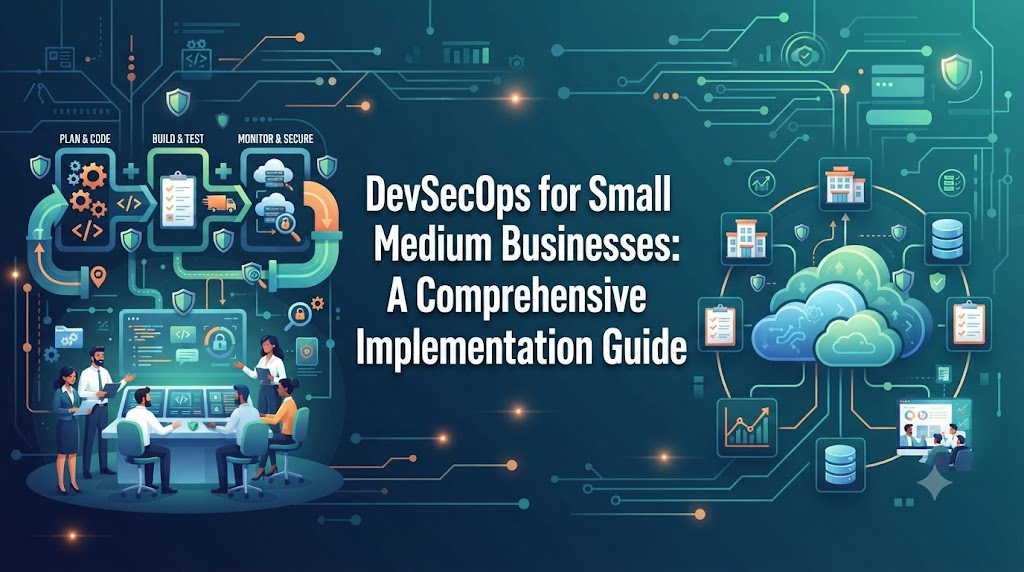
Introduction
In the current digital landscape, cybersecurity is no longer a concern reserved solely for global conglomerates. Every organization, regardless of its size, relies on digital infrastructure to operate, serve customers, and process data. Small and medium businesses (SMBs) are, in fact, increasingly targeted by cyber threats because attackers often perceive them as having weaker defenses compared to large enterprises. A single breach can be catastrophic, leading to financial loss, operational downtime, and irreparable damage to brand reputation. This is where DevSecOps becomes a critical differentiator. DevSecOps integrates security practices directly into the software development lifecycle, ensuring that security is not a final hurdle but a continuous, shared responsibility. For an SMB, this does not mean hiring a massive, expensive security team or purchasing complex, enterprise-grade software that exceeds the budget. Instead, it involves adopting a strategy of automation, cultural shifts, and smart tooling.
At DevOpsSchool, we have helped countless organizations navigate this transformation. By embedding security into every stage—from code commit to production deployment—SMBs can drastically reduce their risk profile while actually increasing their release velocity. Implementing these practices is achievable and necessary for long-term survival in an competitive market.
What Is DevSecOps?
At its core, DevSecOps is the philosophy of integrating security practices within the DevOps process. Traditionally, security was treated as a distinct phase that occurred after development was completed. This “gatekeeper” approach often caused bottlenecks, slowed down releases, and resulted in costly late-stage vulnerability discovery.
DevSecOps changes this paradigm through several key principles:
- Shift-Left Security: Moving security testing to the earliest stages of the development cycle, allowing developers to identify and fix issues while writing code.
- Shared Responsibility: Security is not solely the job of the security team; it is a collaborative effort between developers, operations, and security practitioners.
- Continuous Security: Security is integrated into the CI/CD pipeline, meaning every code change is automatically scanned and validated.
- Automation: Using tools to handle routine security checks, which reduces human error and ensures consistency.
By adopting these principles, SMBs can build a “security by design” culture where protection is part of the development workflow rather than an external check.
Why SMBs Need DevSecOps
The need for DevSecOps in smaller organizations is driven by necessity, not just convenience.
- Growing Cyber Threats: Attackers frequently automate their scanning tools to find low-hanging fruit. SMBs without automated defenses are easy targets.
- Limited Resources: Small teams cannot afford to have dedicated manual security auditors for every release. Automation allows a small team to do the work of a much larger one.
- Customer Trust: In an era of high-profile data breaches, customers are increasingly conscious of how their data is handled. Robust security practices are a competitive advantage.
- Compliance: Many SMBs must adhere to industry standards (GDPR, HIPAA, PCI-DSS). DevSecOps makes maintaining continuous compliance feasible.
- Business Continuity: Downtime is expensive. Proactive security prevents the vulnerabilities that lead to outages and data loss.
Common Security Challenges for SMBs
| Challenge | Business Impact | Recommended Solution |
| Limited budgets | Inability to hire dedicated security staff | Invest in open-source automation tools |
| Small IT teams | Security tasks are overlooked due to workload | Integrate security into existing CI/CD pipelines |
| Manual processes | Slow release cycles and high human error | Prioritize IaC and automated testing |
| Weak access controls | Unauthorized access to sensitive environments | Implement Principle of Least Privilege and MFA |
| Insecure CI/CD | Pipeline compromise leads to malicious code | Secure runner environments and scan dependencies |
| Cloud misconfigurations | Data exposure and potential breaches | Use CSPM tools and automated audit scripts |
| Compliance challenges | Risk of fines and lost contracts | Document processes and automate compliance checks |
Benefits of DevSecOps for Small and Medium Businesses
| Benefit | Business Value |
| Faster secure releases | Reduced feedback loops allow for quicker feature delivery |
| Reduced vulnerabilities | Proactive discovery prevents expensive patching post-release |
| Better collaboration | Silos are broken down, fostering a shared security culture |
| Improved compliance | Audit-ready infrastructure reduces regulatory friction |
| Lower operational costs | Automated processes require less manual overhead |
| Increased customer confidence | Security maturity builds long-term brand loyalty |
Building a DevSecOps Strategy
Building a strategy for an SMB requires starting small and scaling as the business matures.
Step 1: Assess Current Security
Conduct an honest inventory of your current infrastructure, code repositories, and access protocols. Identify where your biggest risks lie.
Step 2: Secure Source Code
Use static analysis tools (SAST) to scan code as it is written. Configure your version control to prevent pushing code that contains known security flaws.
Step 3: Automate Security Testing
Integrate automated scanners into your CI/CD pipeline. Every build should be automatically checked for vulnerabilities before proceeding.
Step 4: Protect CI/CD Pipelines
The pipeline itself is a target. Ensure that CI/CD servers are locked down, use encrypted credentials, and limit access to those who truly need it.
Step 5: Secure Infrastructure
Treat infrastructure as code (IaC) to ensure environments are consistent and reproducible. Use automated tools to scan infrastructure code for misconfigurations.
Step 6: Monitor Continuously
Implement centralized logging and real-time monitoring to catch anomalies immediately, rather than discovering them weeks later.
Step 7: Improve Regularly
Treat security as an iterative process. Hold regular retrospectives to discuss what went wrong and how the process can be improved.
Secure CI/CD for SMBs
For an SMB, the CI/CD pipeline is the engine of the business. Securing it means protecting the integrity of your product.
- Automated Testing: Integrate SAST and DAST (Dynamic Application Security Testing) tools that provide feedback directly to developers.
- Dependency Scanning: Modern applications rely heavily on open-source libraries. Use tools to automatically scan these dependencies for known vulnerabilities.
- Secrets Management: Never hardcode passwords or API keys in your repository. Use dedicated tools to inject these secrets securely during deployment.
- Pipeline Security: Ensure your CI/CD runners are isolated and patched. Treat the pipeline configuration as production-grade code.
Infrastructure as Code (IaC)
IaC allows SMBs to define their environment using scripts rather than manual configuration. This provides several security benefits:
- Consistency: Every environment is identical, reducing “configuration drift” where security gaps emerge over time.
- Security Validation: Since infrastructure is defined in code, you can scan that code for security misconfigurations before the infrastructure is even created.
- Auditability: Because IaC is version-controlled, you have a complete history of who changed what and when, which is vital for compliance.
Secrets Management
Hardcoded secrets are a primary cause of data breaches in small businesses. Implementing a secrets management strategy is a high-impact, low-effort security win.
- Externalize: Remove all credentials from source code immediately.
- Environment Variables: Use secure vault services or environment variables provided by your CI/CD platform.
- Rotation: Implement a schedule for rotating API keys and passwords to limit the window of opportunity if a secret is ever leaked.
- Least Privilege: Ensure that the services using these secrets have only the permissions required to perform their specific tasks.
Compliance and Governance
Compliance often feels like an administrative nightmare for SMBs. DevSecOps enables “Compliance as Code.” By embedding policy checks into your automated pipelines, you can ensure that every change meets regulatory requirements before it goes live. This transforms compliance from an annual, stressful event into a continuous state of readiness.
Monitoring and Incident Response
Visibility is essential. If you cannot see it, you cannot protect it.
- Logging: Centralize logs from applications, servers, and cloud providers.
- Alerting: Configure alerts for suspicious activity, such as failed login attempts or unusual API calls.
- Incident Response: Have a simple, documented plan for what to do when a potential security issue is detected. Even a basic plan is better than a reactive, panicked response.
Cost-Effective DevSecOps Tools
| Category | Tool Type | Business Purpose |
| Version Control | Git-based | Code integrity and history |
| CI/CD | Automation Servers | Automating testing and deployment |
| Container Security | Registry/Runtime Scanning | Ensuring container images are secure |
| Vulnerability Scanning | SAST/DAST | Finding bugs in code early |
| Monitoring | Log Aggregators | Real-time visibility into system health |
| Secrets Management | Vault Services | Safely storing and injecting credentials |
Note: Selection should be based on integration capability and existing stack rather than brand name.
Measuring DevSecOps Success
| Metric | Why It Matters | Business Value |
| Vulnerability remediation time | Speed of response reduces exposure window | Faster mitigation of risk |
| Deployment frequency | Shows agility and maturity of pipeline | Competitive market advantage |
| Security incidents | Indicates overall effectiveness of controls | Reduced business disruption |
| Compliance score | Measures audit readiness | Smoother regulatory interactions |
| Mean Time to Recovery (MTTR) | Measures resilience during failures | Minimized downtime costs |
| Release quality | Number of bugs in production | Better user experience |
Common Implementation Challenges
| Challenge | Impact | Recommended Solution |
| Limited expertise | Insecure configurations | Invest in training and leverage community resources |
| Resistance to change | Stalled adoption | Start with small, non-critical projects to show value |
| Budget constraints | Inability to use paid tools | Leverage mature open-source alternatives |
| Legacy systems | Security integration difficulties | Use containerization to wrap legacy apps safely |
| Security awareness | Human error | Conduct regular, practical security workshops |
| Tool integration | Inefficient workflows | Focus on consolidating tools rather than adding more |
Best Practices for SMB DevSecOps
- Automate wherever possible: Manual steps are the primary source of human error.
- Secure the CI/CD pipeline: Treat it with the same level of protection as your production environment.
- Review access regularly: Regularly audit who has access to your production and CI/CD environments.
- Train your team: Foster a security-first mindset among developers through regular, non-punitive training.
- Monitor continuously: Security is not a one-time check; it requires ongoing vigilance.
- Improve incrementally: Don’t try to implement everything at once. Focus on one area, optimize it, then move to the next.
Real-World Example: SMB DevSecOps Adoption
Initial Situation: A medium-sized e-commerce business was manually deploying code via FTP, with no automated security testing. They had experienced two minor data leaks due to exposed API keys in their repository.
Implementation:
- Repository Security: They moved to a private Git repository and implemented automated scanning for secrets.
- Pipeline Automation: They built a CI/CD pipeline that automatically ran vulnerability scans on every commit.
- Infrastructure as Code: They migrated their server configurations to IaC, allowing them to rebuild environments securely in minutes.
Outcomes: The team reduced the time to patch vulnerabilities from three days to four hours. They achieved compliance certification within six months and saw a 40% reduction in production deployment failures.
Lessons Learned: Automating the “easy” wins first built confidence across the team and created momentum for more complex security changes.
Common Beginner Mistakes
- Security as an afterthought: Trying to “bolt on” security at the end of the project is always more expensive and less effective.
- Hardcoding secrets: Never store credentials in your code repository.
- Weak monitoring: Ignoring logs until a breach occurs.
- Delaying automation: Relying on manual processes that do not scale as your business grows.
- Ignoring employee training: Technical tools are only as effective as the people using them.
Future of DevSecOps for SMBs
The future of DevSecOps is moving toward more intelligent, autonomous systems. We are seeing the rise of AI-assisted security, where tools can automatically suggest code fixes for identified vulnerabilities. “Zero Trust” architectures are becoming standard, ensuring that every request is verified, regardless of where it originates. Platform Engineering is also helping simplify the developer experience, allowing teams to consume secure infrastructure as a service.
Certifications & Learning Paths
For teams looking to upskill, focusing on a structured learning path is essential.
| Certification | Best For | Skill Level | Focus Area |
| DevSecOps Foundation | Beginners | Entry | Basic principles and concepts |
| Kubernetes Security | Cloud Engineers | Intermediate | Container and orchestration security |
| Certified Cloud Security | Architects | Advanced | Platform-specific security controls |
| Linux System Security | IT Managers | Intermediate | OS-level hardening |
For those starting out, the DevOpsSchool learning ecosystem provides comprehensive paths that cover everything from foundational DevOps to advanced security orchestration.
Practical DevSecOps Checklist for SMBs
- Scan all source code repositories for secrets and hardcoded credentials.
- Implement a branch protection policy in your version control system.
- Add an automated dependency scanning tool to your CI pipeline.
- Adopt an IaC tool for provisioning and managing infrastructure.
- Enable multi-factor authentication (MFA) for all development and production accounts.
- Establish a central log management system.
- Run a basic security audit of your cloud configuration.
- Schedule a bi-annual team training session on common web vulnerabilities.
FAQs
- What is DevSecOps for small businesses?It is the practice of integrating security measures into every part of the development process to make software more secure without slowing down delivery.
- Can startups implement DevSecOps?Absolutely. In fact, it is easier to implement DevSecOps when starting a new project than to retrofit it into an old system.
- Is DevSecOps expensive?Not necessarily. There are many high-quality open-source tools available that can handle most security needs for a small organization.
- How can SMBs secure CI/CD pipelines?By restricting access, using secure secret management, and ensuring that your build environments are isolated and patched.
- Which security practices should be automated?Code scanning, dependency vulnerability checks, configuration audits, and compliance reporting.
- What are the biggest implementation challenges?Culture shift, lack of experience, and the tendency to try to implement too many tools at once.
- How does DevSecOps improve customer trust?It demonstrates a professional commitment to data protection, which is increasingly a deciding factor for customers.
- How should beginners get started?Start by automating one manual security check in your pipeline and build from there.
- Does DevSecOps replace security teams?No, it empowers developers to take on more security responsibilities, allowing security teams to focus on strategy and complex threats.
- What is “Shift-Left”?It means moving security testing to the earliest possible point in the development cycle.
- How do I handle legacy systems?Use containerization to isolate them, and build wrappers around them to ensure their communication is secure.
- Is IaC really more secure?Yes, because it eliminates manual configuration errors and provides an audit trail for every change.
- How often should I rotate secrets?Regularly, based on your internal policy, but at least every 90 days or whenever staff changes.
- What is the most important part of DevSecOps?The cultural shift towards shared responsibility—where everyone owns security.
- Where can I find more resources?DevOpsSchool offers extensive guides and training programs tailored for all experience levels.
Final Thoughts
Implementing DevSecOps is a journey, not a destination. For SMBs, the key to success is to start small, automate the most critical processes first, and build a culture where security is a shared value rather than a siloed task. You do not need an enterprise budget to create a robust, secure environment. By focusing on consistent, incremental improvements, you can build a resilient software delivery pipeline that protects your business, your data, and your customers for years to come.




Leave a Reply
You must be logged in to post a comment.