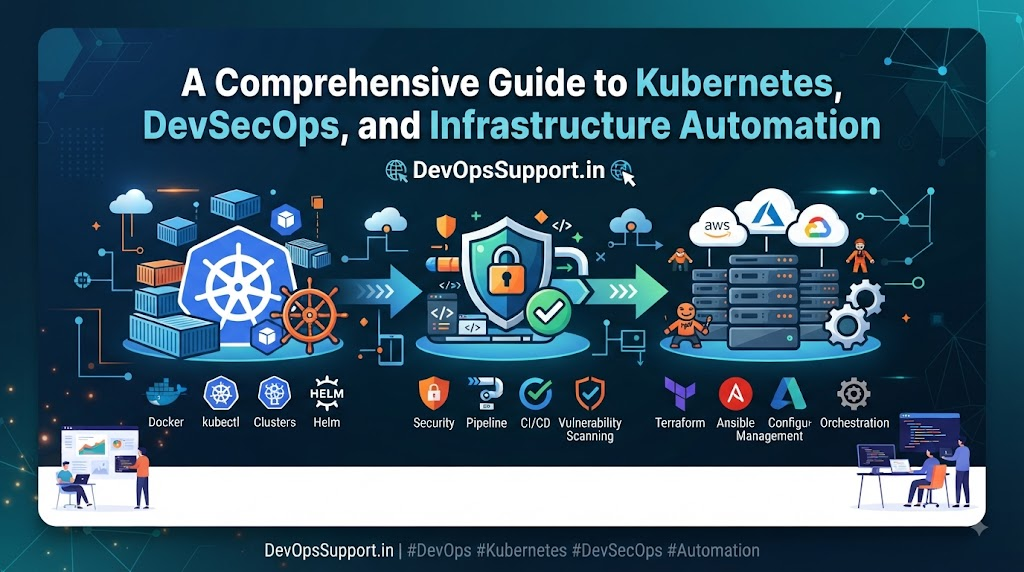
Managing enterprise-grade digital systems requires a resilient, scalable operational framework. As organizations transition from legacy monolithic architectures to microservices, orchestrating container fleets, securing automated delivery pipelines, and maintaining platform uptime introduce complex technical challenges. Distributed cloud software demands intelligent load distribution, strict access control mechanisms, and deep telemetry integration to guarantee high availability under heavy workloads.
Embedding security protocols early into the software delivery process—commonly known as DevSecOps—enables engineering teams to identify and remediate security vulnerabilities during initial development phases without compromising release velocity. Achieving long-term platform resilience relies on clear deployment policies, standardized automation frameworks, and proactive risk mitigation strategies.
This practical guide examines actionable strategies for scaling containerized workloads, automating pipeline security, and preserving operational stability across complex cloud environments.
Understanding Cloud-Native Engineering
Modern cloud architectures depend on lightweight containerization, decoupled microservices, declarative configuration management, and automated operational orchestration. Rather than relying on static physical hosts or manually provisioned virtual machines, contemporary platforms adjust compute resources dynamically to match live user traffic demands.
At the core of this strategy is container orchestration, which automates deployment, scaling, networking, and state management for distributed application workloads. Partitioning software applications into modular, independent services connected through APIs yields significant operational benefits:
- Resource Optimization: Containers share the host operating system kernel directly, making them lightweight and highly performant compared to traditional virtual machines.
- Fault Isolation: Operational disruptions or errors occurring within an isolated microservice do not immediately impact the broader application system.
- Multi-Cloud Portability: Containerized applications run consistently across developer workstations, testing environments, and major public cloud providers.
Attempting to manage distributed infrastructure manually introduces significant human error and operational complexity. Organizations rely on automated continuous integration and continuous deployment (CI/CD) pipelines, infrastructure version control, and unified monitoring tools to maintain control over running applications.
Business Value of Infrastructure Automation
Operating software services at scale requires an operational model focused on predictability, rapid iteration, and high availability. Manual administration slows down feature delivery, increases deployment errors, and complicates regulatory reporting. Enterprise infrastructure depends on several vital operational capabilities:
- High System Uptime: Automated health checks, intelligent traffic routing, and self-healing worker nodes reduce unplanned outages and decrease mean time to recovery (MTTR).
- Cost Efficiency: Dynamic autoscaling policies automatically scale down active compute instances during off-peak hours, preventing resource over-provisioning and keeping operational expenditure predictable.
- Unified Observability: Aggregating metrics, application logs, and request traces provides full technical visibility, enabling operational teams to fix latency issues before end users are impacted.
- Standardized Infrastructure Governance: Implementing Infrastructure as Code (IaC) ensures environments are provisioned from audited, peer-reviewed templates, stopping configuration drift across development, staging, and production tiers.
Core Pillars of Resilient Operations
Building a scalable cloud platform requires combining multiple technical disciplines into a single operational architecture.
+-----------------------------------------------------------------------+
|                    Enterprise Infrastructure Ecosystem                |
+-----------------------------------------------------------------------+
|                                                                       |
|   +-------------------+    +--------------------+    +------------+   |
|   | AWS / Azure Cloud |    | Kubernetes Cluster |    | CI/CD      |   |
|   | Platforms         |    | Orchestration      |    | Automation |   |
|   +---------+---------+    +---------+----------+    +-----+------+   |
|             |                        |                     |          |
|             +-------------------+    |    +----------------+          |
|                                 |    |    |                           |
|                                 v    v    v                           |
|                     +---------------------------+                     |
|                     | Unified Operational Layer |                     |
|                     +-------------+-------------+                     |
|                                   |                                   |
|                                   v                                   |
|                     +---------------------------+                     |
|                     | DevOps Support Services   |                     |
|                     | (Observability, Security, |                     |
|                     |  SRE, and MLOps Support)  |                     |
|                     +---------------------------+                     |
|                                                                       |
+-----------------------------------------------------------------------+
Container Orchestration
Kubernetes functions as the principal platform for deploying, managing, and scaling containerized applications across cloud networks. It handles service routing, secret management, dynamic compute allocation, and zero-downtime rolling updates.
Continuous Integration and Continuous Deployment (CI/CD)
Automated CI/CD pipelines compile source code, run automated unit tests, analyze software dependencies, package container images, and execute deployments. Releasing small, incremental software updates lowers the operational risk associated with large-scale monolithic rollouts.
Infrastructure as Code (IaC)
Declarative frameworks such as Terraform, OpenTofu, and Ansible allow teams to define cloud networks, compute nodes, and security settings through version-controlled code files. IaC enables peer code reviews, auditable change histories, and consistent environment creation.
Observability and Telemetry
Comprehensive system visibility relies on collecting three fundamental telemetry data types:
- Metrics: Quantitative performance measurements over time, such as CPU utilization, memory allocation, and request volume.
- Logs: Timestamped event records generated by applications and operating systems, vital for technical root-cause analysis.
- Traces: End-to-end request paths tracking transactions as they traverse distributed microservices, identifying underlying system bottlenecks.
DevSecOps and Compliance Automation
Security checks must be embedded directly into automated build processes. Static application security testing (SAST), software composition analysis (SCA), and container vulnerability scanning run during daily build triggers, catching security flaws prior to production deployment.
Real-World Industry Applications
Modern cloud practices deliver measurable efficiency gains across diverse market sectors:
Financial Technology (Fintech)
Financial software requires high transaction speed combined with strict data privacy compliance. Utilizing microservices and automated compliance pipelines allows fintech companies to isolate payment systems, maintain audited logs, and handle unexpected transaction spikes during high-volume trading windows safely.
E-Commerce Platforms
Digital retail applications experience extreme traffic swings during promotional sales and seasonal shopping events. Utilizing container autoscaling rules ensures compute clusters dynamically expand capacity during traffic surges, maintaining website performance and checkout availability.
Software-as-a-Service (SaaS) Solutions
SaaS providers host multi-tenant applications serving thousands of corporate accounts. Cloud-native architectures allow tenant resource isolation, continuous feature rollouts without downtime, and efficient resource allocation to optimize hosting overhead.
Common Technical Challenges and Risks
Transitioning to containerized cloud architectures introduces specific operational challenges that require active planning:
- Configuration Errors: Misconfigured network security rules, identity access policies, or cluster manifests can cause service disruptions or expose internal database endpoints.
- Alert Fatigue: Collecting vast amounts of telemetry data without intelligent filtering leads to notification overload, delaying incident response times during critical outages.
- Security Drift: Unpatched container base images, overly permissive access rights, and unencrypted API secrets create significant security risks across cloud environments.
- Tool Fragmentation: Adopting too many single-purpose software tools without unified governance increases team workload and causes operational silos.
- Technical Skill Gaps: The rapid pace of cloud software evolution often leaves internal engineering teams short on specialized cluster administration and site reliability skills.
Essential Best Practices for Cloud Governance
To maintain system security, high performance, and operational speed across modern environments, engineering teams should implement these practical guidelines:
- Shift Security Controls Left: Integrate vulnerability scanning tools directly into developer repositories and early build pipelines. Resolving code security issues during initial development is far simpler and cheaper than patching live production systems.
- Apply Least-Privilege Access Rules: Enforce strict role-based access control (RBAC) frameworks across cloud accounts and container clusters. Limit developer permissions strictly to necessary environments and restrict production write access to automated deployment systems.
- Adopt GitOps Deployment Workflows: Maintain cluster state using Git repositories as the single source of truth. Declarative tools like ArgoCD monitor Git commit updates and sync cluster states automatically, ensuring full auditability and simple rollbacks.
- Set Explicit Pod Resource Constraints: Define CPU and memory requests and limits for every deployed application pod. This prevents resource-heavy processes from starving adjacent services on the same compute nodes.
- Automate System Security Updates: Schedule routine, automated patch cycles for container base images, operating systems, and cluster control planes to safeguard systems against emerging security exploits.
Navigating Professional Infrastructure Support
Managing multi-cloud environments, maintaining container orchestrators, and securing continuous delivery pipelines demands dedicated technical focus. As digital applications expand, internal development teams often struggle to juggle routine platform maintenance, updates, and on-call rotations alongside core feature development.
Partnering with specialized technical service teams helps bridge operational gaps. Utilizing targeted Managed DevOps Services gives companies continuous system monitoring, automated platform maintenance, and clear incident response workflows. Leveraging external 24/7 DevOps Support Services allows organizations to fulfill strict service level agreements (SLAs) without overloading internal developers with constant on-call responsibilities.
Specialized external engineers deliver domain knowledge across critical platform disciplines:
- Kubernetes Support Services: Direct assistance with control plane upgrades, ingress traffic controllers, service mesh setups, and stateful database management.
- AWS DevOps Support Services & Azure DevOps Support Services: Platform architectural reviews, cost management, identity management hardening, and native CI/CD optimization.
- DevSecOps Support Services: Implementing automated security scanners, secret management workflows, compliance policy checks, and container image protection.
- SRE Support Services: Defining service level objectives (SLOs), managing error budgets, building automated recovery scripts, and running blameless post-mortem reviews.
- MLOps Support Services: Constructing dedicated training pipelines and deployment environments to support artificial intelligence and machine learning workloads reliably at scale.
For organizations expanding their cloud platforms, working with specialized partners like DevOps Support provides clear technical guidance, operational stability, and deep expertise across enterprise cloud systems.
Selecting the Right Support Strategy
Determining the ideal technical support model requires assessing internal team capacity, compliance goals, and available engineering resources:
| Operational Consideration | Internal Engineering Team | Hybrid Operational Model | Fully Managed External Support |
| Operational Coverage | Standard working hours; high internal cost to maintain round-the-clock coverage. | Shared coverage; external partners manage off-hours alerts and complex issues. | Continuous 24/7 monitoring backed by guaranteed incident SLAs. |
| Resource Efficiency | Requires recruiting, training, and retaining specialized cloud engineers internally. | Blends internal business knowledge with external specialized technical skills. | Low management overhead; frees internal engineers to build core product features. |
| Tooling & Standards | Internal teams build and maintain proprietary deployment tools manually. | Combines internal knowledge with established external operational standards. | Direct access to proven, pre-configured security and automation blueprints. |
| Deployment Speed | Onboarding new internal engineers can delay infrastructure expansion projects. | External technical resources scale team capacity almost immediately. | Instant access to specialized technical skills as system demands grow. |
| Ideal Alignment | Large enterprise organizations with substantial internal technology budgets. | Fast-growing organizations scaling operations with evolving technical needs. | Startups, growing SaaS vendors, and enterprise units requiring high uptime. |
Emerging Industry Trends
Cloud engineering methodologies continue to evolve as new tools streamline developer workflows and strengthen infrastructure stability:
- Platform Engineering and Self-Service Portals: Platform engineering teams are constructing Internal Developer Platforms (IDPs) that allow developers to provision compliant infrastructure components independently while preserving centralized governance.
- AIOps and Predictive Telemetry: Machine learning analytics engines continuously process system logs and metric streams, catching anomalous behavior and launching automated remediation scripts before end-user outages occur.
- Kernel-Level Observability via eBPF: Extended Berkeley Packet Filter (eBPF) technology enables high-performance, non-intrusive kernel-level tracing and security monitoring without adding heavy sidecar proxies to container pods.
- Standardized MLOps Implementations: As enterprise AI adoption matures, operational frameworks for model tracking, dataset validation, and automated drift detection are becoming standard parts of core cloud infrastructure.
Frequently Asked Questions
What sets DevSecOps apart from standard DevOps practices?
DevOps focuses on automating software delivery and aligning software development with operations. DevSecOps embeds automated security checks, code scanning, and policy audits directly into those automated deployment steps, ensuring security is addressed throughout the development lifecycle.
How does container orchestration maintain application uptime?
Container orchestration platforms use continuous health checks, self-healing pod management, and automatic failovers. If a running container crashes or an underlying compute node fails, the orchestration platform automatically creates new instances on healthy nodes across the cluster.
What are the main benefits of Managed DevOps Services?
Managed services accelerate cloud migrations, ensure continuous platform monitoring, reduce operational overhead, and provide access to specialized domain skills across cloud management, security automation, and site reliability engineering.
How does Infrastructure as Code eliminate configuration drift?
Infrastructure as Code defines environment configurations using version-controlled text templates. Automated systems regularly compare live cloud settings against these code templates, reverting unauthorized manual modifications to keep environments aligned.
How do Site Reliability Engineering principles support cloud operations?
Site Reliability Engineering applies software automation to infrastructure administrative tasks. SRE teams define clear uptime metrics (SLOs), manage error budgets, build automated recovery tools, and reduce manual administrative work.
Summary
Scaling enterprise cloud infrastructure requires a balanced strategy built on container orchestration, automated continuous security, and real-time system observability. Combining Kubernetes orchestration with structured DevSecOps controls allows engineering organizations to release software features rapidly while keeping production systems secure and stable. Long-term technical success relies on declarative automation workflows, clear operational governance, and continuous performance tuning across every cloud layer.


Leave a Reply
You must be logged in to post a comment.