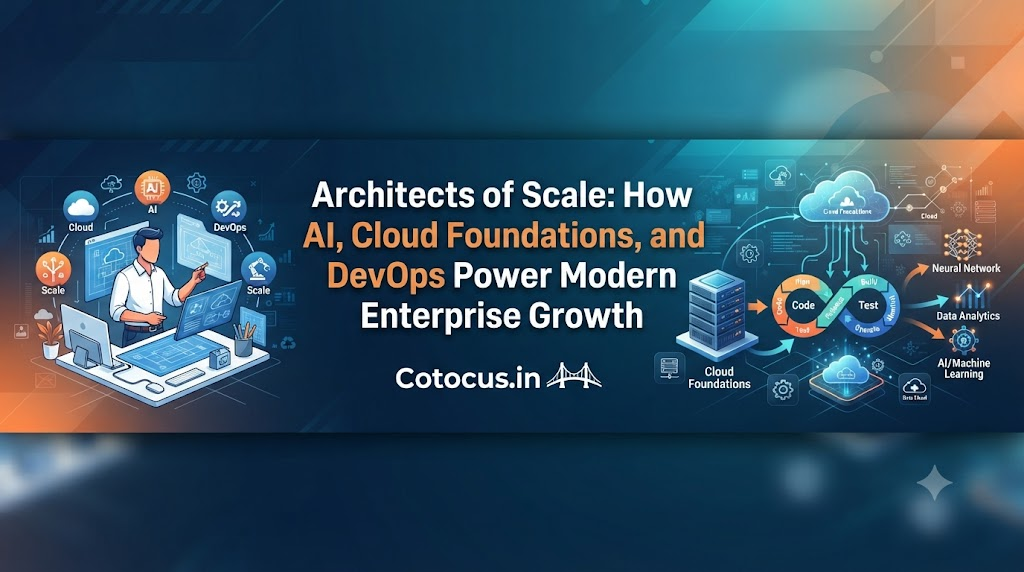
The blueprint for building and scaling software products has undergone a fundamental transformation. Launching a basic website or a siloed desktop tool no longer meets the demands of today’s fast-paced market. Modern organizations are aggressively fusing artificial intelligence, elastic cloud infrastructure, automated workflows, subscription platforms, mobile applications, and continuous deployment pipelines into a unified core strategy. Treating these advanced technologies as disconnected experiments rarely succeeds; lasting digital maturity requires an integrated approach that connects clean code, robust security, seamless scalability, and team readiness.
Forward-thinking leaders recognize that no single tool can resolve complex operational bottlenecks on its own. True digital progress relies on collaborating with seasoned technology providers who align their strategies with genuine business objectives rather than chasing short-lived industry fads.
The Evolution of Software Engineering
Traditional application development has matured into a sophisticated, multi-disciplinary engineering practice. Today’s high-performing systems rely heavily on cloud-native patterns, embedded intelligence, automated provisioning, and decoupled application programming interfaces. Engineering squads construct resilient architectures using microservices and containerized runtimes to maximize fault tolerance.
To ship reliable features at speed, modern engineering hinges on several foundational pillars:
- Automated pipelines handling continuous integration and continuous deployment for rapid testing and releases
- Infrastructure as code frameworks for repeatable, error-free environment provisioning
- Container runtimes and orchestration engines ensuring consistent application behavior across diverse environments
- Deep observability toolchains tracking system performance and telemetry in real time
- Security controls baked directly into every stage of the software lifecycle
Engineering groups unlock peak productivity when development and operations teams operate as a single unit from day one. Eradicating silos between writing code and managing infrastructure allows businesses to innovate quickly while safeguarding operational stability.
Deploying Artificial Intelligence with Purpose
Artificial intelligence has graduated from theoretical research labs into the bedrock of modern software solutions. Organizations collaborate with a specialized AI Software Development Company India to weave intelligent capabilities straight into their production workflows. These integrations eliminate redundant administrative friction, hyper-personalize customer touchpoints, and extract actionable insight from massive data repositories.
Core areas where machine intelligence delivers immediate business value include:
- Automated processing of unstructured documents and high-volume data entry
- Dynamic recommendation engines tailored to user behavior
- Advanced predictive analytics for resource and operational planning
- Natural conversational interfaces for streamlined client support
- Smart internal workflows that accelerate employee output
When vetting partners in this space, decision-makers must look beyond surface-level coding ability. A credible partner demonstrates mastery over data security, seamless API integration, scalability governance, and a nuanced understanding of real-world business constraints.
Leveraging Generative Intelligence for Enterprise Scale
Generative AI operates on an entirely different plane compared to traditional automation scripts or conventional machine learning classifiers. Rather than simply evaluating existing data against rigid rules, generative systems synthesize novel content, distill complex documentation, and assist technical teams with complex problem-solving. Enterprises tap into dedicated Generative AI Development Services to turn these models into practical business assets.
Common enterprise implementations feature intelligent internal assistants, automated content pipelines, enterprise-grade search systems, and automated document synthesis. Deploying these tools safely requires meticulous attention to model selection, data privacy, prompt design, and retrieval-augmented generation techniques. Organizations must also institute strict telemetry, ongoing evaluation, cost governance, and responsible usage policies to prevent model drift and data exposure.
Empowering Systems with Autonomous AI Agents
Autonomous digital agents represent the next major leap in computing assistance. Unlike standard conversational bots that react strictly to single-turn prompts, AI agents fuse reasoning loops, planning frameworks, external APIs, and business logic to execute multi-step workflows on their own.
Adopting specialized AI Agent Development Services requires careful architectural guardrails. Businesses must enforce strict access boundaries, mandatory human approval gates for critical actions, and transparent memory management. Because agents interact directly with external environments, robust monitoring, failure handling, and security governance are non-negotiable. Organizations should treat autonomous agents as powerful assistants requiring careful oversight rather than entirely unsupervised actors.
Crafting Bespoke Digital Assets
Off-the-shelf software packages often crack under the weight of unique operational workflows or complex industry regulations. Partnering with a Custom Software Development Company India enables businesses to build tailor-made applications mapped explicitly to their operational roadmap.
Custom software shines brightest when dealing with legacy system modernization, specialized analytics dashboards, proprietary internal portals, and custom automation layers. When vetting a custom development partner, engineering leaders should scrutinize architectural philosophy, testing automation, security hardening, technical documentation, and post-launch maintenance structures to ensure the final product remains agile over time.
Building Resilient Subscription Software Platforms
The software-as-a-service delivery model has rewritten the rules of product monetization and customer engagement. Launching a winning subscription platform demands disciplined system architecture backed by rigorous product thinking.
Essential considerations for subscription software development include:
- Multi-tenant data architectures that guarantee absolute tenant isolation
- Enterprise-grade authentication and granular authorization models
- Scalable billing and subscription management integrations
- Clean, well-documented API interfaces for ecosystem expansion
- Automated backup and disaster recovery protocols
- Deep product analytics to study user interaction and churn metrics
Building a sustainable subscription asset requires a deep appreciation of user experience design, cloud compute expenditure, and continuous deployment loops that push updates without disrupting active users.
Modernizing Operations Through DevOps
As release cadences accelerate, managing infrastructure through manual intervention quickly becomes a recipe for failure. Engaging for expert DevOps Consulting Services India helps organizations streamline delivery pipelines, eliminate deployment friction, and maximize operational uptime.
Primary focal points for DevOps consulting typically involve:
- Architecting automated build, test, and release pipelines
- Standardizing infrastructure provisioning via code
- Implementing containerization strategies and release policies
- Deploying centralized monitoring and tracing systems
- Fostering a culture of shared accountability between developers and system administrators
An effective consulting partnership always tailors its approach to an organization’s existing technology footprint, team capability, and commercial goals rather than pushing a one-size-fits-all playbook.
Navigating Cloud Migration Initiatives
Moving workloads and infrastructure to elastic cloud environments enables businesses to scale compute power on demand, trim capital expenditures, and fortify disaster recovery readiness. Organizations regularly seek out Cloud Migration Services India to modernize aging data centers.
A successful cloud transition relies on a methodical playbook:
- Deep application inventory audits and dependency mapping
- Strategic workload classification and phased migration grouping
- Designing secure identity, access, and networking topologies
- Establishing cost-governance and backup policies early
- Running rigorous performance benchmarks before final cutover
Migration should never be treated as a blind lift-and-shift exercise. Taking the time to refactor and modernize applications where appropriate ensures the business captures the full value of cloud-native scalability.
Orchestrating Infrastructure with Kubernetes
Containerization solved the problem of packaging code, but managing hundreds of containers at scale created an entirely new set of operational hurdles. Kubernetes has emerged as the industry baseline for container orchestration, helping engineering teams automate deployment, scaling, and operational management across distributed clusters.
Deploying specialized Kubernetes Consulting Services helps enterprises tame container complexity. Key areas of focus include automated rollout strategies, horizontal pod autoscaling, service discovery, configuration mapping, and cluster-level security hardening. However, Kubernetes introduces steep operational overhead and should only be adopted when application scale and team maturity genuinely justify the complexity.
Building High-Performance Mobile Applications
Mobile applications serve as critical engagement channels for consumers, field agents, and enterprise staff. Partnering with a Mobile App Development Company India allows companies to develop fluid, high-performance applications spanning Android, iOS, and cross-platform ecosystems.
Modern mobile engineering requires robust backend APIs, secure token-based authentication, reliable push notification pipelines, and seamless cloud synchronization. Furthermore, today’s mobile experiences frequently interface with AI microservices and complex enterprise databases, making rigorous performance tuning and mobile security paramount priorities.
Upskilling Teams Through Corporate Training
Technology moves at a relentless pace, making continuous workforce upskilling a core survival requirement. Specialized Corporate AI and DevOps Training programs empower technical teams to bridge skill gaps, embrace modern engineering standards, and navigate cloud and AI adoption safely.
Effective training initiatives must be customized around an organization’s specific technical stack, employee roles, and baseline proficiency. Elevating internal talent boosts cross-functional collaboration, reinforces security discipline, and ensures internal teams can confidently maintain digital assets long after external consultants depart.
The Interconnected Technology Lifecycle
Building resilient digital solutions requires viewing artificial intelligence, cloud infrastructure, delivery pipelines, container orchestration, and application layers as parts of a single ecosystem.
A healthy technology lifecycle flows through a continuous cycle:
- Business requirements shape system architecture and software design
- Engineers build application logic and intelligence features
- Automated test suites validate code health inside CI/CD pipelines
- Workloads deploy securely onto cloud infrastructure utilizing container orchestration
- Observability platforms monitor system telemetry and security posture in real time
- Operational insights feed directly back into the next product iteration
When these elements function in harmony, organizations can experiment and innovate rapidly while preserving rock-solid system stability.
Evaluating Technology Partners
Choosing the right technology collaborator is a pivotal decision for any digital initiative. Decision-makers should cut through marketing noise and evaluate prospective partners against rigorous benchmarks.
Key evaluation criteria include:
- Proven technical track record and relevant industry project history
- Sound software architecture and secure coding standards
- Deep cloud engineering competence and DevOps maturity
- Practical experience building and deploying machine learning solutions
- Comprehensive quality assurance and thorough documentation practices
- Responsive post-launch support and team enablement capabilities
Screening partners against these criteria ensures the resulting technology investment remains secure, scalable, and maintainable over the long haul.
How Cotocus Powers Digital Transformation
Navigating the intricacies of modern software engineering, cloud migration, artificial intelligence, and DevOps demands seasoned guidance. Cotocus partners with organizations across these critical disciplines, offering expert software development, cloud infrastructure consulting, DevOps implementation, Kubernetes orchestration, and professional technology training.
By prioritizing engineering rigor and practical business alignment, Cotocus helps enterprises build secure, scalable, and reliable digital products tailored to their exact operational requirements.
The Horizon of Software Engineering
The technology landscape continues to evolve at a blistering pace, driven by agentic artificial intelligence, advanced generative utilities, platform engineering frameworks, and secure software supply chain tools. Modern observability platforms and developer productivity suites are fundamentally rewriting how engineering squads build software.
Ultimately, lasting success will always depend on sound engineering fundamentals, strict data governance, robust security practices, and an unwavering focus on real business value rather than chasing temporary industry hype.
Conclusion
Artificial intelligence, custom application engineering, subscription platforms, mobile solutions, cloud migration, Kubernetes, and DevOps are no longer isolated domains. They constitute an integrated framework powering modern digital engineering. Organizations that evaluate their current technical readiness, define measurable targets, and blend external expertise with strong internal talent will remain best positioned to thrive in a digital-first world.


Leave a Reply
You must be logged in to post a comment.