Introduction
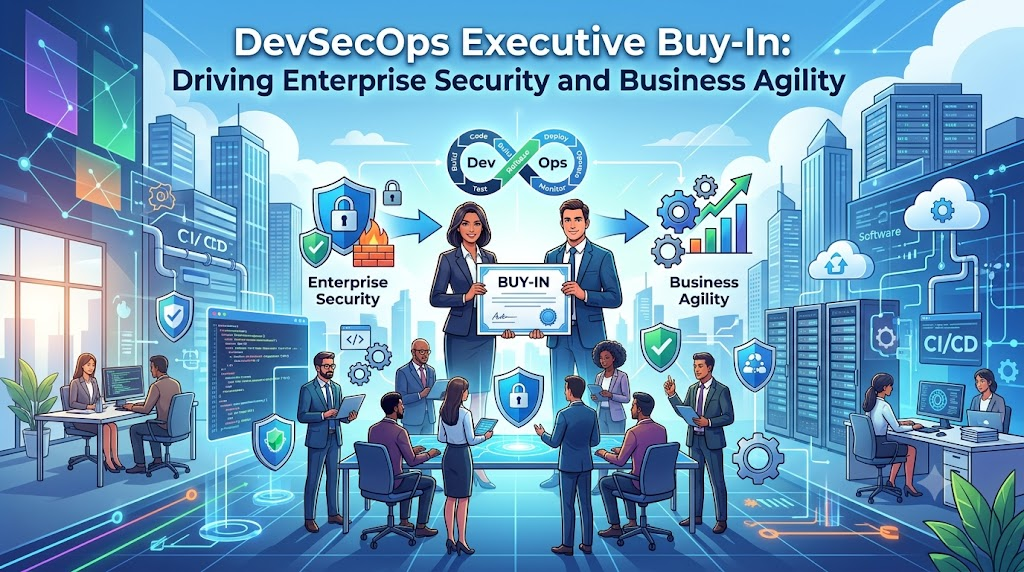
In the modern enterprise landscape, security can no longer function as an isolated, final gatekeeping step right before release, where traditional models routinely forced a painful choice between delaying market launch or shipping applications with unaddressed vulnerabilities. DevSecOps solves this by embedding automated security controls, compliance checks, and continuous testing directly into every phase of the CI/CD pipeline—yet software tools alone cannot drive this technical transition when bottom-up engineering efforts run into misaligned incentives, budget bottlenecks, and departmental silos. Sustainable security transformation requires active C-suite sponsorship, strategic budget allocation, and cultural alignment, which is why forward-thinking organizations rely on educational leaders like DevOpsSchool to equip teams with the skills required to bridge technical execution with corporate governance—as illustrated by a mid-sized financial firm whose bottom-up security initiative stalled in developer friction and unmitigated risk simply because leadership failed to align delivery targets with security outcomes.
What Is DevSecOps?
DevSecOps represents the structural integration of development, security, and operations into a single continuous delivery process. It builds on the foundational principles of DevOps—collaboration, automation, and continuous feedback—by treating security as a shared responsibility across the entire software delivery life cycle.
       +-------------------------------------------------------+
       |                  DevSecOps Cycle                      |
       |                                                       |
       |  [ Plan ] --> [ Code ] --> [ Build ] --> [ Test ]     |
       |      ^                                       |        |
       |      |                                       v        |
       |  [ Monitor ] <-- [ Operate ] <-- [ Deploy ]          |
       +-------------------------------------------------------+
       |   Automated Security, Compliance & Monitoring Enforced|
       +-------------------------------------------------------+
In a traditional DevOps model, development and operations collaborate to deploy code rapidly. DevSecOps extends this collaboration by embedding automated security checkpoints directly into the deployment workflow.
Key concepts include:
- Shift-Left Security: Testing for vulnerabilities early in the design and coding stages rather than waiting for pre-production audits. Identifying bugs during code creation costs significantly less to remediate than fixing vulnerabilities found in production.
- Automated Security Guardrails: Replacing manual security reviews with automated security scans integrated directly into code management repositories and deployment pipelines.
- Continuous Security Testing: Conducting static application security testing (SAST), dynamic application security testing (DAST), software composition analysis (SCA), and infrastructure as code (IaC) scanning automatically on every code push.
To visualize this, imagine building a commercial skyscraper. A traditional approach constructs the entire structure first and brings in safety inspectors just before opening the doors. If a foundational defect is found, fixing it requires demolishing major sections of the building. The DevSecOps approach brings safety standards and structural checks into every architectural blueprint, bricklayer’s schedule, and material delivery—catching flaws while the concrete is still wet.
Why DevSecOps Is More Than a Technical Initiative
A common misconception among business leaders is that DevSecOps is simply a software purchasing decision. Executives often assume that acquiring enterprise security scanning tools automatically fulfills security mandates. In practice, tools represent only a single dimension of a broader system.
       +-------------------------------------------------------+
       |                  DevSecOps Triad                      |
       |                                                       |
       |                      CULTURE                          |
       |                    /         \                        |
       |                   /           \                       |
       |                  /             \                      |
       |             PROCESS ----------- TOOLS                 |
       +-------------------------------------------------------+
DevSecOps requires comprehensive operational change across multiple dimensions:
Cultural Transformation
DevSecOps shifts the organizational mindset from “security is the security team’s problem” to “security is a shared operational standard.” This shift requires building an environment where engineers feel empowered to prioritize bug fixes without fear of missing arbitrary release dates.
Process Optimization
Traditional development processes often rely on heavy manual approval gates and lengthy security audits. Modern security integration streamlines these workflows by creating automated compliance guardrails, reducing friction between teams.
Cross-Functional Collaboration
DevSecOps breaks down historical rivalries between software developers, system administrators, and cybersecurity auditors. It brings these groups into regular alignment around unified delivery metrics.
Shared Security Ownership
In mature organizations, developers write code with security principles in mind, operations teams manage secure infrastructure baselines, and security experts focus on threat modeling, architecture design, and strategic policy enforcement rather than manual testing.
What Is Executive Buy-In in DevSecOps?
Executive buy-in is more than high-level approval or signing off on software budgets. True executive sponsorship means C-suite leaders actively champion security as an enterprise priority, align organizational incentives with secure software practices, and allocate resources for long-term capability building.
Executive support requires:
- Strategic Alignment: Connecting software security goals directly to top-line business objectives, such as customer trust, revenue protection, operational resiliency, and regulatory compliance.
- Resource and Capital Allocation: Granting dedicated funding for modern tooling, developer security training, cloud infrastructure, and organizational restructuring.
- Cross-Departmental Authority: Resolving operational friction between competing business priorities—such as feature velocity versus systemic stability and security.
- Sustained Leadership Engagement: Regularly reviewing security metrics at the board level and holding business leaders accountable for security performance alongside financial goals.
Why DevSecOps Needs Executive Buy-In
Security Requires Organization-Wide Change
Implementing security practices across the enterprise requires altering established workflows in development, quality assurance, IT infrastructure, legal compliance, and product management. Technical managers lack the cross-departmental authority required to mandate these structural shifts. Executive leaders must step in to redefine performance metrics, ensure department goals are aligned, and encourage teams to share accountability for operational risk.
Leadership Provides Strategic Direction
When security initiatives operate in isolation, they often focus on technical tasks rather than business outcomes. Executive engagement ensures security priorities support broader corporate goals—such as expanding into regulated markets, accelerating product releases, or protecting market reputation. Clear strategic vision helps engineering teams focus on the security practices that deliver the highest risk reduction and business value.
Executives Enable Budget and Resources
Transitioning to an automated, secure delivery workflow requires up-front investment. Organizations must invest in modern tooling, continuous learning, secure cloud architecture, and ongoing skill development. Without dedicated executive funding, teams are forced to rely on fragmented open-source tools or incomplete workarounds that struggle to scale across enterprise applications.
Leadership Helps Build Security Culture
Organizational culture reflects what executive leadership measures, rewards, and prioritizes. If leadership exclusively praises delivery speed while ignoring security technical debt, engineering teams will naturally sacrifice security to meet feature deadlines. When executives publicly champion security, recognize teams for fixing vulnerabilities, and reward proactive risk management, they establish a culture where security is valued across all levels.
Executives Reduce Resistance to Change
Changing day-to-day practices inevitably creates operational friction. Developers may resist extra automated steps, while security analysts may hesitate to trust automated testing policies over manual checks. Executive leaders help manage this transition by communicating the strategic necessity of the shift, aligning management incentives, and maintaining momentum during the early phases of adoption.
Business Benefits of Executive-Driven DevSecOps Adoption
| Benefit | Business Impact |
| Reduced Security Risks | Minimizes high-profile data breaches, regulatory fines, and costly emergency patches. |
| Faster Software Delivery | Eliminates late-stage security bottlenecks, accelerating time-to-market for new features. |
| Improved Compliance Readiness | Automates audit trail collection for standards like SOC 2, ISO 27001, HIPAA, and PCI-DSS. |
| Lower Operational Costs | Reduces the financial cost of remediating vulnerabilities by fixing issues early in the delivery lifecycle. |
| Enhanced Customer Trust | Builds market confidence by protecting customer data and maintaining high system availability. |
| Faster Incident Response | Speeds up threat identification, containment, and recovery through automated deployment pipelines. |
| Higher Engineering Productivity | Streamlines delivery pipelines and automates repetitive compliance tasks, freeing developers to focus on core features. |
Exploring the Core Business Benefits
Reduced Security Risks
Proactive, automated security testing significantly lowers the likelihood of critical vulnerabilities reaching production environments. By identifying security flaws during early code reviews, organizations protect sensitive business data, safeguard intellectual property, and prevent operational disruptions caused by external attacks.
Faster Software Delivery
Security checks often become major bottlenecks when executed right before launch. Integrating automated security verification into CI/CD pipelines allows organizations to push code updates continuously, safely, and predictably—delivering value to customers faster without increasing business exposure.
Improved Compliance Readiness
Regulatory standards require continuous proof of compliance, audit trails, and access control policies. Executive-backed initiatives embed automated compliance tracking directly into deployment workflows, making audit readiness a natural byproduct of day-to-day software operations rather than a disruptive annual preparation exercise.
Lower Operational Costs
Fixing a security vulnerability in production can cost up to 30 times more than addressing the same issue during the design or early coding phase. By shifting security evaluations left, organizations significantly lower engineering rework expenses, legal fees, and administrative overhead associated with emergency hotfixes.
Enhanced Customer Trust
Enterprise clients and retail users demand strong data security guarantees. Organizations that demonstrate continuous security governance build stronger market reputations, achieve higher brand loyalty, and gain a clear competitive advantage in trust-sensitive industries.
Faster Incident Response
When zero-day vulnerabilities emerge, executive-aligned delivery platforms enable rapid risk assessment and automated patching across application fleets. Automated pipelines allow engineering teams to build, test, and deploy critical security updates within hours rather than weeks.
Higher Engineering Productivity
Manual security testing and fragmented compliance reporting consume significant engineering hours. Automated security tooling streamlines administrative workflows, allowing developers to spend less time filling out compliance forms and more time writing high-value business features.
Role of Executives in DevSecOps Transformation
| Leadership Role | DevSecOps Responsibility |
| Chief Executive Officer (CEO) | Champions security as a strategic corporate initiative; aligns company culture with proactive risk management. |
| Chief Information Officer (CIO) | Oversees modernizing enterprise infrastructure; aligns IT operations with secure, scalable delivery systems. |
| Chief Technology Officer (CTO) | Drives the technical strategy; integrates automated security guardrails directly into software architecture and development pipelines. |
| Chief Information Security Officer (CISO) | Defines security standards and governance policies; transitions security teams from reactive auditors to continuous engineering enablers. |
| Engineering Managers | Adjusts daily sprint priorities and performance goals; ensures software teams have dedicated time for security debt remediation. |
| Security Managers | Collaborates with software teams to integrate security tools directly into developer workflows; provides actionable threat guidance. |
                     +---------------------------+
                     |         CEO / BOARD       |
                     |  (Culture & Strategy)     |
                     +-------------+-------------+
                                   |
         +-------------------------+-------------------------+
         |                                                   |
+--------v--------+                                 +--------v--------+
|    CIO / CTO    |                                 |      CISO       |
| (Infrastructure |                                 |  (Governance &  |
|  & Architecture)|                                 | Risk Management)|
+--------+--------+                                 +--------+--------+
         |                                                   |
         +-------------------------+-------------------------+
                                   |
                     +-------------v-------------+
                     |   ENGINEERING LEADERSHIP  |
                     | (Execution & Remediation) |
                     +---------------------------+
Strategic Alignment across Leadership Roles
Chief Executive Officer (CEO)
The CEO sets the organization’s operational standard. By communicating that software security is directly tied to customer trust and corporate performance, the CEO creates the top-level sponsorship required to align disparate business departments.
Chief Information Officer (CIO)
The CIO drives operational infrastructure modernization, removing aging system architectures that cannot support automated delivery pipelines. The CIO ensures enterprise IT investments support fast, continuous deployment cycles without compromising stability.
Chief Technology Officer (CTO)
The CTO defines the engineering vision, ensuring software architecture, container frameworks, and CI/CD pipelines incorporate automated security checks from the ground up. The CTO bridges the gap between software features, operational speed, and technical resilience.
Chief Information Security Officer (CISO)
The CISO evolves the security department from an external control group into an integrated engineering partner. The CISO defines automated policy controls, establishes threat modeling practices, and ensures security metrics align with engineering workflows.
Engineering Managers
Engineering Managers manage daily development velocity and team capacity. They ensure developers have adequate sprint time to fix identified code vulnerabilities, reduce technical security debt, and complete ongoing security education.
Security Managers
Security Managers work directly alongside software teams to provide practical context for discovered flaws. They help tune automated scanning systems to minimize false positives and build internal security champion programs within software teams.
DevSecOps Without Executive Support: Common Challenges
When engineering teams attempt to adopt DevSecOps without C-suite backing, initiatives routinely run into structural roadblocks that limit enterprise adoption.
+-----------------------------------------------------------------+
|             Unsupported DevSecOps Implementation                |
+-----------------------------------------------------------------+
|  [ Limited Budget ] --> [ Tool Sprawl & False Positives ]       |
|                                |                                |
|                                v                                |
|  [ Untrained Teams ] --> [ Friction & Developer Resistance ]    |
|                                |                                |
|                                v                                |
|  [ Slower Deliveries & High Technical Security Debt ]          |
+-----------------------------------------------------------------+
- Limited Budget and Resource Constraints: Bottom-up security initiatives often lack dedicated funding, forcing engineers to use fragmented open-source tools that are difficult to scale, manage, or maintain across complex enterprise platforms.
- Poor Tool Adoption and False Positive Fatigue: Without leadership-backed integration standards, security tools are often layered onto existing processes without proper calibration. This generates floods of false positives that overwhelm developers, leading them to ignore security alerts altogether.
- Lack of Formal Training and Skill Gaps: Developers are frequently asked to write secure code without receiving training on secure coding practices, cloud security baselines, or modern threat modeling methods.
- Team Resistance and Cultural Friction: Without clear direction from leadership, developers often view new security checks as frustrating hurdles that slow down software releases and threaten delivery deadlines.
- Security Functioning as an Isolated Department: Security remains an isolated unit that steps in at the end of the development cycle to conduct manual audits, preserving historical bottlenecks and departmental friction.
- Slow, Incomplete Transformation: Security improvements remain isolated within small pockets of enthusiastic teams, failing to scale across the wider enterprise application portfolio.
How Executives Can Support DevSecOps Adoption
To convert security goals into lasting operational capability, executives must provide structured leadership across six strategic areas.
       +-------------------------------------------------------+
       |           Executive Enablement Framework              |
       |                                                       |
       |  1. Define Clear Goals   --> 2. Invest in Skills      |
       |             |                        |                |
       |             v                        v                |
       |  3. Encourage Alignment  --> 4. Fund Automation       |
       |             |                        |                |
       |             v                        v                |
       |  5. Track Metrics        --> 6. Reward Practice      |
       +-------------------------------------------------------+
1. Define Clear Security Goals
Executives must define actionable, measurable security expectations aligned with business strategy. Rather than setting vague targets like “improve system security,” leadership should establish clear performance indicators—such as scanning 100% of production applications, automating compliance checks, and resolving critical flaws within defined SLAs.
2. Invest in Training and Skills
Technology platforms evolve rapidly, making continuous skill development essential. Leadership must allocate dedicated budget and time for developers, SREs, and security engineers to learn modern application security practices, cloud guardrails, and automated testing frameworks.
3. Encourage Collaboration and Shared Goals
Executives should restructure performance management frameworks to reward cross-departmental success. When security metrics are integrated into developer targets and delivery velocity metrics are shared with security managers, teams naturally align their daily decisions.
4. Support Automation and Platform Engineering
Manual security inspections do not scale alongside modern deployment environments. Executives must champion investments in platform engineering, automated CI/CD security workflows, dynamic analysis systems, and self-service security components that make doing things securely the default path for developers.
5. Measure Security Progress Transparently
Leadership must establish visibility into security metrics through executive dashboards. Regularly reviewing vulnerability trends, mean time to remediation (MTTR), and pipeline security coverage alongside financial metrics ensures risk governance remains an active corporate commitment.
6. Reward Secure Development Practices
Leadership should publicly recognize and reward engineering teams that prioritize application security, fix technical debt, and contribute to internal security libraries. Celebrating proactive security behavior reinforces its importance across the culture.
Executive DevSecOps Support Checklist
- Establish executive-sponsored security targets for all software products.
- Allocate dedicated annual budget for security tooling, training, and platform engineering.
- Align developer and security performance metrics around unified business goals.
- Build continuous security testing requirements into standard CI/CD deployment pipelines.
- Conduct quarterly executive reviews focused on threat exposure, MTTR, and compliance readiness.
- Establish clear SLAs for resolving critical software vulnerabilities across all environments.
- Implement formal recognition programs for teams that demonstrate exemplary security practices.
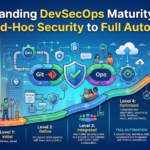
DevSecOps Maturity Model and Leadership Impact
Moving through the stages of DevSecOps maturity requires evolving both organizational behaviors and leadership engagement.
| Maturity Level | Organization Behavior | Leadership Role |
| Level 1: Initial | Security is reactive, manual, and executed strictly before release; frequent deployment delays. | Sponsor: Recognizes security risks and approves initial exploratory funding. |
| Level 2: Developing | Basic automated SAST/SCA scanners introduced; security teams run isolated tools with high false positives. | Enabler: Mandates basic security training and establishes cross-departmental communication channels. |
| Level 3: Defined | Automated security checks integrated directly into CI/CD pipelines; security policies documented and standardized across core teams. | Strategist: Aligns business performance metrics with secure delivery standards; funds platform engineering. |
| Level 4: Managed | Application security metrics tracked continuously; automated policy enforcement across multi-cloud environments; developers fix vulnerabilities independently. | Governor: Conducts board-level security reviews; leverages automated compliance to accelerate market entry. |
| Level 5: Optimized | Continuous adaptive security, automated remediation workflows, self-healing architecture, and deeply embedded blameless security culture. | Visionary: Drives industry-leading security practices as a primary market differentiator and brand trust builder. |
Building a Strong DevSecOps Culture
A mature security posture relies on culture just as much as automation. Tools enforce policy rules, but organizational culture dictates how engineers respond when unforeseen edge cases arise.
       +-------------------------------------------------------+
       |               DevSecOps Cultural Core                 |
       |                                                       |
       |   +-------------------+       +-------------------+   |
       |   | Shared Responsibility |   | Developer Ownership|  |
       |   +---------+---------+       +---------+---------+   |
       |             |                           |             |
       |             +-------------+-------------+             |
       |                           |                           |
       |   +-----------------------v-----------------------+   |
       |   | Blameless Post-Mortems & Continuous Learning  |   |
       |   +-----------------------------------------------+   |
       +-------------------------------------------------------+
Shared Responsibility
In a healthy DevSecOps environment, security is no longer delegated exclusively to a isolated auditing group. Software developers, system operators, database managers, and product leads take pride in delivering resilient, secure code.
Security Awareness
Security education must shift away from passive, annual compliance videos toward practical, context-aware training. Conducting regular threat modeling sessions and hands-on workshops helps engineers understand attack mechanics and design safer software architectures.
Developer Empowerment
Developers must be equipped with immediate feedback tools within their IDEs and code management platforms. Providing engineers with clear, actionable context allows them to identify and resolve flaws directly at their workstations before pushing code to central repositories.
Continuous Learning and Blameless Improvement
When security incidents occur, resilient organizations conduct blameless post-mortems. Instead of assigning personal fault, teams analyze system failures, refine automated test suites, update infrastructure policies, and share lessons learned across the enterprise.
Open Communication
Building open communication channels between software engineers and security analysts eliminates operational friction. Establishing internal “Security Champions” networks within engineering teams creates local support systems for resolving security challenges.
Measuring DevSecOps Success
To verify that DevSecOps investments deliver real business value, leadership must track performance metrics across security, operations, and business dimensions.
| Metric | Why It Matters |
| Vulnerability Detection Time | Measures how early in the delivery lifecycle security flaws are discovered; shorter times significantly lower remediation costs. |
| Security Issue Resolution Time (MTTR) | Tracks the average speed at which teams patch identified vulnerabilities across staging and production systems. |
| Deployment Frequency | Demonstrates the team’s ability to release software updates quickly and safely without manual security bottlenecks. |
| Compliance Readiness | Evaluates how efficiently an organization generates operational audit evidence using automated testing controls. |
| Security Training Participation | Tracks engineering team engagement with secure coding courses and technical workshops. |
| Automation Coverage | Measures the percentage of code deployment pipelines that execute automated security and compliance checks. |
| Incident Response Time | Measures how quickly security and operations teams isolate, contain, and resolve active production threats. |
Real-World Example: Executive Support Driving DevSecOps Success
A global retail healthcare provider operated a complex hybrid cloud infrastructure handling sensitive patient records and processing millions of daily API transactions. Over several years, the engineering department expanded rapidly, adopting microservices architectures and continuous deployment to keep pace with market demand.
However, security audits remained tied to an older quarterly review process. Security teams conducted manual penetration testing and static code reviews right before major updates went live. As feature release velocity increased, this manual process created serious operational challenges:
- Software releases were routinely delayed by three to four weeks while teams resolved accumulated compliance backlogs.
- Vulnerability remediation costs escalated because flaws were uncovered long after original code was written.
- Engineering and security teams experienced severe operational friction, blaming each other for missed feature schedules and unpatched software flaws.
+-----------------------------------------------------------------+
|                      Transformation Journey                     |
+-----------------------------------------------------------------+
|  BEFORE: High Friction & Delayed Releases                       |
|  [ Feature Build ] --> [ Pre-Release Audit Blockers ]           |
|                                                                 |
|  EXECUTIVE ACTION:                                              |
|  [ C-Suite Alignment ] --> [ Dedicated Funding & Training ]     |
|                                                                 |
|  AFTER: Integrated DevSecOps Platform                           |
|  [ Automated CI/CD Scans ] --> [ Fast, Secure Deployments ]     |
+-----------------------------------------------------------------+
Recognizing the strategic threat to business growth and regulatory compliance, the executive team stepped in with a comprehensive transformation plan led by the CTO, CISO, and VP of Engineering:
- Strategic Alignment: Leadership made secure software delivery an explicit corporate OKR, linking executive compensation to both feature release velocity and software security health.
- Resource Allocation: Executive leadership allocated funding for automated application security tools, integrated software supply chain scanners, and self-service cloud infrastructure platforms.
- Capability Building: The organization provided developers and operations engineers with dedicated weekly training hours to learn secure coding practices and container security guardrails.
- Process Integration: Security engineers worked alongside software architects to embed automated security testing directly into CI/CD pipelines.
- Cultural Shift: Leadership established blameless post-mortem reviews and introduced quarterly awards to celebrate engineering teams that reduced technical security debt.
Within twelve months, the results transformed the organization’s delivery capabilities:
- 90% Reduction in Pre-Release Security Bottlenecks: Automated security testing caught 85% of software flaws during early code reviews.
- Release Frequency Increased 4x: Engineering teams moved from delayed quarterly updates to multiple production deployments per week.
- Mean Time to Remediation (MTTR) Dropped from 45 Days to 4 Hours: Critical vulnerabilities were identified, patched, and automatically re-deployed within hours.
- Audit Efficiency Improved 70%: Compliance reporting for HIPAA and PCI-DSS became automated, saving hundreds of engineering hours during annual audits.
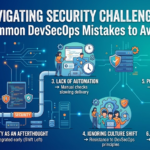
Common Mistakes Executives Make During DevSecOps Adoption
Even well-intentioned leaders can stumble during a security transformation if they rely on outdated management practices.
       +-------------------------------------------------------+
       |                  Common Pitfalls                      |
       |                                                       |
       |  [ Buying Tools Without Strategy ]                    |
       |  [ Treating Security as a Siloed IT Issue ]           |
       |  [ Ignoring Culture Change & Training ]               |
       |  [ Demanding Immediate Results ]                      |
       |  [ Measuring Only Vulnerability Counts ]              |
       +-------------------------------------------------------+
Treating Security as Only an IT Issue
The Mistake: Viewing application security as an isolated technical problem rather than a core business strategy.
The Solution: Recognize that security directly impacts revenue protection, brand reputation, regulatory compliance, and customer trust.
Purchasing Tools Without a Clear Strategy
The Mistake: Buying enterprise security tools without integrating them into developer workflows or adjusting team processes.
The Solution: Focus on developer experience, pipeline integration, and automated guardrails before purchasing additional security software.
Ignoring Cultural Change
The Mistake: Mandating new security tools while leaving developer performance evaluations tied exclusively to feature delivery speed.
The Solution: Align organizational rewards, team goals, and delivery metrics so security is valued alongside speed.
Underfunding Training and Skill Development
The Mistake: Expecting software developers to instantly master secure coding and cloud infrastructure rules without targeted education.
The Solution: Budget continuously for hands-on training programs, certifications, and security workshops.
Demanding Immediate Results
The Mistake: Expecting an enterprise-wide security transformation to happen overnight, leading to frustration when early friction occurs.
The Solution: Adopt an iterative transformation roadmap, focusing on incremental improvements across high-value application services first.
Measuring Only Security Failures
The Mistake: Tracking only vulnerability counts, system outages, and security defects, which creates a punitive work environment.
The Solution: Measure positive progress metrics like remediation speed, pipeline scan coverage, and security training completion.
How DevOpsSchool Helps Professionals Learn DevSecOps Practices
Successfully executing a leadership-backed DevSecOps strategy requires technical knowledge, practical platform training, and organizational alignment. DevOpsSchool provides comprehensive educational programs designed to help engineers, architects, and technology leaders implement modern secure software delivery practices.
       +-------------------------------------------------------+
       |             DevOpsSchool Learning Framework           |
       |                                                       |
       |  [ CI/CD Pipeline Integration ]                       |
       |  [ Cloud-Native Security & Infrastructure as Code ]   |
       |  [ Automated Vulnerability Management ]               |
       |  [ Practical Hands-On Enterprise Labs ]               |
       |  [ Strategic Leadership Alignment Guidance ]          |
       +-------------------------------------------------------+
Key Areas Focus
- Practical DevSecOps Implementation: Master integrating automated SAST, DAST, SCA, and IaC security scanning tools into CI/CD pipelines using platforms like Jenkins, GitLab, GitHub Actions, and Kubernetes.
- Cloud-Native Security Architecture: Learn to secure modern multi-cloud environments, container runtimes, microservices architectures, and serverless applications.
- Automated Compliance and Governance: Understand how to build continuous compliance workflows, manage secrets securely, and automate policy enforcement at enterprise scale.
- Hands-On Real-World Labs: Gain practical experience through scenario-based projects that mirror complex enterprise environments and real-world security challenges.
- Career and Transformation Mentorship: Access guidance from seasoned industry architects who understand how to guide engineering teams through technical and cultural security transformations.
By combining foundational theory with real-world technical execution, educational resources like DevOpsSchool empower individual contributors and technology managers to lead successful DevSecOps initiatives within their organizations.
Future of Executive-Led DevSecOps Transformation
As technological complexity increases, executive leadership will play a vital role in shaping resilient security organizations.
       +-------------------------------------------------------+
       |               Emerging DevSecOps Trends               |
       |                                                       |
       |  [ AI-Powered Threat Detection & Code Remediation ]   |
       |  [ Platform Engineering & Self-Service Guardrails ]   |
       |  [ Continuous Automated Compliance (Policy-as-Code) ] |
       |  [ Software Supply Chain Security & Attestation ]     |
       +-------------------------------------------------------+
AI-Powered Security Operations
Artificial intelligence and machine learning tools are reshaping modern threat detection and automated code remediation. AI capabilities analyze code changes, suggest contextual security fixes directly in pull requests, and identify abnormal application behavior in production. Executives must guide the adoption of AI tools to enhance engineering productivity while managing privacy and model governance risks.
Platform Engineering and Developer Security Platforms
Leading organizations are adopting Internal Developer Platforms (IDPs) that embed security standards directly into daily developer workflows. Platform engineering teams create pre-configured, compliant development environments and deployment templates, making secure choices the easiest path for software engineers.
Continuous Automated Compliance (Policy-as-Code)
Static quarterly compliance audits are being replaced by Policy-as-Code frameworks. Executives will increasingly rely on automated governance tools that evaluate application policies, cloud configurations, and identity access rules continuously, providing real-time compliance status across multi-cloud environments.
Software Supply Chain Security
High-profile supply chain attacks have elevated software components and open-source dependencies into a board-level priority. Leaders must ensure their engineering teams implement strict dependency verification, generate Software Bills of Materials (SBOMs), and enforce cryptographically signed build pipelines.
FAQs (15 Questions)
1. Why does DevSecOps require executive support?
DevSecOps requires executive support because it involves organizational, cultural, and workflow changes across multiple departments. Without leadership sponsorship, teams struggle with resource constraints, conflicting goals, and resistance to change.
2. Is DevSecOps only the responsibility of the security team?
No. DevSecOps makes security a shared responsibility across software developers, operations engineers, quality assurance, and security teams. Executive leadership ensures every department shares accountability for application security.
3. How can executives support DevSecOps adoption?
Executives can support adoption by defining clear security goals, allocating funding for tooling and training, aligning performance metrics, encouraging collaboration, and recognizing teams that demonstrate strong security practices.
4. What happens when leadership ignores DevSecOps initiatives?
When leadership ignores DevSecOps, initiatives remain isolated within small engineering groups. This results in tool fragmentation, unprioritized security alerts, developer burnout, late-stage release delays, and increased vulnerability to data breaches.
5. How does executive sponsorship improve security culture?
Executive sponsorship establishes security as an enterprise priority. When leaders publicly reward security improvements and promote blameless learning, teams feel empowered to prioritize security alongside delivery speed.
6. What resources are required for a DevSecOps transformation?
Successful transformation requires investment in automated security tools (SAST, DAST, SCA, IaC), platform engineering infrastructure, developer training programs, and the continuous refinement of deployment pipelines.
7. Can small and medium-sized businesses implement DevSecOps?
Yes. DevSecOps principles apply to organizations of all sizes. Smaller organizations often adapt faster because they have fewer organizational silos and can embed automated security tools into cloud-native CI/CD pipelines early on.
8. How long does an enterprise DevSecOps transformation take?
A full enterprise transformation typically takes 12 to 24 months, depending on organizational size, legacy technical debt, and executive commitment. However, initial improvements—such as automated code scanning—can deliver measurable value within weeks.
9. How do executives measure DevSecOps ROI?
Executives measure ROI through reduced vulnerability remediation costs, faster software release cycles, fewer production security incidents, automated compliance reporting, and lower audit overhead.
10. Does DevSecOps slow down software development?
No. While introducing security checks can initially create short-term friction, a mature DevSecOps platform speeds up overall software delivery by catching bugs early and eliminating late-stage launch blockers.
11. What is the difference between DevOps and DevSecOps?
DevOps focuses on automating and streamlining software delivery between development and operations teams. DevSecOps expands this approach by embedding automated security controls, compliance checks, and threat modeling directly into every phase of that delivery pipeline.
12. How does DevSecOps lower application vulnerability remediation costs?
Fixing flaws during early development stages costs significantly less than fixing vulnerabilities found in production. DevSecOps uses automated testing to identify flaws while code is being written, preventing costly post-release emergency patches.
13. What role does automation play in DevSecOps leadership?
Automation removes human error, provides consistent policy enforcement, and allows security controls to scale alongside deployment volumes. Leadership support ensures teams have the platform resources needed to build reliable, automated security guardrails.
14. How can developers be encouraged to adopt secure coding practices?
Developers adopt secure coding when given immediate feedback tools inside their IDEs, dedicated sprint time to resolve technical security debt, clear context for identified flaws, and ongoing learning opportunities rather than punitive audits.
15. How do executives select the right DevSecOps training resources?
Executives should choose practical, industry-aligned training programs that combine conceptual frameworks with hands-on enterprise lab exercises, platform engineering concepts, and real-world pipeline integration methods.
Final Thoughts
DevSecOps is fundamentally an organizational evolution that aligns engineering practices with business strategy. While technical tools and automated deployment pipelines are necessary components, they cannot drive lasting enterprise transformation on their own.
Without executive vision, budget support, and strategic alignment, security initiatives frequently stall under the weight of competing business priorities, departmental silos, and technical debt. Executive buy-in transforms application security from a reactive, manual roadblock into an automated engine for fast, safe, and resilient software delivery.
By providing clear direction, investing in engineering skills, modernizing delivery platforms, and building a blameless culture, leadership empowers organizations to ship features quickly while maintaining strong security standards. In today’s digital landscape, executive-led DevSecOps is not merely a modern IT strategy—it is an essential requirement for long-term business resilience and market trust.



Leave a Reply
You must be logged in to post a comment.