Losing important data can disrupt an entire business. A failed hard drive can erase years of work. A ransomware attack can lock vital files. Even a simple mistake can delete important records.
Data backup tools help prevent these problems. They create copies of files, databases, servers, and other digital information. Users can restore these copies when the original data becomes lost or damaged.
But not every backup tool solves the same problem. Some protect office computers. Others handle large business systems, cloud workloads, and virtual machines. Some focus on simple online backups, while others offer advanced recovery controls.
This guide explores ten useful data backup tools. It explains their main features, strengths, limits, and best uses. It also helps you choose a tool that fits your needs.
What Are Data Backup Tools?
Data backup tools create and manage copies of digital information. These copies help users recover data after loss, damage, or system failure.
A backup can protect many types of information, such as:
- Documents, photos, and business files
- Databases and application data
- Virtual machines and servers
- Employee computers and laptops
- Cloud storage and business applications
- Websites and shared folders
Most backup tools support scheduled backups. This means they can copy data at set times. Some also track changes and save only new or changed data.
This can reduce storage use and backup time.
However, creating a backup is only part of the job. You must also check that the backup works. A copy that cannot be restored offers little protection.
How to Choose the Right Data Backup Tool
Start with the data you need to protect. Then compare the recovery options and daily work each tool requires.
1. Check What the Tool Can Protect
Some tools focus on computers and files. Others protect servers, databases, virtual machines, or cloud applications.
Make a list of every system you need to back up. Check that the product supports each one.
2. Understand Backup Types
Backup tools may offer several methods.
- Full backup: Copies all selected data.
- Incremental backup: Copies data changed since the last backup.
- Differential backup: Copies data changed since the last full backup.
- Image backup: Saves a full system image for recovery.
- File backup: Copies selected files and folders.
Each method has different storage and recovery needs.
3. Review Recovery Options
Check how the tool restores data. Can you recover one file? Can you restore a full computer? Can you bring back a server or database?
Also check how long recovery may take. Your business may need some systems back quickly.
4. Check Backup Security
A backup must stay safe from theft and attacks.
Look for encryption, access controls, multi-factor authentication, and protected backup copies. Immutable storage can also help. It stops backup data from being changed or deleted during a set period.
Do not assume every security feature comes with every plan.
5. Calculate the Full Cost
The price of backup software is only one part of the cost.
You may also pay for storage, cloud data transfer, extra workloads, support, and recovery services. Some tools need local hardware or staff to manage them.
Compare the full cost before you choose.
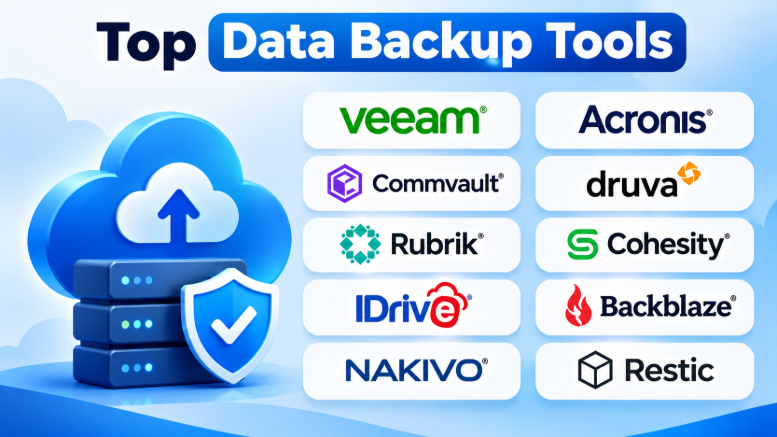
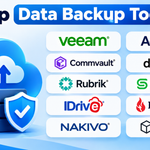
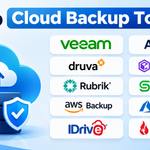
Top 10 Data Backup Tools
The tools below serve different users and workloads. Some focus on enterprise backup. Others suit small teams, cloud-first businesses, or technical users.
1. Veeam Data Platform
Veeam Data Platform supports data protection across virtual, physical, cloud, and other business environments. It is designed for organizations that need central backup management and recovery options.
Veeam is a strong option for businesses with mixed IT systems. It can help teams manage backup jobs across different workloads.
Key features
- Backup and recovery for supported virtual and physical workloads
- Protection for selected cloud environments
- Central backup management
- Backup monitoring and reporting
- Recovery options for supported applications and systems
- Security features for protecting backup data
Pros
- Supports a broad range of business workloads.
- Offers detailed backup and recovery controls.
- Fits organizations with complex IT systems.
- Provides options for backup verification.
Cons
- Setup may require technical knowledge.
- Licensing can become complex across many workloads.
- Larger deployments need careful planning.
Best use: Businesses that need backup across virtual machines, servers, and hybrid IT systems.
2. Acronis Cyber Protect
Acronis Cyber Protect combines backup with endpoint protection features. It helps organizations protect devices and recover data after common system problems.
Its combined approach can appeal to teams that want backup and security tools in one product. However, buyers should check which features their chosen plan includes.
Key features
- File and system backup
- Disk imaging and recovery
- Cloud and local backup options
- Endpoint security features
- Ransomware protection features
- Central management for supported devices
Pros
- Combines backup with endpoint protection.
- Offers several recovery methods.
- Supports different business sizes.
- Can reduce the need for separate tools in some setups.
Cons
- The wide feature set may take time to manage.
- Some capabilities depend on the selected plan.
- Teams should review system and workload support before buying.
Best use: Small and midsize businesses that want backup and endpoint protection together.
3. Commvault Cloud
Commvault Cloud focuses on data protection and recovery across complex business environments. It supports organizations that manage large amounts of data across local systems and cloud services.
Its broad approach can help IT teams manage backup policies across many workloads. It also includes tools for cyber recovery and data management.
Key features
- Backup and recovery for supported workloads
- Cloud and hybrid data protection
- Central policy management
- Data security and threat detection features
- Recovery planning and orchestration
- Support for enterprise data environments
Pros
- Suits complex business environments.
- Offers broad workload protection.
- Includes advanced recovery controls.
- Helps centralize data protection tasks.
Cons
- Setup can require skilled IT staff.
- The platform may be too complex for small teams.
- Costs depend on workloads and selected services.
Best use: Large organizations with complex data systems and recovery needs.
4. Druva Data Security Cloud
Druva Data Security Cloud uses a cloud-based delivery model for data protection. It helps organizations protect endpoints, business applications, and supported cloud workloads.
Its managed approach reduces the need to run backup infrastructure locally. This can help teams that want less hardware to maintain.
Key features
- Cloud-delivered backup management
- Endpoint data protection
- Backup for supported SaaS applications
- Cloud workload protection
- Data recovery and security controls
- Central policy management
Pros
- Reduces the need for local backup hardware.
- Offers a cloud-based management model.
- Supports different business workloads.
- Helps centralize backup operations.
Cons
- Depends on network access for cloud operations.
- Workload support varies by product and plan.
- Data storage and recovery costs need review.
Best use: Cloud-first businesses that want managed backup across endpoints and supported cloud services.
5. Rubrik Security Cloud
Rubrik Security Cloud focuses on data protection and cyber resilience. It helps organizations protect business data and recover after cyber incidents.
Its security-focused approach can be useful for companies that treat backup as part of their wider security plan. Buyers should still test recovery steps before relying on them.
Key features
- Backup and recovery for supported workloads
- Data security monitoring
- Immutable backup options
- Threat detection features
- Policy-based data protection
- Recovery tools for supported systems
Pros
- Strong focus on cyber recovery.
- Offers protection for enterprise workloads.
- Includes security and data management features.
- Supports controlled recovery processes.
Cons
- May be more than smaller teams need.
- Enterprise setup can require planning.
- Buyers should check workload coverage and licensing.
Best use: Enterprises that place high value on ransomware recovery and data security.
6. Cohesity DataProtect
Cohesity DataProtect supports backup and recovery across business systems. It is part of a wider data security and management platform.
The product can suit organizations that want to bring backup and recovery tasks into a broader data platform. Its fit depends on the systems already used by the business.
Key features
- Backup and recovery for supported workloads
- Protection for hybrid environments
- Centralized data management
- Security and recovery controls
- Support for enterprise data protection needs
- Integration with the wider Cohesity platform
Pros
- Supports complex business environments.
- Combines backup with wider data management.
- Offers enterprise recovery features.
- Can help reduce scattered backup operations.
Cons
- The platform may need specialist setup.
- Some features depend on the selected products.
- Small teams may not need its full range.
Best use: Organizations that want enterprise backup within a wider data security platform.
7. IDrive
IDrive offers online backup for personal users and businesses. It supports multiple devices and gives users a way to protect files in cloud storage.
Its broad device support makes it useful for people who manage data across computers and other supported devices. Business users should check the plan limits and supported workloads.
Key features
- Online file backup
- Backup for supported computers and devices
- Scheduled backup options
- File sharing and sync features
- File recovery
- Business backup plans
Pros
- Offers plans for different user needs.
- Supports backup across multiple devices.
- Provides online storage and recovery.
- Can suit small teams and individual users.
Cons
- Large backups can take time to upload.
- Storage limits depend on the plan.
- It may not replace advanced enterprise backup systems.
Best use: Individuals and small businesses that need online backup across several devices.
8. Backblaze
Backblaze offers cloud backup products for computers and cloud storage needs. Its computer backup service focuses on protecting user files with a simple online backup approach.
Backblaze also offers B2 Cloud Storage for users who need object storage. These products serve different purposes, so buyers should choose the correct service.
Key features
- Online computer backup
- File recovery options
- Cloud object storage through B2
- Storage access for supported applications
- Data protection options for business users
Pros
- Offers a simple computer backup approach.
- Provides a separate cloud storage service.
- Can suit users who want off-site copies.
- Offers options for different storage needs.
Cons
- Computer backup and object storage are different products.
- Advanced server needs may require other tools.
- Recovery and storage costs depend on the service.
Best use: Individuals and small businesses that need straightforward computer backup or cloud object storage.
9. NAKIVO Backup & Replication
NAKIVO Backup & Replication focuses on backup and recovery for virtual, physical, cloud, and other supported environments. It serves businesses and service providers that need control over backup jobs.
It can be useful for teams that manage virtual machines and local infrastructure. Buyers should confirm support for their exact platform and workload.
Key features
- Backup and replication for supported virtual environments
- Physical machine backup
- Cloud backup options
- Recovery and replication tools
- Backup monitoring
- Support for selected storage targets
Pros
- Focuses on business backup and recovery.
- Supports several infrastructure types.
- Offers options for local and cloud environments.
- Can suit IT teams and service providers.
Cons
- Platform support varies by workload.
- Setup requires technical planning.
- Buyers should check licensing and feature limits.
Best use: Small and midsize IT teams that need backup for virtual and physical systems.
10. Restic
Restic is an open-source backup program for technical users. It creates encrypted backups and supports several storage locations.
Unlike many commercial platforms, Restic is a command-line tool. Users can choose where to store backup data, including local disks and supported cloud storage services.
Key features
- Encrypted backups
- Incremental backup snapshots
- Data deduplication
- Support for multiple storage backends
- Command-line operation
- Restore and backup verification commands
Pros
- Open-source software.
- Supports different storage destinations.
- Offers encryption and deduplication.
- Gives technical users control over backup jobs.
Cons
- Requires command-line knowledge.
- Users must manage storage and automation.
- It does not provide a full enterprise backup dashboard by default.
Best use: Developers and system administrators who want flexible, scriptable backups.
Data Backup Tools Comparison
The table below shows the main focus of each product. It does not rank them by performance or quality.
| Tool | Main Focus | Deployment Approach | Best Use |
|---|---|---|---|
| Veeam Data Platform | Business data protection | Hybrid and cloud options | Mixed IT environments |
| Acronis Cyber Protect | Backup and endpoint security | Cloud and local options | Small and midsize businesses |
| Commvault Cloud | Enterprise backup and recovery | Cloud and hybrid | Large organizations |
| Druva Data Security Cloud | Cloud-delivered data protection | SaaS | Cloud-first businesses |
| Rubrik Security Cloud | Data security and cyber recovery | Cloud and hybrid options | Security-focused enterprises |
| Cohesity DataProtect | Enterprise backup and data management | Hybrid and cloud options | Large IT environments |
| IDrive | Online device backup | Cloud | Individuals and small teams |
| Backblaze | Computer backup and object storage | Cloud | Simple online backup needs |
| NAKIVO Backup & Replication | Virtual and physical backup | Local and cloud options | IT teams and service providers |
| Restic | Encrypted file backup | Self-managed | Developers and technical users |
Which Data Backup Tool Should You Choose?
The right tool depends on your systems, team size, and recovery needs.
Here are some practical starting points:
- For mixed business systems: Consider Veeam Data Platform.
- For backup with endpoint security: Evaluate Acronis Cyber Protect.
- For complex enterprise needs: Compare Commvault Cloud and Cohesity DataProtect.
- For cloud-first backup: Consider Druva Data Security Cloud.
- For cyber recovery needs: Evaluate Rubrik Security Cloud.
- For several personal or small-business devices: Consider IDrive.
- For simple computer backup: Review Backblaze.
- For virtual infrastructure: Compare NAKIVO and Veeam.
- For open-source backup: Evaluate Restic.
These are starting points, not universal winners. Always check product support for your exact systems.
Common Data Backup Mistakes to Avoid
Even good backup software cannot fix a poor backup plan. Avoid these common mistakes.
Keeping Every Backup in One Place
A local backup can fail with the main computer. A cloud account can also face access problems.
Keep separate copies in different locations. This can reduce the risk of losing every copy at once.
Never Testing a Restore
A completed backup does not prove that recovery will work.
Restore sample files on a regular schedule. Also test full system recovery when possible.
Ignoring Backup Access
Attackers may try to delete backup copies. Limit who can change or remove them.
Use strong passwords and multi-factor authentication. Keep backup accounts separate from everyday user accounts where possible.
Choosing a Tool Without Checking Workload Support
A product may support computers but not every database or application.
Check the exact versions and workloads before buying. Ask the vendor to confirm any important requirement.
Forgetting Recovery Time
A backup may contain all your data but still take too long to restore.
Decide how quickly each system must return. Then test whether the tool can meet that need.
Questions to Ask Before Buying Backup Software
Use these questions during product demos and trials:
- Which operating systems and workloads does the product support?
- Can it restore single files and full systems?
- Does it support immutable backup storage?
- How does it protect backup accounts from unauthorized access?
- Can we store copies outside our main network?
- What happens if the backup server or cloud account becomes unavailable?
- What storage and data transfer costs apply?
- Can we test recovery without affecting live systems?
- Which tasks need manual work from our IT team?
- What support is included in the chosen plan?
Ask vendors to show important recovery steps. Do not rely only on feature lists.
Frequently Asked Questions
What is the main purpose of data backup software?
Data backup software creates copies of important information. It helps users restore files and systems after deletion, damage, hardware failure, or cyberattacks.
Which data backup tool is best for small businesses?
IDrive and Backblaze may suit simple online backup needs. Acronis and NAKIVO may fit businesses with broader protection needs. The right choice depends on devices, workloads, storage, and recovery plans.
What is the difference between backup and disaster recovery?
Backup creates copies of data. Disaster recovery covers the wider plan to restore systems and services after a major failure.
A backup tool may support disaster recovery. But a complete recovery plan also needs people, processes, and tested steps.
Is open-source backup software a good choice?
Yes, open-source tools can work well for technical users. Restic offers encrypted backups and flexible storage options.
However, your team must manage setup, storage, monitoring, and recovery. Free software does not mean zero operating cost.
How often should a business back up its data?
It depends on how much data the business can afford to lose. Some systems need frequent backups. Others may only need daily copies.
Set backup times based on business needs. Then test whether the schedule meets your recovery goals.
Are cloud backups safer than local backups?
Cloud backups can protect data from local hardware damage. But they still need strong account security and access controls.
Local backups also have value. Many businesses use both approaches to reduce risk.
Make Backup Testing Part of Your Data Plan
The best data backup tool is not always the one with the longest feature list. It is the one that protects your important workloads and helps you recover them when needed.
Start by listing your devices, servers, applications, and cloud services. Set clear limits for data loss and recovery time. Then compare products against those needs.
Before making a long-term choice, run a small backup and restore test. Check the time, effort, and full cost. A backup plan is only useful when your team can bring the data back.


Leave a Reply
You must be logged in to post a comment.