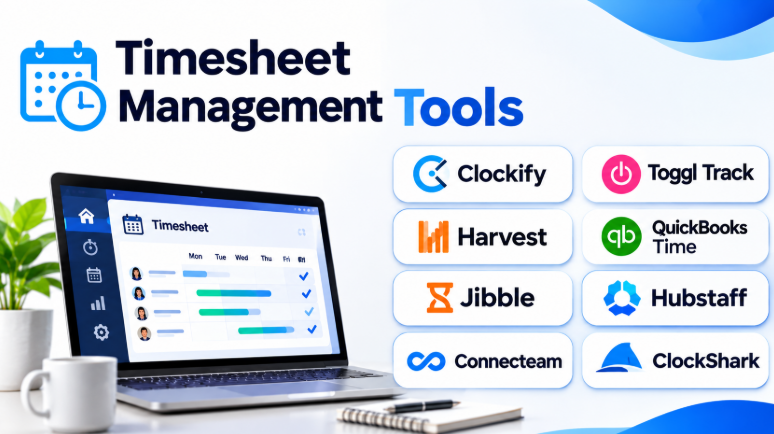
Timesheets help businesses understand how employees spend their working hours. They also support payroll, client billing, project budgets, and workforce planning.
But managing timesheets manually can create many problems. Employees forget to enter hours. Managers chase missing records. Payroll teams fix mistakes. Project managers struggle to understand labor costs.
Timesheet management tools make this process easier. They help employees record hours, managers approve entries, and businesses create accurate reports.
However, different tools serve different needs. Some focus on project billing. Others support employee attendance, shift work, payroll, or workforce management.
This guide explores 10 timesheet management tools. It explains their features, advantages, limitations, and best uses.
What Are Timesheet Management Tools?
Timesheet management tools help businesses record, review, approve, and report employee working hours.
Employees can enter time manually, use timers, or clock in and out. Managers can review entries and approve them before payroll or billing.
Businesses use these tools to:
- Record employee working hours
- Track project and task time
- Manage overtime
- Prepare payroll
- Calculate billable hours
- Monitor project costs
- Approve timesheets
- Create attendance reports
- Manage employee schedules
- Reduce manual errors
For example, a marketing agency may record time for website design, client meetings, and campaign work.
A construction company may track hours by employee, job site, and project.
A restaurant may use timesheets to manage shifts and attendance.
The best tool depends on the type of work and the information the business needs.
Top 10 Timesheet Management Tools
1. Clockify
Clockify is a flexible time tracking platform for individuals and teams.
It helps users record hours, organize work, and create reports. Teams can use timers or enter time manually.
Clockify is especially useful for businesses that need project-based timesheets without a complicated system.
Key features
- Time tracking timers
- Manual timesheet entries
- Project and task tracking
- Billable hour tracking
- Timesheet reports
- Team management
- Project budgets
- Approval workflows on supported plans
- Mobile and desktop applications
Pros
- Easy to start using
- Useful for freelancers and teams
- Supports project-based tracking
- Offers reporting features
- Flexible tracking methods
Cons
- Advanced features may require paid plans
- Large organizations may need additional workforce systems
- Payroll workflows may require integrations
Best uses
Clockify works well for freelancers, agencies, remote teams, consultants, and businesses tracking project hours.
It is particularly useful when teams need a flexible way to record time across several projects.
2. Toggl Track
Toggl Track focuses on simple and fast time tracking.
Its interface helps users record work without complicated timesheet processes. Employees can use timers, manual entries, and project labels.
Key features
- One-click timers
- Manual time entries
- Project tracking
- Client management
- Billable time tracking
- Time reports
- Calendar integrations
- Team reporting
Pros
- Simple interface
- Easy timer workflow
- Useful for project-based teams
- Helps track billable hours
- Suitable for individuals and small businesses
Cons
- Limited workforce attendance features
- Advanced reporting may require paid plans
- Not designed as a complete payroll system
Best uses
Toggl Track is useful for freelancers, consultants, designers, developers, and small teams.
It works best when the main goal is recording time spent on projects rather than managing employee shifts.
3. Harvest
Harvest connects timesheets with project budgets, expenses, and invoicing.
This makes it useful for businesses that charge clients based on working hours.
Employees record time against projects. Managers can review the hours and use them for billing and project reports.
Key features
- Project time tracking
- Timesheets
- Billable hour tracking
- Expense tracking
- Project budgets
- Invoicing
- Client management
- Project reports
Pros
- Connects time tracking with invoicing
- Useful for service businesses
- Helps monitor project costs
- Supports expense tracking
- Reduces manual billing work
Cons
- Less suitable for complex employee attendance
- Workforce monitoring features are limited
- Businesses may need separate payroll software
Best uses
Harvest is suitable for consulting firms, creative agencies, freelancers, and professional services businesses.
It is particularly helpful when recorded hours directly affect client invoices.
4. QuickBooks Time
QuickBooks Time helps businesses record employee hours and manage timesheets.
It is particularly useful for organizations that already use QuickBooks for accounting or payroll workflows.
Employees can record time using supported devices. Managers can review records and prepare approved hours.
Key features
- Employee time tracking
- Mobile clock-in and clock-out
- Timesheets
- Scheduling workflows
- GPS-related features
- Team reports
- Payroll integration
- Employee management
Pros
- Useful for businesses using QuickBooks
- Supports mobile employees
- Helps organize employee hours
- Connects time records with business workflows
- Suitable for field teams
Cons
- Best value may depend on the QuickBooks ecosystem
- May be excessive for freelancers
- Businesses should verify plan and integration requirements
Best uses
QuickBooks Time works well for small and medium businesses, contractors, field employees, and companies that need time records connected with accounting or payroll.
5. Jibble
Jibble focuses on employee attendance and clock-in records.
It helps businesses record when employees start and finish work. Teams can use mobile devices, computers, or supported clock-in methods.
Jibble is especially useful for companies that need attendance records rather than only project timers.
Key features
- Clock-in and clock-out
- Employee timesheets
- Attendance tracking
- Mobile time tracking
- Kiosk clock-in
- Location-related features
- Attendance reports
- Timesheet approvals
Pros
- Useful for attendance management
- Supports different clock-in methods
- Suitable for mobile employees
- Helps reduce manual attendance records
- Offers a free plan
Cons
- Project billing is not its main focus
- Advanced features may require paid plans
- Businesses should review its attendance workflow before adoption
Best uses
Jibble works well for offices, retail teams, field employees, schools, and businesses that need employee attendance records.
It is particularly useful when employees need a simple way to clock in and out.
6. Connecteam
Connecteam combines time tracking with workforce management.
It is designed for businesses with employees who work outside traditional office environments.
The platform can help businesses manage attendance, schedules, communication, and employee workflows.
Key features
- Employee time clock
- Timesheets
- Employee scheduling
- Mobile workforce management
- GPS-related features
- Shift management
- Team communication
- Employee administration
Pros
- Combines several workforce workflows
- Useful for mobile and deskless teams
- Supports employee scheduling
- Helps managers organize shifts
- Mobile-friendly approach
Cons
- May be too complex for simple timesheets
- Project-based billing is not its main purpose
- Businesses should review available plans and feature limits
Best uses
Connecteam is useful for retail, hospitality, field services, construction, cleaning services, and other businesses with mobile employees.
It is particularly valuable when timesheets and employee schedules need to work together.
7. Hubstaff
Hubstaff combines timesheets with workforce visibility features.
It can help managers review recorded work hours and understand team activity.
Depending on the selected configuration, businesses may use activity reports, location features, and workforce management tools.
Key features
- Time tracking
- Timesheets
- Employee activity reports
- Project tracking
- Team scheduling
- Location-related features
- Workforce reporting
- Payroll-related workflows
Pros
- Useful for remote and field teams
- Combines time tracking with workforce visibility
- Supports project-based work
- Provides employee activity reports
- Helps managers review work records
Cons
- Monitoring features may raise privacy concerns
- Not every business needs activity tracking
- Requires clear employee policies
- More complex than basic timesheet software
Best uses
Hubstaff can suit remote businesses, distributed teams, field operations, and companies that need more workforce visibility.
Businesses should use monitoring features only when they have a clear purpose.
8. Timesheets.com
Timesheets.com focuses on employee timesheets and business time records.
It supports businesses that need to collect work hours and manage employee time information.
The platform is particularly relevant to organizations that want timesheets connected with payroll and administrative workflows.
Key features
- Employee timesheets
- Time tracking
- Attendance records
- Project tracking
- Expense tracking
- Approval workflows
- Reporting
- Payroll-related processes
Pros
- Focused on timesheet management
- Useful for employee records
- Supports approval workflows
- Helps organize work-hour information
- Suitable for small and medium businesses
Cons
- Interface and workflow preferences should be evaluated
- Businesses with complex project management needs may need another system
- Integration requirements should be checked before purchase
Best uses
Timesheets.com can suit small businesses, professional services companies, and organizations that need employee timesheets and administrative reporting.
It is worth considering when timesheet management is more important than advanced project management.
9. ClockShark
ClockShark focuses on construction, field service, and mobile work teams.
These businesses often need to track employee hours by job site. They may also need to connect labor records with specific projects.
ClockShark supports workflows designed for businesses that manage employees outside the office.
Key features
- Employee clock-in and clock-out
- Timesheets
- Job and project tracking
- Mobile time tracking
- Location-related features
- Team scheduling
- Job costing workflows
- Reporting
Pros
- Useful for construction teams
- Supports job-based time tracking
- Helps organize field employee hours
- Designed for mobile workflows
- Useful for service businesses
Cons
- May be excessive for office-based teams
- Project billing needs may require additional tools
- Businesses should evaluate its workflow against their job requirements
Best uses
ClockShark is useful for construction companies, contractors, field service businesses, and teams that track labor by job.
It is especially helpful when employees work across several locations.
10. Deltek Replicon
Deltek Replicon provides time management capabilities for larger organizations.
It supports more complex workflows involving projects, employee hours, approvals, and business rules.
Organizations with several departments, locations, or reporting requirements may need a more structured timesheet system.
Key features
- Enterprise timesheets
- Project time tracking
- Approval workflows
- Employee time management
- Reporting
- Workforce administration
- Project-related time records
- Business process controls
Pros
- Suitable for complex organizations
- Supports structured time workflows
- Useful for project-based businesses
- Offers enterprise-oriented administration
- Can support detailed reporting requirements
Cons
- May be complex for small teams
- Implementation can require planning
- Cost and configuration should be evaluated carefully
- Not ideal for businesses needing only simple timers
Best uses
Deltek Replicon is suitable for large organizations, professional services businesses, enterprise project teams, and companies with complex time management requirements.
It is worth considering when basic timesheets cannot support the organization’s approval and reporting needs.
Timesheet Management Tools Comparison
| Tool | Best For | Main Strength | Main Limitation |
|---|---|---|---|
| Clockify | Project-based teams | Flexible tracking and reports | Advanced features may require paid plans |
| Toggl Track | Freelancers and small teams | Simple time tracking | Limited attendance management |
| Harvest | Agencies and consultants | Time tracking and invoicing | Not a complete workforce system |
| QuickBooks Time | Accounting-connected businesses | Payroll and business workflows | Best value may depend on QuickBooks |
| Jibble | Employee attendance | Clock-in and attendance records | Less focused on project billing |
| Connecteam | Mobile and deskless teams | Workforce management | May be complex for basic timesheets |
| Hubstaff | Remote and distributed teams | Workforce visibility | Monitoring may raise privacy concerns |
| Timesheets.com | Small businesses | Employee timesheet management | May require other project tools |
| ClockShark | Construction and field services | Job-based field time tracking | Less suitable for office-only teams |
| Deltek Replicon | Enterprise organizations | Structured time management | More complex implementation |
Which Timesheet Management Tool Should You Choose?
The best tool depends on how your business records and uses employee hours.
Best for freelancers
Toggl Track is useful for freelancers who need simple time tracking.
Harvest is better when recorded hours connect directly with client billing.
Best for agencies
Harvest and Clockify are useful options.
Harvest connects time with invoices. Clockify offers flexible project tracking and reporting.
Best for employee attendance
Jibble is worth considering when employees need to clock in and out.
It can help businesses organize attendance records without using a complicated system.
Best for field teams
Connecteam and ClockShark are useful for mobile employees.
Connecteam combines workforce management with time tracking. ClockShark focuses on job-based field work.
Best for remote teams
Hubstaff may suit businesses that need workforce visibility.
However, teams should decide carefully whether monitoring features are necessary.
Best for businesses using QuickBooks
QuickBooks Time is worth evaluating when the company already uses QuickBooks.
Connecting timesheets with existing business workflows can reduce manual work.
Best for enterprise organizations
Deltek Replicon may suit businesses with complex time approval and reporting requirements.
Large organizations should evaluate implementation needs, administration, and integration requirements before choosing it.
Features That Matter Most in Timesheet Management Software
1. Easy time entry
Employees should be able to record time quickly.
Look for:
- Timers
- Manual time entry
- Clock-in and clock-out
- Mobile applications
- Weekly timesheets
- Easy editing
A complicated process can reduce employee adoption.
2. Approval workflows
Managers should be able to review timesheets before payroll or billing.
Approval workflows can help identify:
- Missing hours
- Incorrect entries
- Duplicate records
- Overtime
- Unusual time entries
3. Payroll integration
Businesses should check how approved hours move into payroll.
The integration should reduce manual entry and help prevent payroll errors.
4. Project and job tracking
Project-based businesses need to connect hours with specific work.
For example, an agency may track hours by client. A construction company may track labor by job site.
5. Reports
Useful reports should help managers answer questions.
They may show:
- Employee hours
- Project hours
- Overtime
- Attendance
- Billable hours
- Labor costs
- Department totals
6. Mobile support
Mobile applications are important for field employees.
Employees should be able to record time without returning to an office.
7. Security and privacy
Businesses should understand what information the software collects.
Some tools may support location tracking, activity monitoring, or other employee data.
Companies should review privacy policies and establish clear rules before using these features.
Common Mistakes When Choosing Timesheet Software
Choosing software with unnecessary features
A small business may not need advanced workforce monitoring.
Extra features can increase cost and make the system harder to manage.
Ignoring the approval process
Recording time is only one part of timesheet management.
Businesses also need a process for reviewing and approving entries.
Forgetting payroll integration
Manual payroll entry can create errors.
Check whether the software connects with your existing payroll system.
Choosing project software for attendance needs
Project timers are not always suitable for employee clock-in and clock-out workflows.
Businesses with hourly workers should check attendance features carefully.
Ignoring employee privacy
Monitoring features should have a clear purpose.
Employees should understand what the system records and how managers use the information.
How to Implement Timesheet Management Software
A simple implementation plan can help employees adopt the system.
Step 1: Identify your requirements
Decide whether you need:
- Attendance tracking
- Project time tracking
- Payroll preparation
- Client billing
- Overtime management
- Employee scheduling
- Approval workflows
Step 2: Choose the right tracking method
Some teams need timers.
Others need clock-in systems or weekly timesheets.
Select the method that matches daily work.
Step 3: Create clear work categories
Organize projects, departments, tasks, or job sites.
Avoid creating too many categories.
Step 4: Define approval rules
Decide who reviews timesheets.
Set clear rules for corrections, overtime, and missing entries.
Step 5: Test the software
Run a pilot with a small group.
Check whether employees can record hours easily and managers can review reports.
Step 6: Train employees
Explain how to record time and correct mistakes.
Make sure everyone understands the approval process.
Step 7: Review the results
Check whether the software reduces manual work.
Also review payroll errors, missing entries, and employee feedback.
Frequently Asked Questions
What is timesheet management software?
Timesheet management software helps businesses record, review, approve, and report employee working hours.
It can support payroll, attendance, project tracking, and client billing.
What is the difference between time tracking and timesheet management?
Time tracking records how long someone spends working.
Timesheet management adds processes such as submitting, reviewing, approving, and reporting those hours.
Which timesheet software is best for small businesses?
Clockify, Jibble, Timesheets.com, and QuickBooks Time are worth evaluating.
The best option depends on whether the business needs project tracking, attendance, payroll, or client billing.
Can timesheet software help with payroll?
Yes.
Some platforms connect approved timesheets with payroll systems. Businesses should verify the supported integrations and payroll workflows.
Is timesheet software useful for remote employees?
Yes.
Remote employees can record working hours through web, desktop, or mobile applications.
Some tools also offer additional activity or workforce visibility features.
Can timesheet software track project costs?
Many project-based tools support project and task time tracking.
Businesses can use recorded hours to understand labor costs and project budgets.
Is timesheet software free?
Some tools offer free plans.
However, free plans may limit users, reports, integrations, approvals, or advanced features.
Businesses should check current plan details before selecting software.
Final Thoughts
Timesheet management tools help businesses create accurate work-hour records.
They can reduce manual work, improve payroll preparation, support project budgets, and simplify employee approvals.
But the right tool depends on your workflow.
Freelancers may need simple timers. Agencies may need billable tracking. Field teams may need mobile clock-ins. Enterprises may need complex approval systems.
Before choosing a platform, identify how your business uses time records.
Then test the software with real employees and real workflows.
The best timesheet management tool is not the one with the most features. It is the one that makes recording, approving, and using work hours simple and accurate.









Leave a Reply
You must be logged in to post a comment.