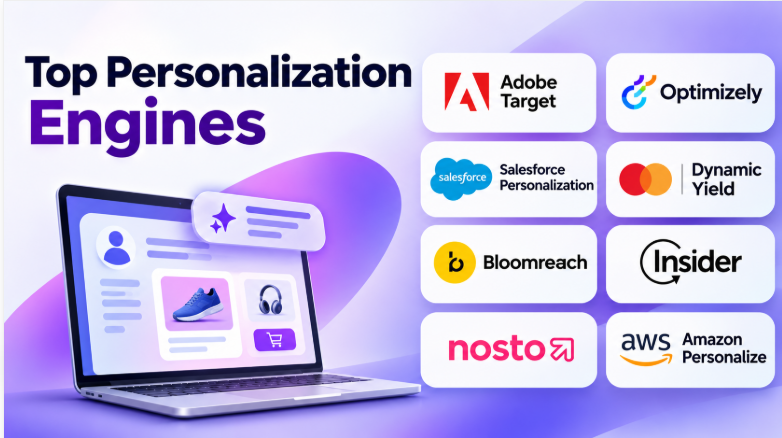
Customers rarely behave in the same way. One visitor searches for a product, another compares prices, and someone else returns to finish an earlier purchase. Showing everyone the same content can mean missing valuable opportunities.
Personalization engines help businesses respond to these differences. They use customer data, browsing behavior, preferences, and machine learning to deliver more relevant digital experiences.
A good personalization engine can recommend products, adjust website content, personalize search results, and coordinate customer messages. Some platforms focus on ecommerce, while others support enterprise marketing and customer engagement.
However, these tools do not all solve the same problem. Some provide complete personalization platforms, while others specialize in recommendations, search, or automated decision-making.
This guide explores 10 personalization engines, their features, strengths, limitations, and practical uses. It also explains how to choose a platform that fits your data, technology, and business goals.
What Are Personalization Engines?
A personalization engine is software that adapts digital experiences based on customer information and behavior.
It helps businesses decide which content, products, offers, or messages are most relevant to a particular visitor.
For example, an online store can use browsing activity to recommend products related to a shopper’s interests. A travel website can display destinations based on previous searches. A streaming service can suggest content based on viewing history.
Personalization engines can use several types of information:
- Browsing Behavior: Pages, products, and categories a visitor views.
- Purchase History: Products and services a customer previously bought.
- Customer Preferences: Selected interests, preferences, and settings.
- Session Activity: Searches, clicks, cart updates, and other recent actions.
- Customer Segments: Groups based on shared characteristics or behavior.
- Contextual Information: Device type, location, language, and current session.
- Engagement History: Responses to emails, notifications, and campaigns.
The engine processes available information and selects an appropriate experience.
Some platforms use predefined rules. Others use machine learning to predict what a visitor may find useful. Many combine both approaches.
How Do Personalization Engines Work?
Most personalization engines follow a connected process. The exact implementation depends on the product and business use case.
1. Collect Customer Data
The platform collects information from websites, mobile apps, ecommerce systems, CRM platforms, and other connected sources.
It may receive product views, searches, purchases, clicks, and campaign interactions.
Accurate tracking is important. Missing events or incorrect product information can reduce personalization quality.
2. Create Customer Profiles
The engine organizes available information into customer profiles or audience segments.
A known customer may have a profile connected to previous purchases and preferences. An anonymous visitor may have a temporary profile based on permitted session activity.
Some platforms also use real-time behavioral signals without requiring a complete customer profile.
3. Analyze Behavior and Intent
The system looks for patterns in customer activity.
It may use business rules, recommendation algorithms, predictive models, or machine learning.
For example, repeated visits to a product category may indicate interest in that category.
However, browsing behavior does not always reveal a person’s actual intention. Predictions should guide decisions, not replace customer choice.
4. Select Relevant Content or Offers
The engine decides what experience to deliver.
It may select products, reorder search results, display a different banner, or recommend a relevant offer.
Some platforms make decisions in real time. Others prepare recommendations in advance.
5. Deliver Personalized Experiences
The selected experience reaches customers through supported channels.
These may include websites, mobile apps, email, push notifications, and messaging platforms.
6. Measure and Improve Results
The platform tracks customer responses and business outcomes.
Teams can measure clicks, purchases, engagement, and other relevant metrics. They can then adjust rules, improve recommendations, or refine their models.
Top 10 Personalization Engines
1. Adobe Target
Best for enterprise website personalization
Adobe Target
Website testing, audience targeting, automated personalization, and recommendations.
Adobe Target is a digital experience optimization platform that helps businesses deliver different website experiences to different audiences.
It combines testing, targeting, and machine learning-based personalization. Marketing teams can create different content variations and decide which visitors should receive them.
One of its important capabilities is Automated Personalization. It uses machine learning to match content variations with visitors based on available profile information and behavioral patterns.
Adobe Target also supports Auto-Target, which selects suitable experiences for visitors using machine learning. Teams can compare experiences and measure their performance.
Key Features:
- Automated Personalization: Matches content variations with individual visitors.
- Auto-Target: Uses machine learning to select suitable experiences.
- A/B Testing: Compares different website experiences.
- Multivariate Testing: Tests combinations of page elements.
- Experience Targeting: Delivers content to selected audiences.
- Recommendations: Suggests relevant products, services, or content.
- Visual Experience Composer: Helps teams create page variations.
- Adobe Integration: Connects with other Adobe Experience Cloud products.
Benefits:
- Supports advanced website personalization.
- Combines testing with targeted experiences.
- Helps teams optimize content variations.
- Supports recommendation-based experiences.
- Provides options for enterprise marketing workflows.
Pros:
- Mature testing and personalization capabilities.
- Machine learning-based targeting.
- Multiple experience optimization methods.
- Useful for complex website programs.
- Integrates with the Adobe ecosystem.
Cons:
- Advanced features may require Target Premium licensing.
- Implementation can require technical expertise.
- Works best with reliable audience and analytics data.
- May be excessive for small websites with basic personalization needs.
Use Cases:
- Enterprise website personalization.
- Personalized landing pages.
- Product and content recommendations.
- Audience-based marketing experiences.
- Website conversion optimization.
- Controlled digital experience testing.
Best For: Large businesses, enterprise marketing teams, and organizations already using Adobe products that need advanced website testing and personalization.
2. Dynamic Yield
Best for cross-channel experience personalization
Dynamic Yield
Personalized recommendations, customer targeting, and experience optimization.
Dynamic Yield, part of Mastercard, provides a personalization platform known as Experience OS.
It helps businesses adapt content, recommendations, and offers across digital customer touchpoints.
Its approach combines customer data, machine learning, and business controls. Teams can use these capabilities to create experiences based on customer behavior and preferences.
Dynamic Yield also focuses on experimentation. Businesses can test different experiences and use the results to improve their personalization strategies.
Key Features:
- Experience Personalization: Adjusts content and offers for different customers.
- Product Recommendations: Suggests products based on available customer signals.
- Audience Targeting: Uses customer attributes and behavior to define audiences.
- Predictive Modeling: Uses machine learning to support personalization decisions.
- Experience Testing: Compares different content and experience variations.
- Cross-Channel Delivery: Supports personalization across web, app, email, and other channels.
- Algorithm Controls: Gives teams ways to manage personalization decisions.
- Performance Measurement: Helps evaluate personalization results.
Benefits:
- Supports connected digital experiences.
- Combines machine learning with business controls.
- Helps personalize product and content recommendations.
- Supports experimentation and optimization.
- Fits businesses with multiple customer touchpoints.
Pros:
- Broad personalization capabilities.
- Supports cross-channel experiences.
- Combines predictive models and business rules.
- Provides testing and optimization workflows.
- Suitable for enterprise digital commerce.
Cons:
- Enterprise implementations can require planning.
- Results depend on reliable customer and product data.
- Teams need clear ownership of personalization campaigns.
- Buyers should verify channel support and package details.
Use Cases:
- Ecommerce personalization.
- Personalized product recommendations.
- Customer journey optimization.
- Retail website experiences.
- Cross-channel marketing.
- Digital experience experimentation.
Best For: Retailers, travel businesses, financial services companies, and large organizations that need coordinated personalization across customer touchpoints.
3. Optimizely Personalization
Best for experimentation-led personalization
Optimizely Personalization
Audience-based website experiences connected with experimentation.
Optimizely Personalization helps businesses deliver different website experiences to selected audiences.
Its approach is closely connected with experimentation. Teams can create targeted experiences and measure whether they improve engagement or conversions.
The platform supports audience creation using customer attributes and behavioral information. It also provides visual editing capabilities for changing website content.
This makes it useful for organizations that want marketers and product teams to manage experience variations without coding every change manually.
Key Features:
- Audience Targeting: Creates audiences using available customer information.
- Behavioral Personalization: Uses visitor activity to support targeted experiences.
- Visual Editing: Helps teams change selected website elements.
- Customer Profiles: Connects customer attributes from supported data sources.
- Web Experimentation: Tests different experiences.
- Performance Measurement: Measures campaign and experience results.
- Content Personalization: Delivers different content to selected audiences.
- Integration Support: Connects with supported marketing and data systems.
Benefits:
- Connects personalization with experimentation.
- Helps marketing teams manage targeted content.
- Supports data-driven website improvements.
- Reduces dependence on developers for selected visual changes.
- Provides a structured testing workflow.
Pros:
- Strong experimentation focus.
- Audience-based personalization.
- Visual editing capabilities.
- Useful for marketing and product teams.
- Supports continuous optimization.
Cons:
- Advanced use requires reliable audience data.
- Complex implementations may need developer support.
- Licensing and product packaging need careful review.
- It may not replace a specialist recommendation engine.
Use Cases:
- Personalized landing pages.
- Website content optimization.
- Audience-specific promotions.
- Conversion experiments.
- Product experience testing.
- Targeted digital campaigns.
Best For: Product teams, digital marketers, and businesses that want to combine website personalization with structured experimentation.
4. Salesforce Marketing Cloud Personalization
Best for CRM-connected customer experiences
Salesforce Marketing Cloud Personalization
Real-time customer profiles, recommendations, and personalized engagement.
Salesforce Marketing Cloud Personalization helps businesses track customer interactions and adapt experiences based on available information.
The platform supports real-time interaction management. It can use customer behavior, profile attributes, and business rules to select relevant content and offers.
Salesforce also provides Einstein Recommendations for suggesting products and content in supported marketing experiences.
Its connection with the Salesforce ecosystem is a major consideration. Organizations already using Salesforce products may be able to connect customer information with marketing workflows more easily.
Key Features:
- Real-Time Interaction Management: Tracks and responds to customer activity.
- Unified Profiles: Organizes customer information for personalization.
- Audience Segmentation: Creates groups using customer attributes and behavior.
- Einstein Recommendations: Suggests relevant products and content.
- Web Personalization: Delivers targeted website experiences.
- Triggered Campaigns: Supports campaigns based on customer activity.
- Catalog Management: Uses product or content catalogs for recommendations.
- Salesforce Integration: Connects with supported Salesforce marketing products.
Benefits:
- Connects customer information with personalization.
- Supports real-time interaction management.
- Helps deliver relevant offers and content.
- Supports product and content recommendations.
- Fits Salesforce-centered marketing environments.
Pros:
- Strong Salesforce ecosystem connection.
- Supports customer profile-based experiences.
- Provides recommendation capabilities.
- Supports web and campaign workflows.
- Useful for complex customer engagement programs.
Cons:
- Implementation may require Salesforce expertise.
- Data integration needs careful planning.
- Licensing can be complex.
- Organizations outside the Salesforce ecosystem may need additional integration work.
Use Cases:
- CRM-driven personalization.
- Personalized product recommendations.
- Real-time customer engagement.
- Web campaign targeting.
- Customer lifecycle marketing.
- Personalized offers.
Best For: Enterprises using Salesforce products that want to connect customer data with personalized digital experiences and marketing campaigns.
5. Insider One
Best for omnichannel personalization
Insider One
Customer data, personalized campaigns, and journey orchestration.
Insider One combines customer data, personalization, and customer journey orchestration.
It helps businesses coordinate customer experiences across supported channels such as web, mobile apps, email, SMS, and messaging platforms.
A key strength is its focus on connected customer journeys. For example, a shopper who views a product but does not purchase may receive a relevant follow-up through another available channel.
Insider One also provides audience segmentation and behavioral campaign capabilities. These help marketing teams respond to customer activity rather than relying only on fixed campaign schedules.
Key Features:
- Customer Data Platform: Brings together supported customer information.
- Audience Segmentation: Creates groups based on customer attributes and behavior.
- Website Personalization: Adapts content for selected audiences.
- Mobile Personalization: Supports app-based customer experiences.
- Journey Orchestration: Coordinates customer interactions across channels.
- Behavioral Triggers: Starts campaigns based on customer actions.
- Product Recommendations: Supports personalized product discovery.
- Campaign Analytics: Helps teams measure customer engagement.
Benefits:
- Connects personalization with customer journeys.
- Supports multiple engagement channels.
- Helps coordinate marketing activities.
- Uses behavioral signals for campaign triggers.
- Supports customer segmentation and targeting.
Pros:
- Broad omnichannel capabilities.
- Combines customer data and engagement.
- Supports automated customer journeys.
- Useful for lifecycle marketing.
- Helps coordinate web and messaging experiences.
Cons:
- Requires reliable customer identity and consent data.
- Complex journeys need campaign governance.
- Some capabilities depend on the selected package.
- Teams need clear rules to avoid excessive messaging.
Use Cases:
- Ecommerce customer journeys.
- Personalized email and messaging.
- Mobile app engagement.
- Customer retention campaigns.
- Behavioral marketing automation.
- Cross-channel personalization.
Best For: Ecommerce businesses, digital marketers, and growth teams that want to coordinate personalized experiences across multiple customer channels.
6. Bloomreach
Best for ecommerce discovery and engagement
Bloomreach
Product discovery, search, merchandising, recommendations, and customer engagement.
Bloomreach provides commerce-focused personalization through products for discovery and customer engagement.
Its Discovery capabilities support product search, merchandising, and recommendations. These features help retailers make product discovery more relevant to individual shoppers.
Its Engagement capabilities focus on customer data and marketing campaigns. Businesses can use customer behavior and preferences to create more relevant communications.
Bloomreach is particularly useful for retailers that want to connect product discovery with customer engagement instead of treating them as separate activities.
Key Features:
- Product Recommendations: Suggests relevant products to shoppers.
- Personalized Search: Helps adapt search experiences.
- Product Merchandising: Provides controls for product ranking and presentation.
- Customer Segmentation: Groups customers using available data.
- Marketing Automation: Supports customer engagement workflows.
- Behavioral Targeting: Uses customer interactions to support personalization.
- Commerce Integrations: Connects with supported ecommerce systems.
- Analytics: Helps teams understand product discovery and campaign results.
Benefits:
- Combines commerce discovery with engagement.
- Helps improve product discovery.
- Supports personalized search and recommendations.
- Connects shopper behavior with marketing activities.
- Offers useful merchandising controls.
Pros:
- Strong ecommerce focus.
- Combines search and recommendations.
- Supports product merchandising.
- Connects discovery with customer engagement.
- Suitable for larger retail catalogs.
Cons:
- Product capabilities are distributed across different offerings.
- Implementation requires catalog and event data.
- Pricing and package details need direct verification.
- May be more than a small store requires.
Use Cases:
- Ecommerce product discovery.
- Personalized product search.
- Product recommendations.
- Category merchandising.
- Customer engagement campaigns.
- Retail customer segmentation.
Best For: Online retailers, ecommerce brands, and commerce teams that want connected product discovery, recommendations, merchandising, and customer engagement.
7. Nosto
Best for commerce experience personalization
Nosto
Product recommendations, personalized search, merchandising, and ecommerce experiences.
Nosto focuses on personalization for online commerce. It helps retailers adapt product discovery and shopping experiences using customer behavior and product information.
Its capabilities include product recommendations, search, merchandising, and segmentation.
For example, an online store can recommend related products based on browsing activity. Merchandising rules can also help businesses prioritize products using commercial requirements.
Nosto is designed around ecommerce workflows rather than broad enterprise personalization across every industry.
Key Features:
- Product Recommendations: Suggests products based on shopper activity.
- Personalized Search: Helps shoppers discover relevant products.
- Category Merchandising: Supports product ranking and category presentation.
- Customer Segmentation: Groups shoppers using available information.
- Content Personalization: Supports targeted shopping experiences.
- Merchandising Controls: Lets teams apply business rules to product discovery.
- Commerce Integrations: Connects with supported ecommerce platforms.
- Performance Insights: Helps businesses review shopping experience results.
Benefits:
- Focuses on ecommerce personalization.
- Connects recommendations with merchandising.
- Helps improve product discovery.
- Supports shopping experience optimization.
- Provides useful controls for retail teams.
Pros:
- Commerce-specific functionality.
- Product recommendation capabilities.
- Search and merchandising support.
- Useful for online retail catalogs.
- Helps marketing teams manage shopping experiences.
Cons:
- Less suitable for non-commerce personalization needs.
- Results depend on product catalog quality.
- Some workflows require technical integration.
- Teams should verify current platform and package support.
Use Cases:
- Online store personalization.
- Product recommendations.
- Personalized category pages.
- Ecommerce search.
- Cross-selling and upselling.
- Retail merchandising.
Best For: Online retailers and ecommerce businesses that want to improve product discovery, recommendations, and shopping experiences.
8. Algolia Recommend
Best for developer-focused recommendations
Algolia Recommend
API-driven recommendations for websites and applications.
Algolia Recommend provides recommendation capabilities that developers can integrate into websites and applications.
It focuses on helping users discover relevant products or content. Businesses can use recommendation models to suggest related items, frequently purchased products, or other relevant content.
Its API-oriented approach gives developers control over how recommendations appear in their applications.
Algolia also offers search and discovery capabilities. This makes it relevant to businesses that want to connect search experiences with recommendations.
Key Features:
- Related Items: Suggests items connected to a selected product or content item.
- Frequently Bought Together: Recommends products commonly purchased together.
- Trending Items: Helps surface popular products.
- Recommendation APIs: Lets developers request recommendations.
- Search Integration: Connects recommendations with discovery workflows.
- Event Tracking: Uses interaction data to support recommendation models.
- Developer Tools: Provides APIs and supported client libraries.
- Merchandising Controls: Supports business-oriented discovery workflows.
Benefits:
- Gives developers implementation flexibility.
- Supports API-based recommendations.
- Helps connect search and product discovery.
- Fits custom application architectures.
- Can be used in ecommerce and content experiences.
Pros:
- Developer-oriented approach.
- API-based integration.
- Useful recommendation models.
- Connects with Algolia search capabilities.
- Suitable for custom user interfaces.
Cons:
- Requires development work for implementation.
- Does not replace a complete marketing automation platform.
- Recommendation quality depends on event and catalog data.
- Buyers should review current product packaging and supported models.
Use Cases:
- Ecommerce recommendations.
- Related content suggestions.
- Product discovery.
- Frequently bought together sections.
- Custom application recommendations.
- Search and recommendation integration.
Best For: Developers, ecommerce engineering teams, and businesses that want to build recommendation experiences using APIs.
9. Coveo
Best for AI-powered search and discovery
Coveo
Personalized search, product discovery, and relevant content recommendations.
Coveo focuses on search relevance, product discovery, and personalized content experiences.
Its platform uses machine learning and customer interaction data to improve the relevance of search results and recommendations.
This is particularly useful for websites with large product catalogs or extensive content libraries. Customers can find relevant information without navigating through long lists of unrelated results.
Coveo also supports commerce and service experiences, making it useful beyond traditional online stores.
Key Features:
- AI-Powered Search: Helps deliver relevant search results.
- Personalized Relevance: Uses available user and context signals.
- Product Recommendations: Suggests relevant products and content.
- Search Analytics: Helps teams understand search behavior.
- Merchandising: Supports business rules for product discovery.
- Content Discovery: Helps users find relevant information.
- Machine Learning Models: Supports relevance and recommendation workflows.
- Integration Options: Connects with supported commerce and enterprise systems.
Benefits:
- Improves search and content discovery.
- Supports personalized relevance.
- Helps users navigate large catalogs.
- Connects search with recommendations.
- Supports commerce and service use cases.
Pros:
- Strong search specialization.
- AI-based relevance capabilities.
- Supports product and content discovery.
- Useful for large information collections.
- Supports enterprise search experiences.
Cons:
- May be excessive for websites with simple search needs.
- Requires suitable data and search configuration.
- Implementation can need technical expertise.
- Search personalization is not a complete replacement for customer journey orchestration.
Use Cases:
- Ecommerce search personalization.
- Enterprise content discovery.
- Product recommendations.
- Customer service portals.
- Personalized website search.
- Large catalog navigation.
Best For: Retailers, enterprise websites, and organizations that need relevant search and discovery across large product or content collections.
10. Amazon Personalize
Best for managed machine learning recommendations
Amazon Personalize
Machine learning recommendations through APIs for custom applications.
Amazon Personalize is a managed machine learning service from Amazon Web Services.
It helps developers generate personalized item recommendations using customer interactions and item information.
A business can provide data such as product views, purchases, clicks, and catalog details. Amazon Personalize uses this information to train recommendation models.
Developers can then request recommendations through APIs. The service also supports batch recommendations, user segments, and personalized ranking for supported use cases.
Unlike a complete marketing personalization suite, Amazon Personalize focuses on the recommendation engine itself. Businesses must build or connect the customer-facing experience around it.
Key Features:
- Personalized Recommendations: Suggests products or content for individual users.
- Similar Items: Recommends items related to a selected product.
- Personalized Ranking: Reorders a supplied list for a particular user.
- User Segmentation: Creates segments based on predicted item interests.
- Real-Time Recommendations: Uses supported APIs to return recommendations.
- Batch Recommendations: Generates recommendations for larger groups.
- Event Tracking: Uses recent customer interactions to influence recommendations.
- Business Filtering: Applies supported filters and promotions to results.
Benefits:
- Provides managed machine learning infrastructure.
- Reduces the need to build recommendation models from scratch.
- Supports custom application experiences.
- Offers real-time and batch workflows.
- Integrates with the wider AWS ecosystem.
Pros:
- Managed recommendation service.
- API-based application integration.
- Supports multiple recommendation use cases.
- Provides real-time and batch options.
- Useful for development teams.
- Supports custom recommendation workflows.
Cons:
- Requires technical implementation.
- Businesses must prepare and maintain suitable data.
- Does not provide a complete visual marketing platform.
- Model training and recommendation usage create costs.
- Teams must monitor data quality and recommendation performance.
Use Cases:
- Ecommerce product recommendations.
- Video and content recommendations.
- Personalized search ranking.
- Next-best-action suggestions.
- Personalized application experiences.
- Recommendation services for custom platforms.
Best For: Developers, data teams, SaaS businesses, and organizations that want managed machine learning recommendations inside their own applications.
Comparison Table: Top 10 Personalization Engines
| Tool | Best For | Main Strength | Typical Approach |
|---|---|---|---|
| Adobe Target | Enterprise website optimization | Automated personalization and testing | Experience optimization platform |
| Dynamic Yield | Cross-channel personalization | Recommendations and experience optimization | Enterprise personalization platform |
| Optimizely Personalization | Experimentation-led teams | Audience targeting and testing | Web experience platform |
| Salesforce Marketing Cloud Personalization | CRM-driven engagement | Real-time customer interaction | Customer engagement platform |
| Insider One | Omnichannel marketing | Customer journeys and campaign personalization | Engagement platform |
| Bloomreach | Ecommerce discovery | Search, recommendations, and merchandising | Commerce experience platform |
| Nosto | Online retail | Product discovery and shopping personalization | Commerce personalization platform |
| Algolia Recommend | Developers | API-based recommendations | Recommendation service |
| Coveo | Search-heavy websites | Personalized search and discovery | Search and relevance platform |
| Amazon Personalize | Custom applications | Managed machine learning recommendations | Cloud recommendation service |
Capabilities, licensing, integrations, and deployment options can vary by product and plan. Confirm current availability with each vendor before purchasing.
How to Choose the Right Personalization Engine
The best platform depends on the customer experience you want to improve. Start with the business problem instead of comparing long feature lists.
1. For Enterprise Website Personalization: Adobe Target
Adobe Target is worth considering when an organization needs audience targeting, testing, and machine learning-based website personalization.
Its connection with the Adobe ecosystem can also help teams that already use Adobe products.
2. For Cross-Channel Experiences: Dynamic Yield and Insider One
Dynamic Yield supports personalized experiences across multiple digital touchpoints.
Insider One focuses on connecting customer data with marketing journeys and engagement channels.
Choose based on whether your main requirement is experience optimization or coordinated customer communication.
3. For Experimentation and Website Testing: Optimizely
Optimizely Personalization is relevant when teams want to create targeted experiences and measure their impact through experimentation.
It is a practical option for businesses with ongoing website optimization programs.
4. For Salesforce-Based Customer Engagement: Salesforce Marketing Cloud Personalization
Organizations already using Salesforce can evaluate its personalization capabilities for real-time customer interaction and recommendations.
Check how the required features fit with the existing Salesforce products and data architecture.
5. For Ecommerce Product Discovery: Bloomreach and Nosto
Bloomreach connects commerce discovery with customer engagement.
Nosto focuses more directly on commerce experiences, including product recommendations, search, and merchandising.
Both are worth evaluating for online retail businesses.
6. For Search and Recommendations: Algolia Recommend and Coveo
Algolia Recommend is useful when developers want API-based recommendation capabilities.
Coveo is relevant when personalized search and discovery are central to the customer experience.
7. For Custom Machine Learning Recommendations: Amazon Personalize
Amazon Personalize is suitable when development teams want managed recommendation models and control over the application experience.
It requires more engineering work than a ready-made marketing personalization platform.
Key Benefits of Personalization Engines
1. More Relevant Customer Experiences
Personalization helps businesses show content and products that match customer interests.
This can make websites and applications easier to use.
2. Better Product Discovery
Recommendation and search personalization can help customers find products that match their needs.
This is especially useful for websites with large catalogs.
3. More Relevant Marketing Campaigns
Businesses can use customer behavior and preferences to create targeted campaigns.
This can reduce irrelevant messages and improve campaign relevance.
4. Improved Customer Engagement
Relevant content and recommendations can encourage customers to explore products and services.
However, engagement should be measured alongside meaningful business outcomes.
5. Better Customer Retention
Businesses can use purchase history and engagement patterns to create more relevant follow-up experiences.
For example, a retailer can recommend related products after a purchase.
6. Data-Driven Decisions
Personalization platforms provide information about how customers respond to different experiences.
Teams can use this information to improve content, offers, and product discovery.
7. More Consistent Customer Journeys
Connected personalization systems can help businesses maintain relevant experiences across websites, apps, email, and other channels.
This requires reliable identity and data integration.
Common Challenges of Personalization Engines
Personalization can create problems when businesses focus on automation without managing data, privacy, and customer experience.
1. Poor Data Quality
Incorrect product information, missing events, and duplicate customer records can reduce recommendation quality.
Build reliable tracking and data validation before expanding personalization.
2. Privacy and Consent
Personalization may involve customer behavior and personal information.
Businesses must understand which data they collect, why they collect it, and whether they have the necessary permissions.
3. Too Much Personalization
Changing every page element or sending frequent targeted messages can overwhelm



Leave a Reply
You must be logged in to post a comment.