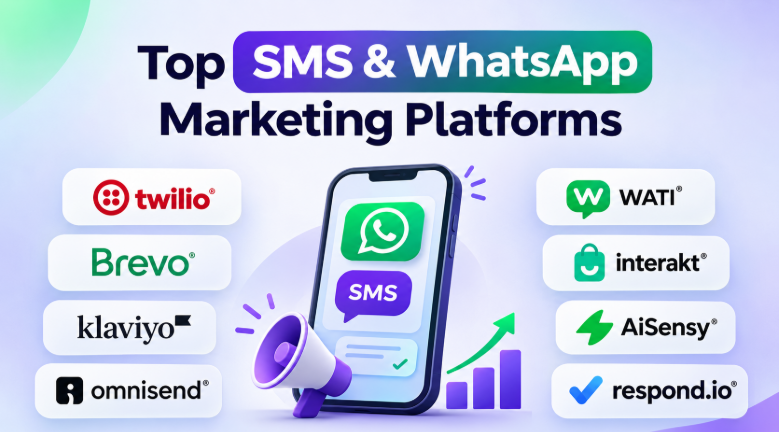
Businesses use SMS and WhatsApp to reach customers faster, share offers, answer questions, and improve sales. But choosing the right marketing platform can be difficult. Some tools focus on bulk messaging. Others provide automation, customer management, analytics, and sales workflows.
The best platform depends on your business needs. A small business may need an affordable WhatsApp campaign tool. An ecommerce company may need abandoned-cart automation. A large enterprise may need APIs, multi-channel messaging, and advanced integrations.
This guide explores 10 SMS and WhatsApp marketing platforms. It explains their features, strengths, limitations, and practical use cases. It also helps businesses compare tools before making a purchase.
What Are SMS and WhatsApp Marketing Platforms?
SMS and WhatsApp marketing platforms help businesses send messages to customers at scale. They also provide tools to manage contacts, campaigns, automation, customer replies, and campaign performance.
SMS marketing uses mobile text messages. It works without requiring customers to install a messaging application.
WhatsApp marketing uses WhatsApp to communicate with customers. It supports text, images, videos, documents, buttons, and interactive conversations.
Businesses can use these platforms for:
- Promotional campaigns
- Product announcements
- Discounts and special offers
- Appointment reminders
- Order confirmations
- Delivery updates
- Customer support
- Lead generation
- Customer retention
- Automated follow-ups
Many modern platforms support both SMS and WhatsApp. Some also include email, voice, social messaging, and customer relationship management features.
Why Businesses Use SMS and WhatsApp Marketing
Direct messaging gives businesses a simple way to communicate with customers. However, the real value comes from sending useful messages at the right time.
Reach Customers Directly
SMS and WhatsApp messages reach customers on their mobile devices. Businesses can share important updates without depending on social media algorithms.
Improve Customer Engagement
Customers can reply to messages, ask questions, request information, and interact with businesses.
WhatsApp supports richer conversations through images, buttons, catalogs, and other interactive features.
Automate Routine Communication
Marketing platforms can automatically send messages after customer actions.
For example, an online store can send an order confirmation after a purchase. It can also send a reminder when a customer leaves items in their cart.
Support Customer Retention
Businesses can use messaging to keep customers informed and encourage repeat purchases.
Personalized offers, useful reminders, loyalty updates, and product recommendations can help maintain customer relationships.
Track Campaign Performance
Most platforms provide campaign reports.
Businesses can review delivery rates, clicks, replies, conversions, and other useful measurements. These reports help marketing teams understand what works.
Top 10 SMS & WhatsApp Marketing Platforms
1. Twilio
Twilio is a programmable communications platform that helps businesses add SMS and WhatsApp messaging to their applications, websites, and business systems.
It is especially useful for companies that want to build custom communication workflows. Developers can connect messaging with customer databases, ecommerce systems, support tools, and internal applications.
Key Features
- SMS messaging APIs
- WhatsApp Business Platform integration
- Programmable messaging workflows
- Delivery status tracking
- Two-way messaging
- Application integrations
- Developer tools and documentation
- Custom communication automation
Pros
- Flexible APIs for custom applications
- Supports multiple communication channels
- Suitable for complex business workflows
- Useful for developers and technical teams
- Can connect messaging with existing software
Cons
- Requires technical knowledge for advanced use
- Custom development can increase implementation costs
- Marketing dashboards may require additional development
- Pricing depends on message volume and destination
Best Uses
Twilio is suitable for companies building custom messaging systems, applications, customer notifications, and automated communication workflows.
It works well when businesses need complete control over how messages are triggered and delivered.
2. Brevo
Brevo is a marketing platform that combines email marketing, SMS, customer management, and automation.
Businesses can manage customer contacts and create campaigns from a central platform. This makes Brevo useful for companies that want to connect messaging with their broader marketing activities.
Key Features
- Email marketing
- SMS campaigns
- WhatsApp marketing capabilities
- Marketing automation
- Contact management
- Campaign scheduling
- Customer segmentation
- Reporting and analytics
Pros
- Supports multiple marketing channels
- Suitable for small and growing businesses
- Contact management tools
- Marketing automation capabilities
- Helps organize campaigns from one platform
Cons
- Advanced features may require higher plans
- WhatsApp availability and pricing depend on the offering
- Businesses may need separate messaging credits
- Complex workflows may require careful setup
Best Uses
Brevo is a good option for businesses that already use email marketing and want to add SMS or WhatsApp communication.
It can help marketing teams manage newsletters, promotional messages, and customer communication without maintaining several separate platforms.
3. Klaviyo
Klaviyo focuses on customer data and personalized marketing.
It is particularly popular among ecommerce businesses that want to create campaigns based on customer behavior. Businesses can use customer information, purchase history, and interactions to create targeted marketing workflows.
Key Features
- Customer segmentation
- Email marketing
- SMS marketing
- Marketing automation
- Ecommerce integrations
- Customer behavior tracking
- Personalized campaigns
- Reporting and analytics
Pros
- Strong customer segmentation
- Useful for ecommerce marketing
- Supports personalized customer journeys
- Connects marketing with customer data
- Helps automate repeat-purchase campaigns
Cons
- Can become expensive as contact and messaging volume grows
- More complex than simple bulk messaging tools
- Businesses need clean customer data
- Advanced workflows require proper configuration
Best Uses
Klaviyo is suitable for ecommerce companies that want to send personalized messages based on purchases, browsing behavior, customer interests, and lifecycle stages.
For example, a business can create different campaigns for new customers, repeat buyers, inactive customers, and customers interested in specific products.
4. Omnisend
Omnisend is an ecommerce-focused marketing platform that helps online stores connect email marketing, SMS, and customer automation.
Its workflows can support customer communication before and after a purchase.
Key Features
- Email marketing
- SMS marketing
- Ecommerce automation
- Abandoned-cart workflows
- Customer segmentation
- Promotional campaigns
- Product-related communication
- Campaign reporting
Pros
- Designed for ecommerce businesses
- Supports automated customer journeys
- Combines multiple marketing channels
- Useful for abandoned-cart campaigns
- Helps manage repeat-purchase communication
Cons
- Less suitable for businesses without ecommerce operations
- Messaging availability may depend on region
- Advanced automation may require learning
- Costs can increase with campaign volume
Best Uses
Omnisend is suitable for online stores that want to automate marketing communication.
A store can send a welcome message after registration, remind customers about abandoned carts, and follow up after a purchase.
It is particularly useful when email and SMS campaigns need to work together.
5. WATI
WATI is a WhatsApp-focused business communication platform.
It helps businesses manage WhatsApp campaigns, customer conversations, automation, and team communication.
Key Features
- WhatsApp Business Platform integration
- Bulk messaging campaigns
- Shared team inbox
- Chat automation
- Customer segmentation
- Campaign management
- Automated replies
- Team assignment and conversation management
Pros
- Focuses on WhatsApp business communication
- Shared inbox helps teams manage customer replies
- Useful for sales and support workflows
- Campaign automation capabilities
- Suitable for businesses with multiple agents
Cons
- Primarily focused on WhatsApp
- Some features depend on the selected plan
- WhatsApp message charges may apply separately
- Automation needs proper configuration
Best Uses
WATI is suitable for businesses that use WhatsApp as their main customer communication channel.
It can help customer support teams, sales teams, and marketing departments manage campaigns and customer conversations from a shared workspace.
For example, a business can send a promotion and allow several agents to respond to customer questions.
6. Interakt
Interakt focuses on WhatsApp business communication, ecommerce engagement, and customer conversations.
It is useful for businesses that want to connect messaging with their sales and customer service activities.
Key Features
- WhatsApp marketing campaigns
- Customer messaging
- Shared inbox
- Ecommerce integrations
- Automated customer communication
- Order-related notifications
- Customer engagement tools
- Sales communication workflows
Pros
- Suitable for ecommerce businesses
- Supports customer conversations
- Useful for WhatsApp sales workflows
- Helps manage promotional campaigns
- Can connect messaging with store activities
Cons
- Mainly focused on WhatsApp
- Businesses should check integration requirements
- Pricing and feature availability vary by plan
- Advanced workflows may require additional setup
Best Uses
Interakt is useful for ecommerce businesses that want to use WhatsApp for customer engagement.
Online stores can use it to send order updates, communicate with customers, manage inquiries, and create promotional campaigns.
Businesses that depend heavily on Shopify or other ecommerce systems should carefully review available integrations before choosing a plan.
7. AiSensy
AiSensy provides tools for businesses that want to manage WhatsApp marketing campaigns and customer engagement.
The platform focuses on campaign management, automation, and WhatsApp communication.
Key Features
- WhatsApp broadcast campaigns
- Campaign scheduling
- Chat automation
- Customer engagement
- Lead generation workflows
- Shared inbox capabilities
- Campaign analytics
- WhatsApp Business Platform support
Pros
- Suitable for businesses starting WhatsApp marketing
- Campaign management tools
- Automation capabilities
- Useful for promotional communication
- Supports customer engagement workflows
Cons
- Mainly focused on WhatsApp
- Some advanced features may require paid plans
- WhatsApp messaging fees may be separate
- Businesses need to understand WhatsApp policies
Best Uses
AiSensy is suitable for businesses that want to start WhatsApp marketing without building their own messaging system.
It can help businesses send promotional campaigns, manage customer replies, and create automated communication workflows.
It may be useful for local businesses, ecommerce companies, education providers, and service businesses.
8. respond.io
respond.io helps businesses manage customer conversations across messaging channels.
The platform focuses on conversation management, automation, and customer workflows rather than only sending promotional campaigns.
Key Features
- WhatsApp messaging
- Multi-channel inbox
- Customer conversation management
- Workflow automation
- Team assignment
- Customer profiles
- Automated responses
- Sales and support integrations
Pros
- Supports multiple communication channels
- Useful for sales and support teams
- Centralized customer conversations
- Workflow automation
- Helps manage customer interactions
Cons
- May be more complex than simple campaign tools
- Pricing may be higher for smaller businesses
- Requires workflow planning
- Some advanced capabilities need configuration
Best Uses
respond.io is suitable for businesses that receive customer messages across several channels.
Sales teams can use it to manage leads. Support teams can use it to assign conversations. Marketing teams can use it to connect campaigns with follow-up workflows.
It is particularly useful when customer conversations are an important part of the sales process.
9. Bird
Bird provides communication services for businesses that need messaging across different channels.
It supports business communication workflows that can include SMS, WhatsApp, email, and other communication services.
Key Features
- SMS messaging
- WhatsApp messaging
- Email communication
- Customer communication APIs
- Messaging automation
- Campaign management capabilities
- Customer data workflows
- Communication integrations
Pros
- Multi-channel communication capabilities
- Useful for businesses with larger messaging needs
- Supports business messaging infrastructure
- Can connect communication with other systems
- Suitable for broader customer engagement workflows
Cons
- Pricing may require careful evaluation
- Advanced implementations may need technical support
- Smaller businesses may not need the full platform
- Features depend on the selected service
Best Uses
Bird is suitable for businesses that want to connect customer messaging across multiple communication channels.
Companies can use it for customer notifications, marketing campaigns, transactional communication, and automated messaging workflows.
Businesses should compare the total cost of their expected message volume before selecting a plan.
10. Gupshup
Gupshup provides messaging infrastructure and tools for businesses that want to build conversational communication systems.
It is especially relevant for companies that need APIs, automation, and custom messaging workflows.
Key Features
- WhatsApp messaging APIs
- SMS capabilities
- Conversational messaging
- Chatbot development
- Automation
- Messaging integrations
- Developer tools
- Custom communication workflows
Pros
- Flexible messaging infrastructure
- Useful for developers
- Supports custom communication workflows
- Suitable for larger messaging volumes
- Helps connect messaging with business applications
Cons
- Advanced implementations may require development work
- API-based workflows can be more complex
- Businesses may need to build their own interface
- Costs depend on usage and messaging requirements
Best Uses
Gupshup is suitable for businesses with developers who want to create custom messaging workflows.
It can help companies connect WhatsApp and SMS communication with their applications, customer databases, and internal systems.
Businesses that need a ready-made marketing dashboard may prefer a more simple campaign-focused platform.
Comparison Table: Top SMS & WhatsApp Marketing Platforms
| Platform | Main Channels | Best For | Standout Strength |
|---|---|---|---|
| Twilio | SMS, WhatsApp | Developers and enterprises | Programmable messaging APIs |
| Brevo | Email, SMS, WhatsApp | Small and growing businesses | Multi-channel marketing |
| Klaviyo | Email, SMS | Ecommerce brands | Customer data and personalization |
| Omnisend | Email, SMS | Online stores | Ecommerce automation |
| WATI | WhatsApp-focused businesses | Shared inbox and automation | |
| Interakt | Ecommerce businesses | Sales and customer communication | |
| AiSensy | Small businesses and marketers | Campaigns and automation | |
| respond.io | WhatsApp and multiple channels | Sales and support teams | Conversation management |
| Bird | SMS, WhatsApp, email | Growing and larger businesses | Omnichannel communication |
| Gupshup | WhatsApp, SMS and messaging APIs | Developers and enterprises | Custom messaging workflows |
How to Choose the Right SMS & WhatsApp Marketing Platform
Choosing a platform requires understanding your communication goals. The most expensive tool is not always the most useful one.
1. Identify Your Main Communication Channel
Start by understanding where your customers prefer to communicate.
If your customers primarily use WhatsApp, a WhatsApp-focused platform may be suitable.
If you need to reach customers through mobile text messages, SMS capabilities should be a priority.
Businesses that use email, SMS, and WhatsApp together may benefit from a multi-channel platform.
2. Understand Your Business Size
Small businesses generally need simple campaign management, contact organization, and affordable messaging.
Growing companies may need automation, customer segmentation, and team inboxes.
Large organizations may require APIs, advanced integrations, reporting, governance, and regional messaging support.
3. Check Automation Capabilities
Automation can save time and improve communication.
Look for features that support your actual workflows, such as:
- Welcome messages
- Appointment reminders
- Abandoned-cart messages
- Order updates
- Lead follow-ups
- Customer support replies
- Promotional campaigns
Avoid paying for advanced automation if your business only needs occasional broadcasts.
4. Review Integration Options
Your marketing platform should connect with the systems your business already uses.
Important integrations may include:
- Shopify
- WooCommerce
- Salesforce
- HubSpot
- CRM software
- Payment systems
- Customer databases
Integration quality can affect how easily customer information moves between systems.
5. Understand the Total Cost
The platform subscription is only one part of the cost.
Businesses should also consider:
- SMS charges
- WhatsApp messaging fees
- Provider fees
- Monthly subscriptions
- Contact-based charges
- Automation costs
- Integration costs
- Additional user fees
Calculate your expected monthly messaging volume before selecting a platform.
6. Check Consent and Compliance Features
Marketing platforms should help businesses manage customer consent and communication preferences.
For WhatsApp marketing, businesses must follow applicable WhatsApp Business Platform policies.
For SMS marketing, businesses should understand local messaging rules and customer opt-out requirements.
Common Use Cases of SMS & WhatsApp Marketing Platforms
Ecommerce Marketing
Online stores can use messaging platforms for:
- Promotional offers
- Product announcements
- Abandoned-cart reminders
- Order confirmations
- Delivery notifications
- Customer follow-ups
Healthcare and Appointment Businesses
Clinics, salons, and service providers can use messaging for:
- Appointment reminders
- Booking confirmations
- Schedule updates
- Customer notifications
Businesses must take appropriate care with sensitive customer information.
Education and Training
Schools, colleges, training centers, and educational businesses can use messaging to share:
- Admission information
- Course updates
- Class reminders
- Event announcements
- Student notifications
Retail Businesses
Retail companies can use SMS and WhatsApp for:
- Sale announcements
- Loyalty offers
- New product updates
- Store notifications
- Customer feedback
Travel and Hospitality
Hotels, travel companies, and tourism businesses can use messaging for:
- Booking confirmations
- Travel updates
- Customer assistance
- Promotional offers
- Reservation reminders
Frequently Asked Questions
What is the difference between SMS marketing and WhatsApp marketing?
SMS marketing sends text messages through mobile networks. WhatsApp marketing uses the WhatsApp messaging platform and supports richer communication, including images, buttons, and interactive messages.
Which platform is best for small businesses?
Small businesses should look for affordable pricing, simple campaign management, automation, and customer support.
Platforms such as AiSensy, WATI, Interakt, and Brevo may be worth evaluating depending on the primary communication channel and business workflow.
Can I send bulk SMS and WhatsApp messages?
Yes. Business messaging platforms can support large-scale campaigns. However, businesses must follow applicable messaging regulations, customer consent requirements, and WhatsApp policies.
Do these platforms offer automation?
Many platforms offer automation.
Businesses can create workflows for customer sign-ups, purchases, abandoned carts, appointments, and follow-ups.
The available automation features vary by platform and subscription.
Is WhatsApp marketing better than SMS marketing?
Neither channel is universally better.
SMS can reach customers without requiring a messaging application. WhatsApp offers richer communication and interactive conversations.
The best channel depends on customer preferences, location, business goals, and message type.
Can businesses use SMS and WhatsApp together?
Yes. Businesses can use both channels for different communication needs.
For example, SMS can deliver urgent notifications, while WhatsApp can support customer questions and promotional conversations.
Are SMS and WhatsApp marketing platforms expensive?
Costs depend on message volume, destination countries, platform subscriptions, automation requirements, and provider charges.
Businesses should calculate total monthly costs rather than comparing subscription prices alone.
Conclusion
SMS and WhatsApp marketing platforms help businesses communicate directly with customers, automate routine messages, and improve customer engagement.
Twilio and Gupshup are useful for businesses that need flexible messaging infrastructure. Brevo offers multi-channel marketing capabilities. Klaviyo and Omnisend focus on ecommerce marketing. WATI, Interakt, and AiSensy support WhatsApp-focused campaigns. respond.io helps businesses manage customer conversations, while Bird supports broader messaging workflows.
The right choice depends on your communication channel, business size, customer workflow, automation requirements, and budget.
Before making a decision, test the platform with a small campaign. Check message delivery, customer replies, automation, integrations, and total costs.
A successful messaging strategy does not depend on sending more messages. It depends on sending useful messages to the right customers at the right time.


Leave a Reply
You must be logged in to post a comment.