Introduction
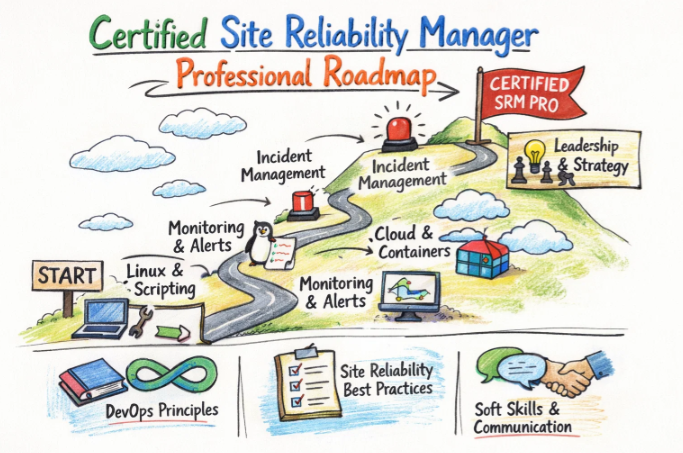
The transition from a technical contributor to a leadership role in modern operations requires more than just knowing how to write code or configure servers. The Certified Site Reliability Manager program is designed for professionals who need to bridge the gap between deep technical execution and strategic engineering management. This guide is curated for senior engineers, aspiring leads, and current managers who want to validate their ability to build and scale reliable systems through people, processes, and data-driven decision-making. As distributed systems become more complex, the industry needs leaders who can translate “uptime” into business value while maintaining a healthy engineering culture. By exploring this roadmap, you will understand how to navigate the evolving landscape of platform engineering and operational excellence. This comprehensive guide, hosted by SREschool, serves as a roadmap for those looking to master the art of managing reliability at scale.
What is the Certified Site Reliability Manager?
The Certified Site Reliability Manager designation represents a shift from individual operational tasks to the holistic management of production ecosystems. Unlike certifications that focus purely on a specific cloud provider or a single toolset, this program emphasizes the frameworks and leadership principles required to run production services effectively. It exists to solve the “management debt” often found in rapidly scaling organizations where technical growth outpaces operational maturity. The curriculum focuses on real-world scenarios, such as managing incident response teams, defining meaningful service level objectives, and fostering a culture of blamelessness. It aligns perfectly with modern engineering workflows by treating reliability as a product feature that must be managed, measured, and improved through disciplined leadership.
Who Should Pursue Certified Site Reliability Manager?
This certification is built for a diverse range of professionals, but it holds the most value for those at the intersection of leadership and infrastructure. Senior DevOps engineers and SREs looking to move into management roles will find the framework essential for their next career step. Engineering managers who have recently inherited infrastructure teams will benefit from the structured approach to reliability management. Even cloud architects and security leaders can use this knowledge to ensure their designs are not just functional, but maintainable and resilient over time. In India and across the global tech hubs, companies are increasingly looking for leaders who can handle the pressures of high-scale production environments while maintaining team morale and operational efficiency.
Why Certified Site Reliability Manager is Valuable and Beyond
The demand for skilled reliability managers is growing as enterprises realize that simply “hiring SREs” is not enough; those SREs need competent leadership to be effective. As organizations move toward platform engineering models, the ability to manage reliability as a centralized service becomes a critical business advantage. This certification ensures that a professional stays relevant regardless of whether the industry moves from Kubernetes to the next major abstraction. It provides a return on investment by teaching managers how to reduce the cost of downtime and improve the velocity of development teams through better stability. Long-term career longevity in this field depends on understanding the “why” behind operational patterns, and this program provides that foundational wisdom.
Certified Site Reliability Manager Certification Overview
The program is delivered via the official portal and is hosted on the primary platform for reliability education. It is structured to provide a logical progression from foundational management concepts to advanced operational strategy. The assessment approach is practical, often requiring candidates to demonstrate how they would handle complex organizational challenges rather than just reciting definitions. Ownership of the certification resides with industry experts who ensure the content remains aligned with the latest enterprise practices and cloud-native trends. Professionals can expect a curriculum that covers the full lifecycle of a service, from design and deployment to decommissioning, all through the lens of a manager responsible for the bottom line.
Certified Site Reliability Manager Certification Tracks & Levels
The certification is structured into three distinct tiers to cater to different stages of a professional’s career journey. The Foundation level introduces the core vocabulary of reliability management, focusing on metrics and basic team structures. The Professional level dives deeper into incident management leadership, budget planning, and cross-team collaboration. Finally, the Advanced level is designed for directors and heads of platform who are responsible for organization-wide reliability strategies and cultural transformation. These tracks allow individuals to specialize in areas like FinOps- integrated management or DevSecOps leadership, ensuring that the certification scales with their specific professional interests and responsibilities.
Complete Certified Site Reliability Manager Certification Table
| Track | Level | Who it’s for | Prerequisites | Skills Covered | Recommended Order |
| Core Management | Foundation | Aspiring Leads | 2+ Years Ops | SLO/SLI, On-call Design | 1st |
| Strategic Leadership | Professional | Senior Managers | Foundation | Incident ROI, Capacity | 2nd |
| Enterprise Strategy | Advanced | Directors / VPs | Professional | Org Transformation | 3rd |
| Cost Reliability | FinOps Track | Finance Managers | Basic Cloud | Unit Economics, Cloud Waste | Optional |
| Security Ops | DevSecOps Track | Security Leads | Security Fundamentals | Risk Management, Compliance | Optional |
Detailed Guide for Each Certified Site Reliability Manager Certification
What it is
This certification validates a candidate’s understanding of the basic pillars of SRE management, including the ability to define and track reliability metrics. It serves as the entry point for those transitioning from technical roles into coordination and team lead positions.
Who should take it
It is suitable for senior individual contributors, junior team leads, and project managers who work closely with infrastructure and operations teams.
Skills you’ll gain
- Drafting Service Level Objectives (SLOs) and Service Level Indicators (SLIs).
- Designing effective on-call rotations that prevent burnout.
- Understanding the basics of error budgets and how to communicate them to stakeholders.
- Basic incident command structures for small to medium-sized teams.
Real-world projects you should be able to do
- Create a reliability dashboard for a microservice-based application.
- Develop a basic incident response playbook for a web service.
- Conduct a post-incident review (post-mortem) that focuses on systemic improvements.
Preparation plan
- 7–14 days: Review core SRE terminology and the official study guide.
- 30 days: Engage in hands-on labs focused on monitoring tools and metric definition.
- 60 days: Participate in peer reviews of existing operational processes within your current organization.
Common mistakes
- Focusing too much on specific tools (like Prometheus) rather than management principles.
- Underestimating the importance of soft skills in incident coordination.
Best next certification after this
- Same-track option: Professional Level Certified Site Reliability Manager.
- Cross-track option: Certified DevOps Lead.
- Leadership option: Engineering Management Fundamentals.
Choose Your Learning Path
DevOps Path
This path focuses on the integration of development and operations through the lens of a manager. It emphasizes the “CAMS” model (Culture, Automation, Measurement, Sharing) and how a manager can facilitate a smoother CI/CD pipeline. Professionals here will learn how to remove silos between departments and ensure that reliability is built into the software development lifecycle from the start.
DevSecOps Path
The management of security within the reliability framework is critical for modern enterprises. This path teaches managers how to integrate security gates into the automated pipeline without sacrificing deployment velocity. It covers risk management, compliance as code, and how to lead a team that treats security vulnerabilities with the same urgency as production outages.
SRE Path
This is the core path for those dedicated to the pure principles of Site Reliability Engineering. It focuses heavily on the Google-pioneered approach to managing large-scale systems. Managers on this path will master error budgets, blameless culture, and the technical leadership required to maintain “five nines” of availability in complex environments.
AIOps Path
As systems generate more data than humans can process, managers must learn to leverage artificial intelligence for operations. This path covers the implementation of machine learning for anomaly detection, automated root cause analysis, and predictive maintenance. Managers will learn how to lead teams that build and maintain these intelligent operational systems.
MLOps Path
Managing the reliability of machine learning models in production presents unique challenges. This path is for leaders who oversee data science and engineering teams. It focuses on model monitoring, data drift detection, and the automated retraining pipelines necessary to keep AI-driven features reliable and accurate over time.
DataOps Path
Data is the lifeblood of the modern enterprise, and its reliability is paramount. This path teaches managers how to apply SRE principles to data pipelines and big data infrastructure. It covers data quality monitoring, pipeline resilience, and how to manage the teams responsible for the flow of information across the organization.
FinOps Path
Managing the cost of reliability is just as important as managing the uptime itself. This path is designed for managers who need to balance performance with cloud spend. It covers unit economics, cloud waste reduction, and how to lead a culture of financial accountability within the engineering department.
Role → Recommended Certified Site Reliability Manager Certifications
| Role | Recommended Certifications |
| DevOps Engineer | Foundation CSRM, DevOps Professional |
| SRE | Professional CSRM, Advanced SRE Track |
| Platform Engineer | Professional CSRM, Cloud Infrastructure Cert |
| Cloud Engineer | Foundation CSRM, Multi-Cloud Management |
| Security Engineer | DevSecOps CSRM Track, Security Leadership |
| Data Engineer | DataOps CSRM Track, Big Data Management |
| FinOps Practitioner | FinOps CSRM Track, Cloud Financial Management |
| Engineering Manager | Professional CSRM, Advanced Leadership |
Next Certifications to Take After Certified Site Reliability Manager
Same Track Progression
Once you have mastered the management aspect of reliability, the logical next step is to go deeper into architectural strategy. Pursuing advanced platform engineering certifications or specialized reliability tracks in specific cloud environments will solidify your status as a top-tier operational leader. This ensures you can not only manage the team but also provide high-level technical direction.
Cross-Track Expansion
A well-rounded manager understands the adjacent domains. Expanding into formal security management or advanced data strategy allows you to lead multi-disciplinary teams more effectively. By moving cross-track, you gain the vocabulary to speak with stakeholders across the entire technical organization, making you a more versatile leader for complex projects.
Leadership & Management Track
For those looking to move into the C-suite or high-level executive roles, transitioning to general management and business strategy certifications is recommended. This path focuses less on the “how” of technical operations and more on the “why” of business growth, organizational design, and financial stewardship at the corporate level.
Training & Certification Support Providers for Certified Site Reliability Manager
DevOpsSchool
DevOpsSchool has established itself as a cornerstone for operational learning, offering a massive library of resources and structured training programs. Their approach focuses on the end-to-end lifecycle of software delivery, making them an excellent choice for managers who need to understand the big picture. They provide extensive community support, forums, and hands-on labs that allow professionals to practice management scenarios in a safe environment. Their instructors are typically industry veterans who bring real-world context to the classroom, ensuring that the theoretical parts of the certification are grounded in practical reality.
Cotocus
Cotocus takes a consulting-led approach to training, which is particularly beneficial for those in management roles. They don’t just teach the curriculum; they show how to apply it within a specific corporate context. Their focus is often on helping organizations modernize their operational practices, making their training programs highly relevant for leads who are tasked with digital transformation. By choosing this provider, professionals gain access to frameworks and templates that can be directly implemented in their workplace, providing immediate value well beyond the certification itself.
Scmgalaxy
Scmgalaxy is widely recognized for its deep focus on configuration management and the technical underpinnings of DevOps. For a Site Reliability Manager, this provider offers the technical depth required to understand the tools their teams are using daily. Their training materials are comprehensive and frequently updated to reflect the latest changes in the software configuration landscape. They provide a wealth of free resources, articles, and community discussions that help managers stay informed about emerging trends and toolsets without constantly needing to enroll in new courses.
BestDevOps
BestDevOps focuses on delivering high-impact certification programs that are tailored to the needs of working professionals. Their curriculum is streamlined to focus on the most important aspects of the certification, making it a great choice for busy managers who need to maximize their study time. They offer a variety of learning formats, including self-paced modules and instructor-led bootcamps, allowing individuals to choose the method that best fits their learning style and schedule. Their emphasis on exam preparation ensures that candidates are well-equipped to succeed on the first attempt.
DevSecOpsSchool.com
As security becomes a primary concern for every organization, DevSecOpsSchool.com provides the specialized training needed to lead secure operational teams. Their programs integrate security principles directly into the DevOps and SRE frameworks, teaching managers how to foster a “security-first” culture. They cover everything from automated vulnerability scanning to compliance management, providing a comprehensive toolkit for the modern manager. Their training is essential for those in regulated industries where reliability and security are inextricably linked and must be managed together.
Sreschool.com
Sreschool.com is the primary authority and hosting platform for this certification, offering the most direct and comprehensive path to mastery. Their content is designed by pioneers in the SRE field, ensuring that students are learning from the very best in the industry. The platform provides a seamless learning experience, with integrated labs, community forums, and direct access to expert mentors. Because they own the certification standard, their training programs are always perfectly aligned with the exam objectives, providing the most reliable way to achieve the Certified Site Reliability Manager designation.
Aiopsschool.com
Aiopsschool.com is at the forefront of the next generation of operations management, focusing on the intersection of AI and infrastructure. For managers, this provider offers a glimpse into the future of automated reliability. Their courses teach how to implement and manage AI-driven tools that can predict and prevent outages before they occur. This training is vital for leaders who want to stay ahead of the curve and move their organizations toward a more proactive, data-driven operational model that reduces the burden on human engineers.
Dataopsschool.com
Dataopsschool.com addresses the unique reliability needs of data-intensive organizations. They teach managers how to apply the rigors of SRE to the often-chaotic world of data pipelines and warehouse management. Their curriculum covers data quality, lineage, and the operational excellence required to support modern analytics and AI initiatives. For managers overseeing data engineering teams, this provider offers the specific frameworks needed to ensure that data is not only available but also accurate and trustworthy for the business.
Finopsschool.com
Finopsschool.com provides the essential financial training that modern engineering managers often lack. They focus on the “cloud economics” of reliability, teaching how to manage infrastructure costs without compromising on performance or stability. Their programs are designed to help managers bridge the gap between the finance department and the engineering team, creating a shared language around value and efficiency. This training is increasingly important as companies look to optimize their cloud spend and improve the unit economics of their digital services.
Frequently Asked Questions (General)
- How difficult is the certification for someone without a management background?
The program is designed to guide technical professionals through the transition, but it does require a mindset shift. It focuses on strategy and coordination rather than just code. - What is the typical time commitment to pass the Professional level?
Most professionals find that 30 to 60 days of consistent study, combined with practical application at work, is sufficient to master the material. - Are there any mandatory prerequisites before taking the Foundation exam?
While there are no strict legal bars, having at least two years of experience in an operations or development role is highly recommended for context. - How does this certification differ from a standard PMP or project management cert?
Unlike general project management, this is deeply technical and focused specifically on the unique challenges of high-scale production environments and reliability. - Is the exam conducted online or at a testing center?
The exam is typically offered through an online proctored platform, allowing you to take it from the comfort of your home or office. - What is the validity period of the certification?
The certification is usually valid for two to three years, after which recertification or continuing education credits are required to stay current. - Does the certification focus on a specific cloud provider like AWS or Azure?
No, the principles taught are cloud-agnostic and apply to on-premises, hybrid, and multi-cloud environments. - Can this certification help me get a job in a different country?
Yes, the frameworks taught (SRE, SLOs, Incident Management) are industry standards used by major tech companies globally. - What kind of salary increase can I expect after becoming certified?
While results vary, individuals moving into reliability management roles often see significant compensation increases compared to individual contributor roles. - Is there a community or alumni group for certified professionals?
Yes, most providers offer access to exclusive forums and networking events for those who have successfully completed the program. - How often is the curriculum updated?
The core curriculum is reviewed annually to ensure it includes the latest trends in platform engineering and AIOps. - Are there practice exams available?
Yes, most training support providers offer mock exams to help you gauge your readiness before the official test.
FAQs on Certified Site Reliability Manager
- What is the core focus of the Certified Site Reliability Manager program?
The primary focus is on leading the cultural and technical shifts required to manage reliability as a business-aligned engineering discipline. - How does the program handle incident management training?
It teaches the Incident Command System (ICS) and how to lead teams during high-pressure outages while maintaining clear communication. - Does the certification cover the financial aspects of SRE?
Yes, especially at the professional and FinOps track levels, it covers how to balance reliability costs with operational goals. - Is there a focus on “Toil” reduction for managers?
Absolutely. One of the key responsibilities of a manager is identifying and automating repetitive tasks to free up their team’s time. - How are SLOs and Error Budgets handled in the curriculum?
The program teaches how to define them, how to get stakeholder buy-in, and most importantly, how to use them to make data-driven “go/no-go” decisions. - Does the certification include training on “Blameless Culture”?
Yes, it provides a framework for conducting post-mortems that focus on process improvement rather than individual mistakes. - How does it prepare you for managing “Platform Engineering” teams?
It covers the transition from traditional ops to providing “internal developer platforms” that have reliability built-in. - What is the role of automation in this management certification?
The program emphasizes “Automation as a Force Multiplier,” teaching managers how to justify and lead large-scale automation projects.
Final Thoughts: Is Certified Site Reliability Manager Worth It?
As a mentor who has watched the industry evolve for two decades, I can tell you that the era of the “accidental manager” is coming to an end. Organizations can no longer afford to promote their best engineer to lead a team without providing them the framework to succeed in that new role. The Certified Site Reliability Manager program provides that framework. It isn’t just a badge on your profile; it is a structured way of thinking about the most critical aspect of modern business: keeping the lights on and the customers happy while your team remains healthy and productive. If you are serious about a career in technical leadership and want to move beyond the day-to-day firefighting to become a strategic asset to your organization, this path is one of the most practical and high-value investments you can make. It grounds you in the principles that stay constant even when the tools change, ensuring your relevance in the industry for years to come.


Leave a Reply
You must be logged in to post a comment.